Designed for axle load and baffles

Design and fabrication of
liquid transport tankers is our speciality!

Water, fuel and milk tankers for pickups, light trucks and trucks. A tanker is not an ordinary tank on a chassis; the liquid surges while moving, the weight must stay within the permitted axle limits and the centre of gravity must be low. Tanker design starts with these three points.

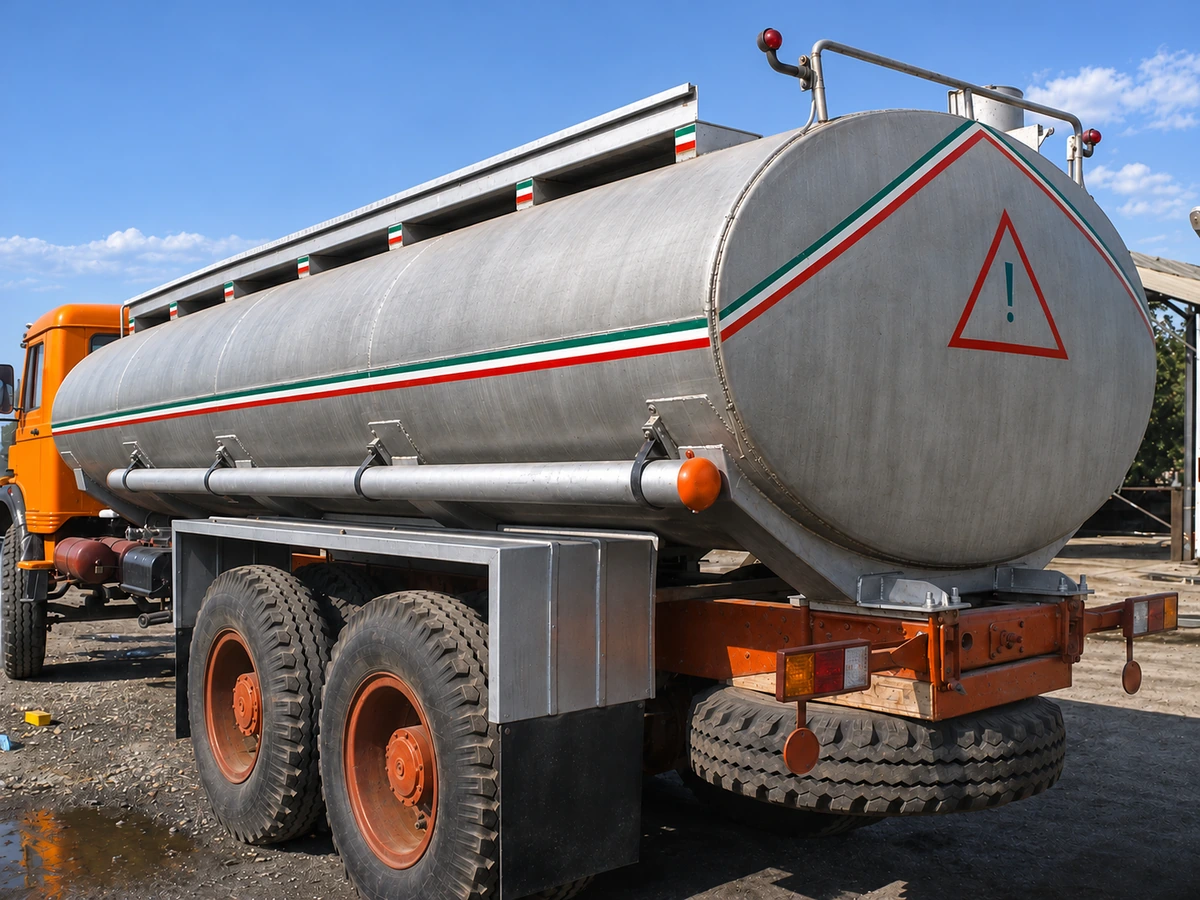
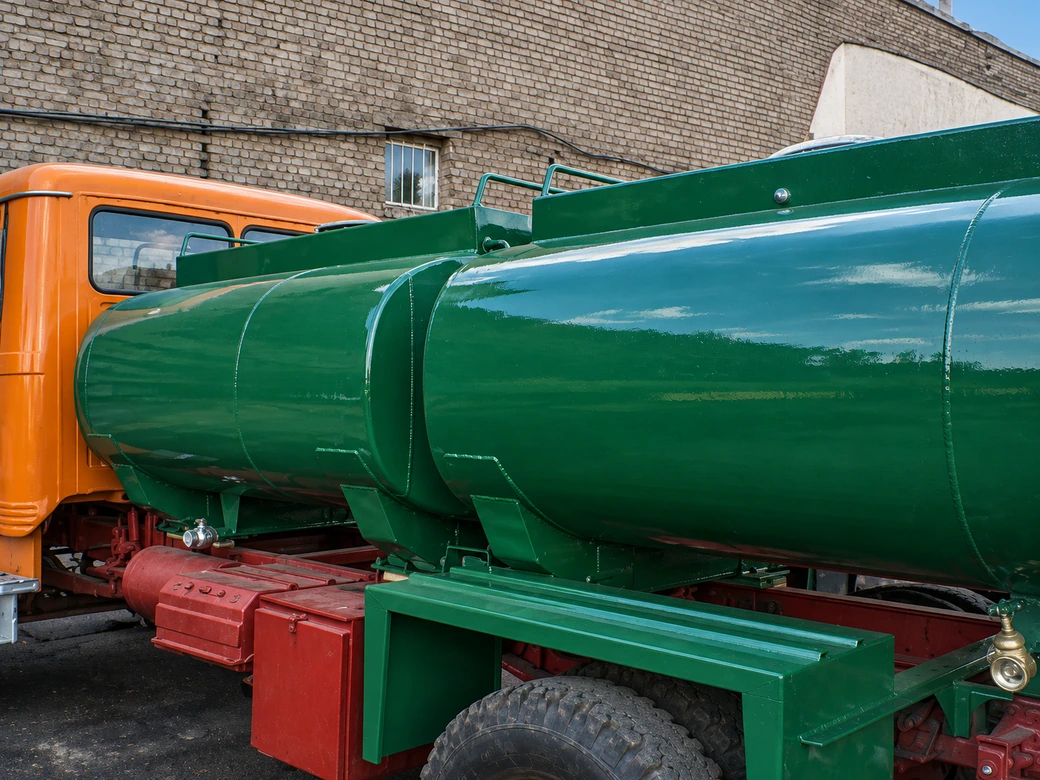
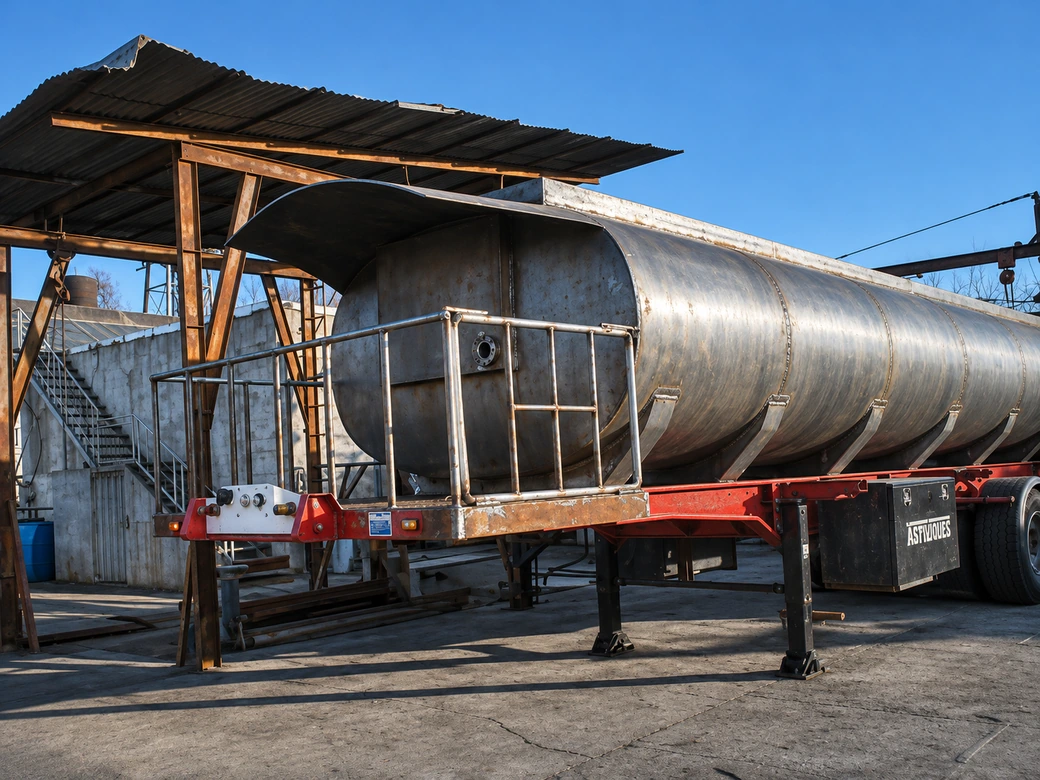
Product photo — water tanker on a truck
Vehicle
Pickup · light truck · truck
Section
Elliptical or circular
Internals
Surge baffles
Fabrication warranty
24 months
Axle load
Surge baffles
Elliptical section
Water, fuel, milk
Insulated stainless
Leak test

1. The vehicle sets the tanker's capacity

Permitted axle loads

The first question when ordering a tanker is "how many litres?", but the right answer comes from the vehicle. Each vehicle has a specific permitted front and rear axle load and empty weight. The tanker's capacity is the difference between the permitted weight and the vehicle's empty weight, minus the weight of the tanker itself.

Weight distribution matters too. If the tanker's centre of gravity is too far back, the front axle becomes light and steering suffers; if it is too far forward, the front axle is overloaded. The tanker's position on the chassis is chosen so that each axle stays within its own permitted limit.

2. Key design parameters

The main tanker design figures:

Permitted weight
Vehicle's gross permitted weight
Liquid capacity
Permitted − empty − tanker
Water density
1 kg/L
Gas oil density
≈ 0.85 kg/L
Workshop note

With the same permitted weight, a gas oil tanker holds more volume than a water tanker, because gas oil is lighter.

3. Surge baffles

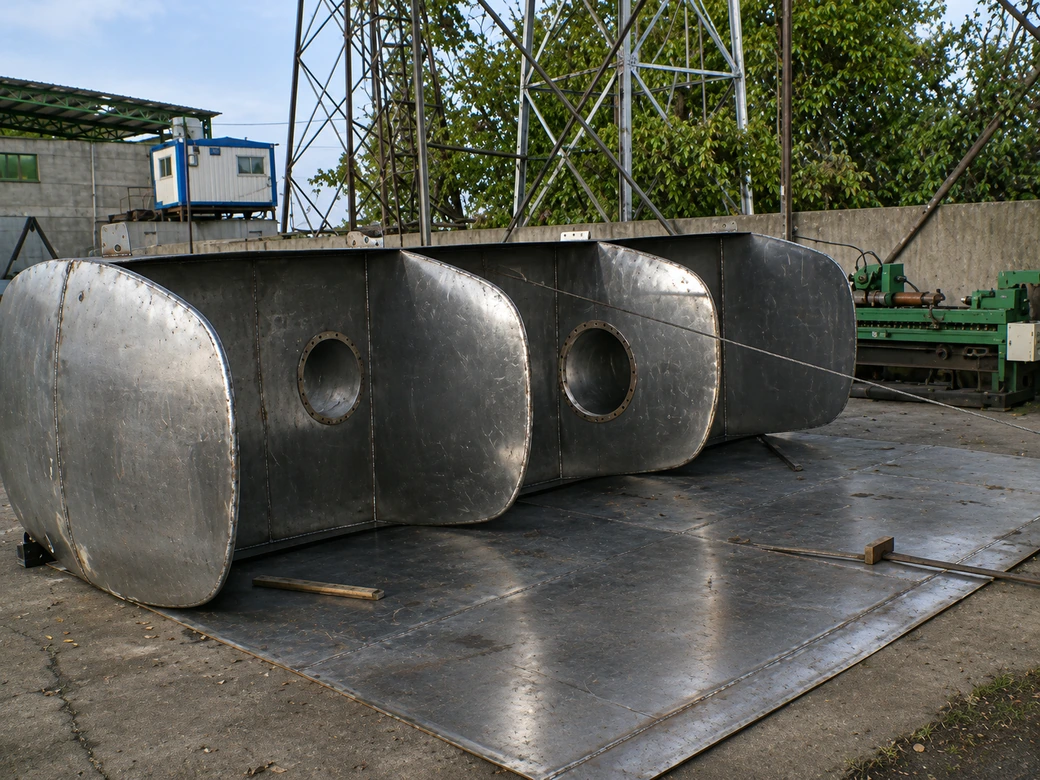
In a partly filled tanker the liquid moves freely. Under sudden braking, the whole liquid mass moves forward and strikes the front wall; this impact can push the vehicle forward. Transverse surge baffles, with holes that let the liquid pass gently, divide the tanker into several sections and reduce the moving mass in each one.

The number and spacing of the baffles depend on the tanker's length. The baffles also add to the strength of the body and stiffen the shell like internal rings.

4. Material for each liquid

LiquidCommon materialNote
Service waterCoated or galvanized steelAnti-corrosion internal coating
Drinking waterStainless or food-grade coatingCertified for contact with potable water
Gas oil and fuelCarbon steelMulti-compartment, earthing and safety accessories
Milk and foodInsulated stainless 304Temperature retention and a washable surface

Features of our tankers

Vehicle stability and sound welds on the move

Capacity calculated from the permitted axle load
Internal surge baffles
Elliptical section for a low centre of gravity
Water, fuel and milk tankers
Insulated stainless steel for milk and food
Inspection hatch and drain valve
Secure connection to the chassis
Leak test before delivery
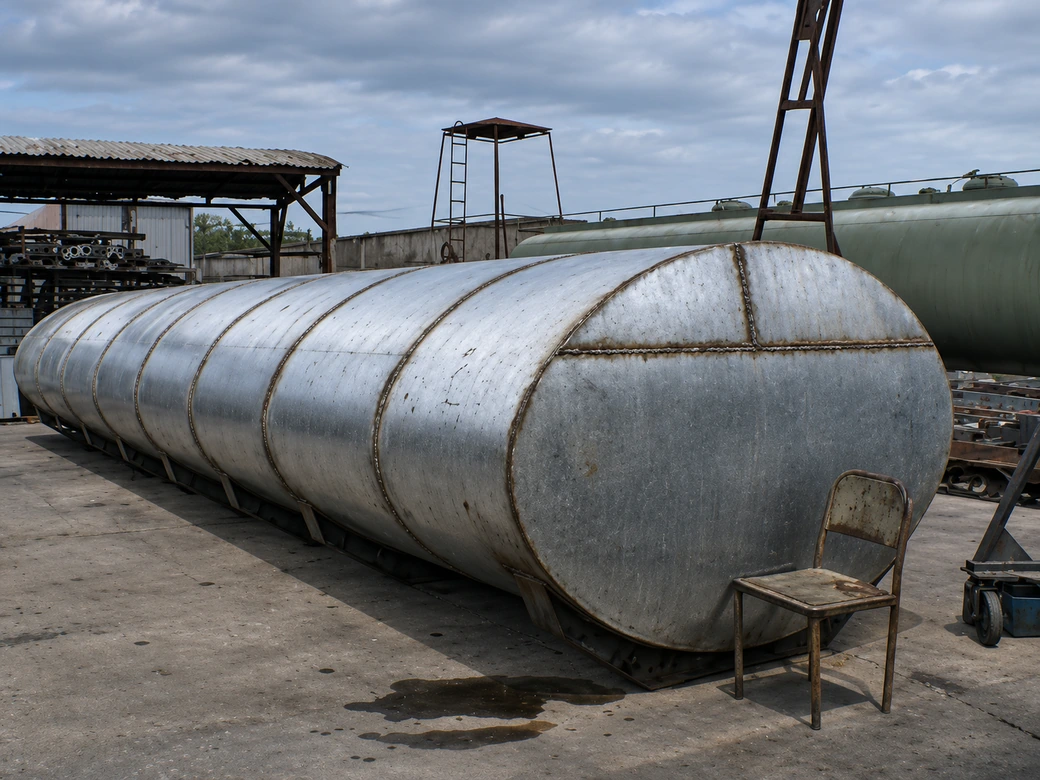
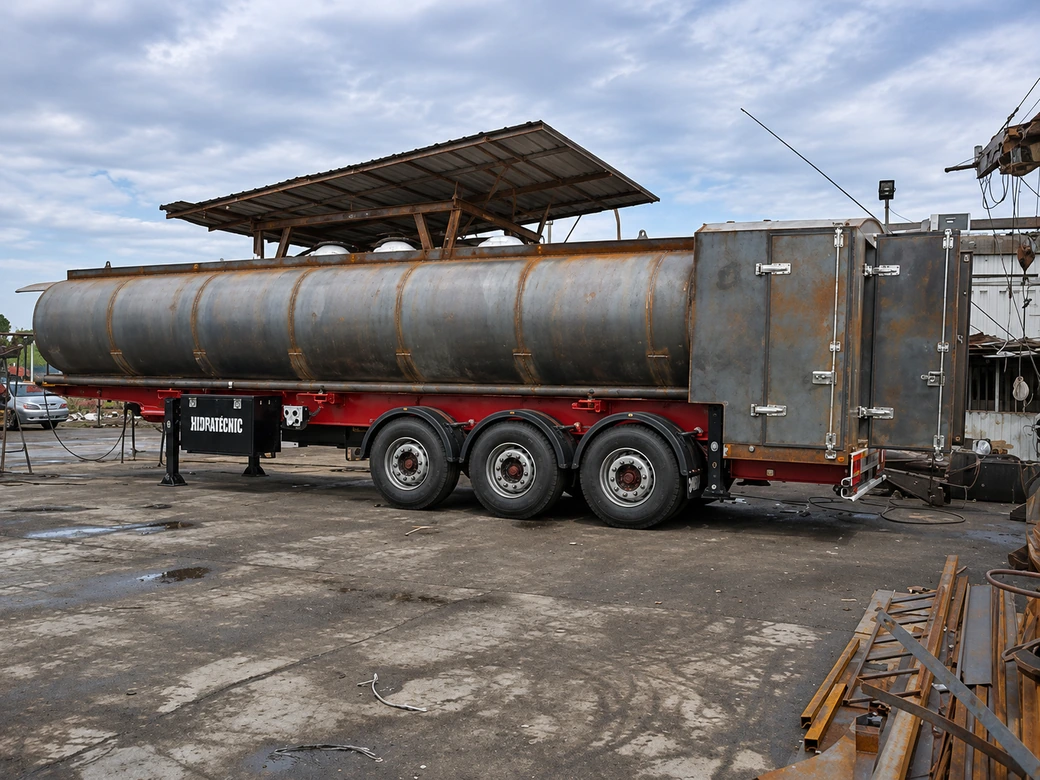
Workshop photo — building a tanker body

How is a liquid transport tanker different?

A liquid that is calm in a fixed tank surges with every brake, acceleration and turn in a moving tanker and strikes the walls. This impact reduces the vehicle's stability and puts strain on the welds and the tank-to-chassis connection. Internal surge baffles divide the tank into smaller sections and reduce the size of the surge.

A tanker's capacity is not set by volume alone. The weight of the full tank plus the tanker's own weight must not exceed the vehicle's axle capacities, and this weight must be distributed correctly between the axles. The centre of gravity must also stay low so the vehicle does not roll over on bends, which is why most tankers have an elliptical section. Use the online tanker calculator to see the capacity, thickness and load distribution for your own vehicle. For milk and food tankers, the body is made as an insulated stainless tank, and as always, the price of tank fabrication is based on weight.

Internal baffles
Less liquid impact when braking and cornering
Axle load
Capacity within the vehicle's permitted limits
Low centre of gravity
Elliptical section for stability

Types of tanker

By liquid and vehicle

Water tanker

Water tanker

For water supply, landscaping and construction sites. Steel with an internal coating or galvanized. For drinking water, the coating must be certified for contact with potable water.

CapacityPer vehicle
MaterialCoated or galvanized steel
AccessoriesDrain valve, pump if needed
Fuel tanker

Fuel tanker

For transporting gas oil and fuel. Usually multi-compartment with separate hatches, earthing and safety accessories according to fuel transport regulations.

CapacityPer vehicle
MaterialCarbon steel or aluminium
NoteMulti-compartment and earthing
Stainless milk tanker

Milk and food tanker

Stainless 304 with thermal insulation to keep the milk's temperature on the road. A smooth, washable internal surface.

CapacityPer vehicle
MaterialInsulated stainless 304
NoteInsulation and hygienic surface

Technical specifications and design range

The main design parameters of a tanker

Capacity
Based on the permitted axle load
Full weight + tanker weight ≤ axle capacities
Section
Elliptical · circular
Elliptical for a lower centre of gravity
Baffles
Internal transverse plates
Less liquid impact on the move
Material
Steel · galvanized · stainless
Based on the liquid
Accessories
Hatch · drain valve · ladder
Pump and hose reel if needed
Test
Leak test
Before mounting on the chassis

Fabrication steps to delivery

From the vehicle model to mounting on the chassis

1
Vehicle and capacity
Checking the vehicle model, axle capacities and empty weight; setting the maximum permitted capacity and dimensions.
2
Design
Section, plate thickness, the number and position of surge baffles, and how it connects to the chassis.
3
Fabrication and testing
Rolling and welding the body, fitting the baffles and hatches, and leak testing.
4
Painting and chassis mounting
Painting or stainless finishing, mounting on the chassis and delivery.

Design and quality control

Besides the liquid pressure, a tanker also carries the dynamic loads of travel: braking deceleration, cornering and road vibration. The welds and the chassis connection are designed for these loads. Fuel tankers also meet the safety regulations for fuel transport.

Capacity within the permitted axle limits
Calculated surge baffles
Weld checks and leak testing
Secure connection to the chassis
Workshop photo — fitting a baffle inside the tanker

Applications of tankers

Transporting liquids by road

Water supply
Drinking and service water
Landscaping and sites
Irrigation and construction water
Fuel
Gas oil delivery to sites and stations
Dairy
Carrying milk from farms to the factory

Speak directly with technical specialists

Tell us the vehicle model, liquid type and desired capacity to receive the permitted capacity and a tanker price.

Frequently asked questions

The most common questions about liquid transport tankers

Price inquiry
liquid transport tanker

Enter your project details; our specialists will send a technical proposal and price within 24 business hours.

  • Written technical response with a proposed concept drawing
  • Site visit in Tehran and suburbs
  • 24-month fabrication & weld warranty
Direct line to engineering office
+98 21 4686 6276

Your information is confidential and used only to prepare a technical proposal.

All articles
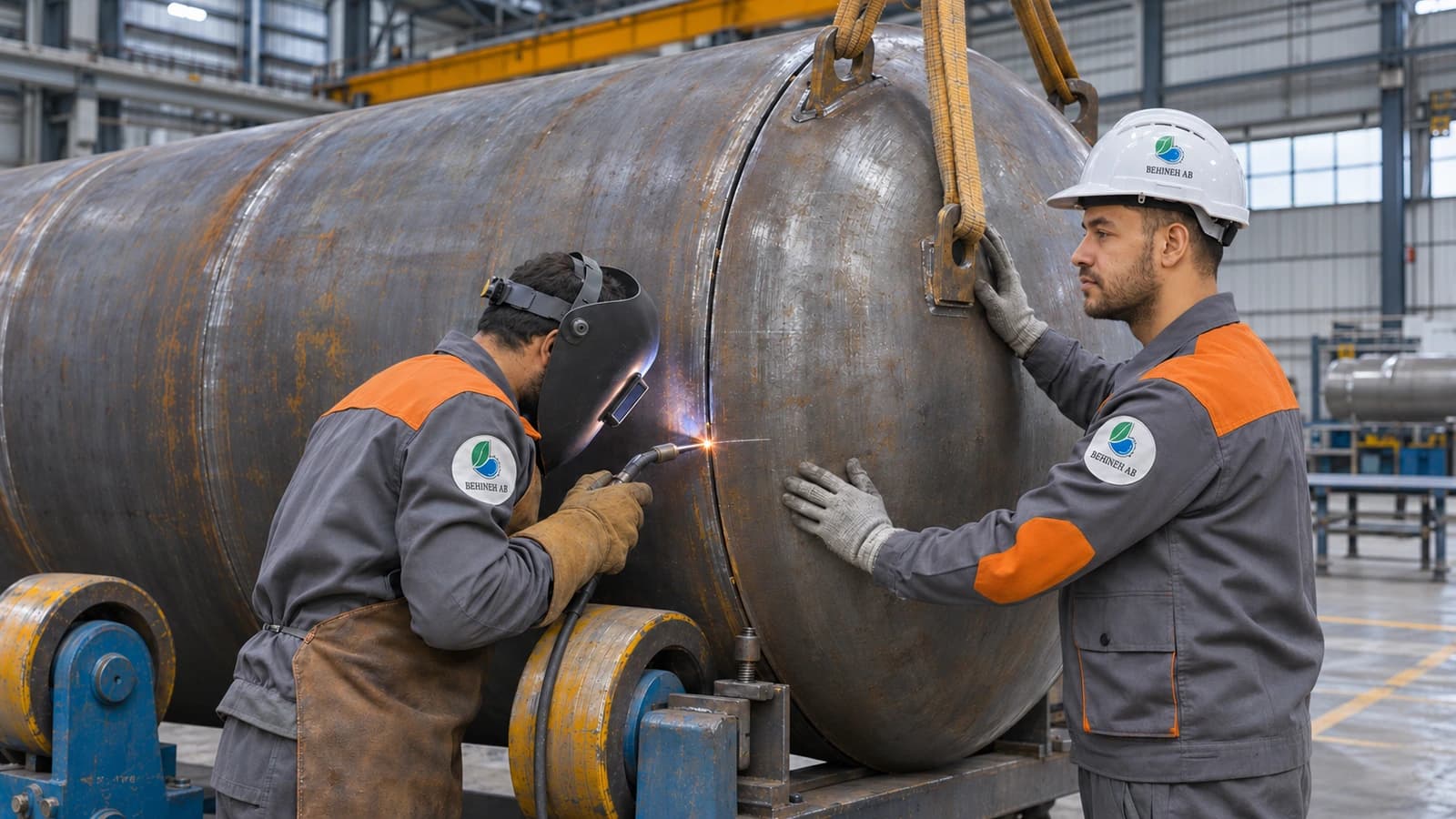
  • Assembling the shell and head of a steel tank in the Behineh Ab tank fabrication workshop

    Steel Tank Manufacturing Steps, from Order to Delivery

    The steps of building a steel tank, from the data sheet to testing and dispatch. A 20,000-litre tank takes about three weeks; here is what that time is spent on.

    Read more
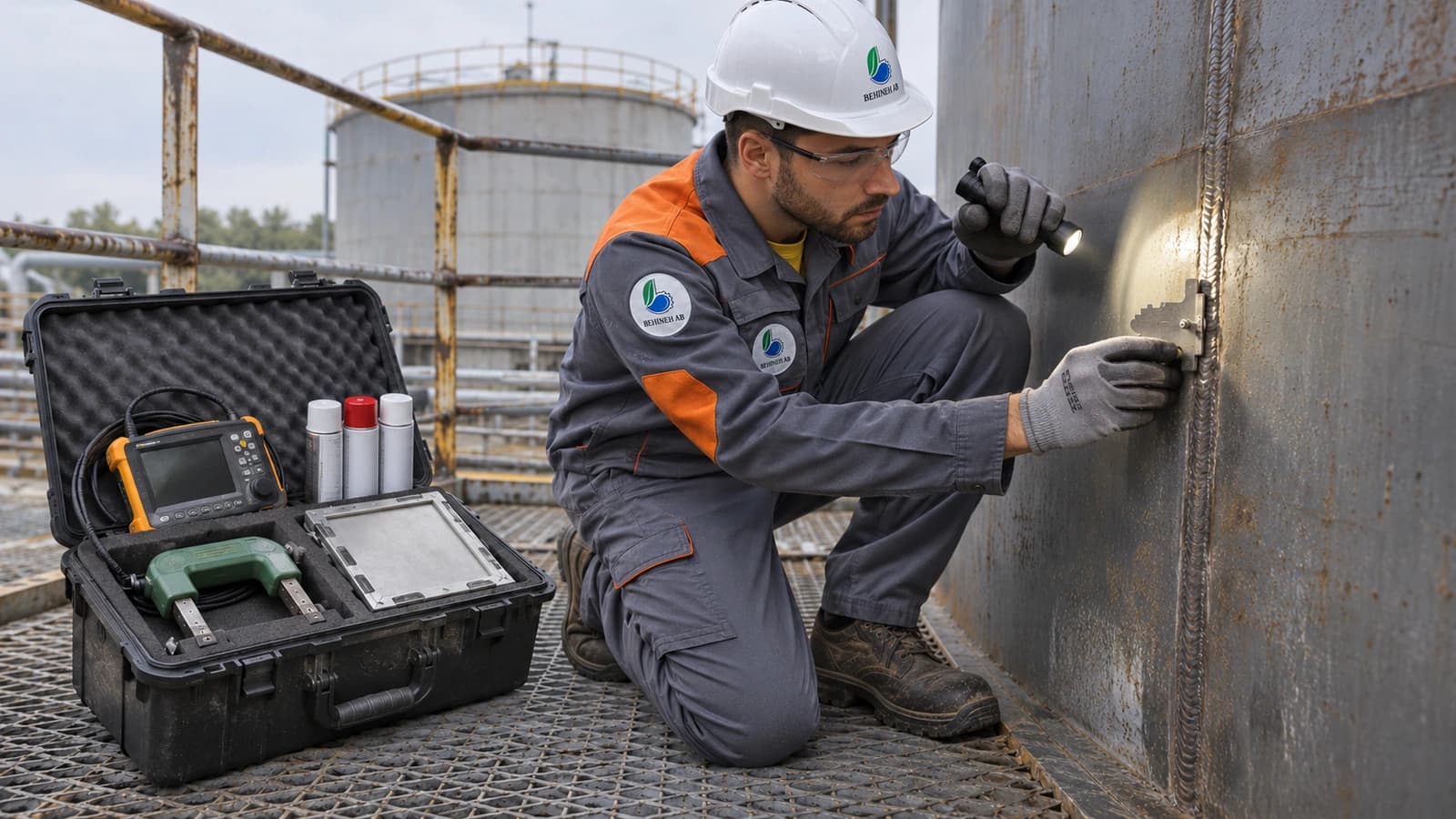
  • Inspector carrying out a non-destructive test on a steel tank shell weld

    Tank Tests: What Defect Does Each Test Find?

    Hydrotest, radiography, ultrasonic, liquid penetrant, magnetic particle and vacuum box. Each finds a particular defect and none can replace another. Here we compare them.

    Read more
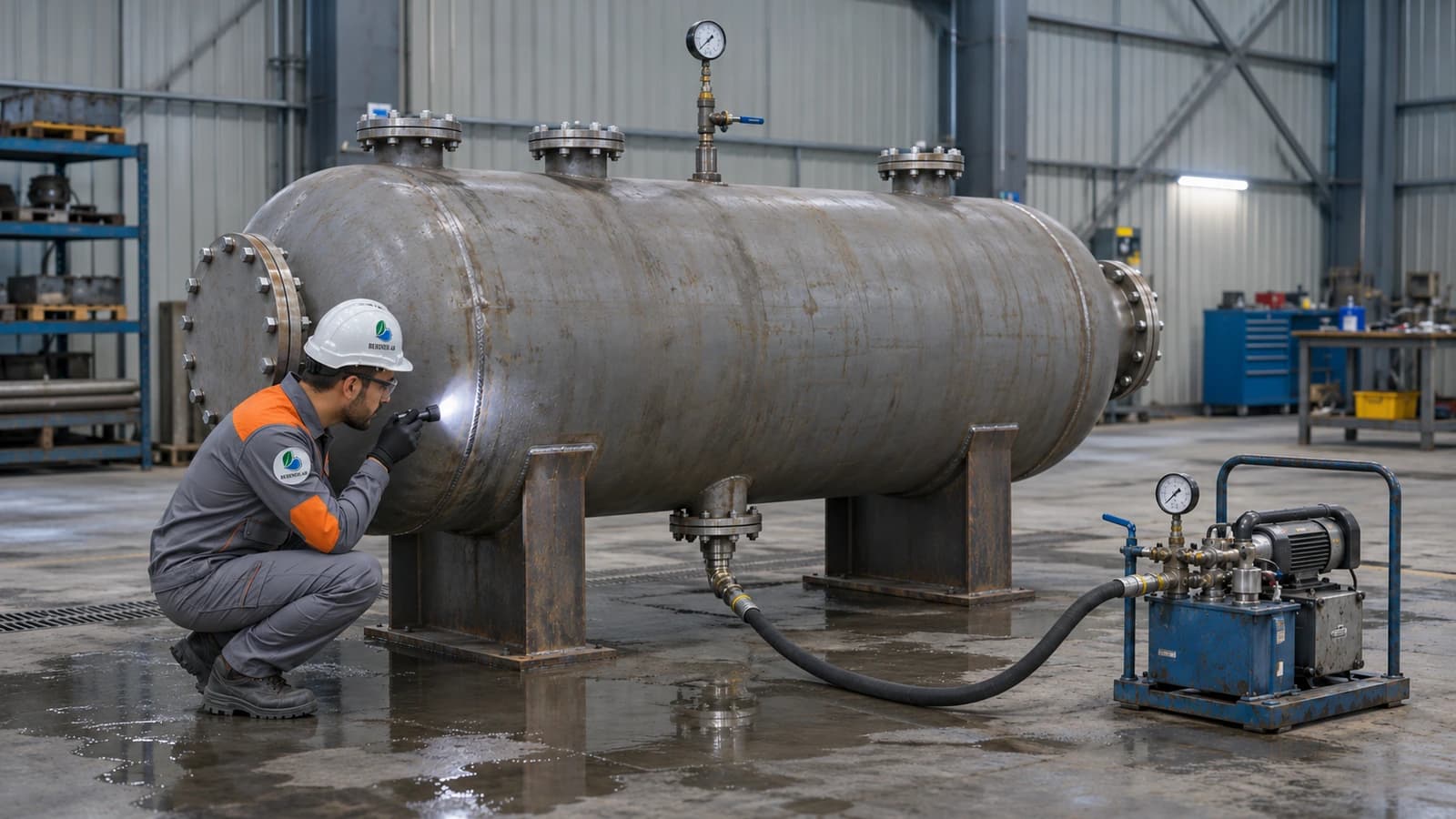
  • Pressure vessel under hydrostatic test with a pressure gauge in the Behineh Ab workshop

    Tank Hydrostatic Test, Step by Step

    The hydrotest is a tank's final exam before delivery, and we carry it out in our own factory. The test pressure, the work before filling, and the mistake that can ruin a tank while it is being drained.

    Read more
  • Radiography film of a tank shell weld on a film viewer

    Weld Radiography: What Percentage of Seams Must Be Tested?

    The radiography percentage sets the joint efficiency, and the joint efficiency sets the plate thickness. In other words, this decision directly affects the tank's weight and price.

    Read more