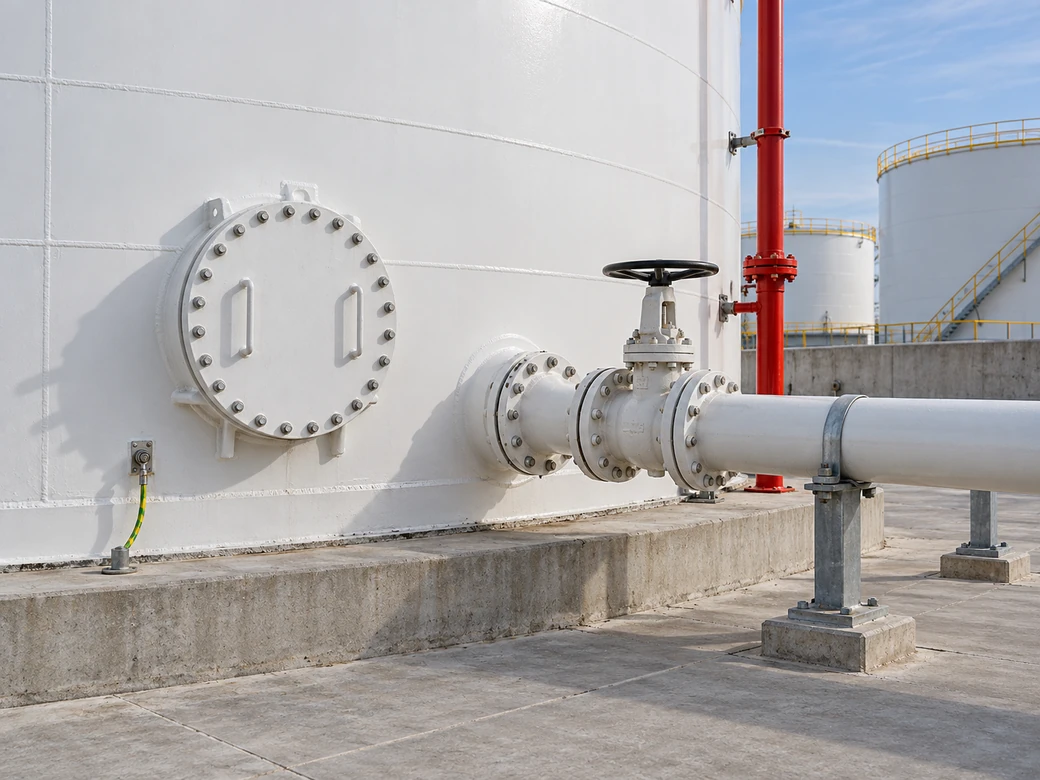
Oil tank fabrication

Safe industrial-scale storage of oil and its products

An oil tank is designed to store crude oil or petroleum products at industrial scale, and it must perform reliably against corrosion from sulphur compounds, environmental loads and swings in temperature and pressure. The roof type (fixed or floating), shell thickness and safety systems are chosen according to the product and the storage capacity.
Oil tank fabrication
Service
Crude oil or petroleum products
Roof type
Fixed or floating, by product
Shell material
Corrosion-resistant steel plate
Safety extras
Bund wall, lightning protection, earthing

Key features

Designed for the petroleum product and its corrosiveness
Fixed or floating roof chosen by volatility
Bund wall designed to contain spills
Lightning protection and earthing system
Standard safety spacing between tanks
Coordinated with the project's fire-fighting system
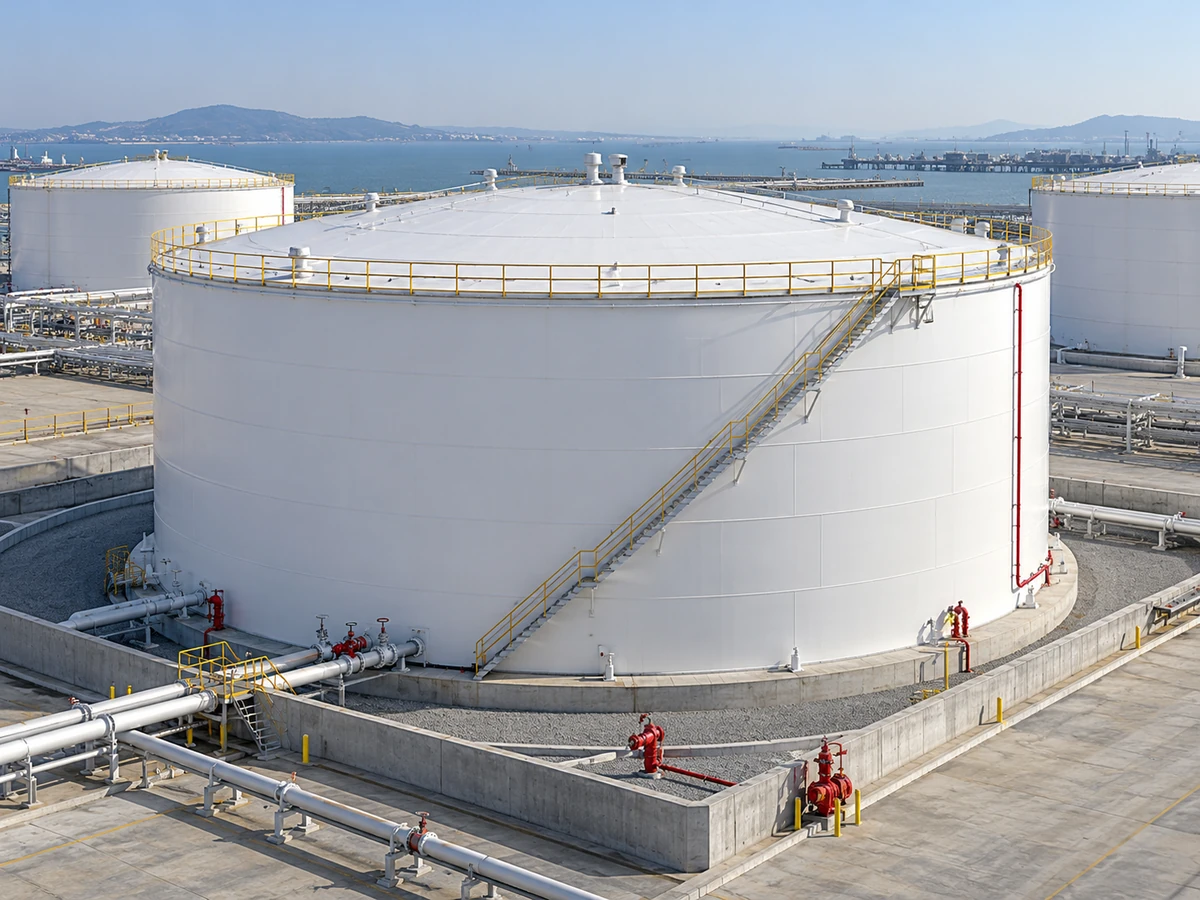
Fixed-roof oil tank designed to API 650

Technical details

Safety requirements for oil tanks include a bund wall (dyke) to contain any spill, a suitable fire-fighting system, lightning protection and earthing to discharge static electricity, and standard safety distances between neighbouring tanks.

Drawing on its experience in designing and building storage tanks, Behineh Ab designs and builds oil tanks for your product, capacity and project safety requirements.

Technical specifications

Service
Crude oil or petroleum products
Roof type
Fixed or floating, by product
Shell material
Corrosion-resistant steel plate
Safety extras
Bund wall, lightning protection, earthing
Design basis
API 650 principles
Capacity
To suit the refinery or fuel depot

Fixed roof or floating roof: choosing by product

For heavy, low-volatility products such as fuel oil, a fixed-roof tank is the more economical choice because evaporation losses are negligible. For volatile products such as gasoline and naphtha, a floating roof reduces the vapour space between roof and liquid, noticeably cutting evaporation losses and fire risk.

Shell thickness calculation to API 650

The thickness of each shell course of an oil tank is usually calculated by the one-foot or variable-design-point method of API 650. These methods take into account the hydrostatic pressure at the bottom of each course, the allowable stress of the steel and the joint efficiency, and the thickness of each course decreases from the bottom up.

Required safety systems for oil tanks

A bund wall around the tank contains any spill and should usually hold at least the volume of the main tank. An earthing system prevents static charge from building up (which could cause a spark), and fixed or semi-fixed fire-fighting equipment is required for a fast response to fire.

Applications and industries

Oil refineries
Oil refineries
Oil storage and export terminals
Petroleum product distributors
Industrial fuel depots
Petrochemical units
Petrochemical units
Large-scale fuelling stations

Frequently asked questions

Request a quote
Oil tank fabrication

Enter the pressure, temperature and fluid; our engineers send a technical proposal and price within 24 working hours.

  • Written technical reply with a proposed concept drawing
  • Site visit in Tehran and surroundings
  • 24-month warranty on fabrication and welding
Call our engineering office
+98 21 4686 6276

Your details are confidential and used only to prepare a technical proposal.

All articles
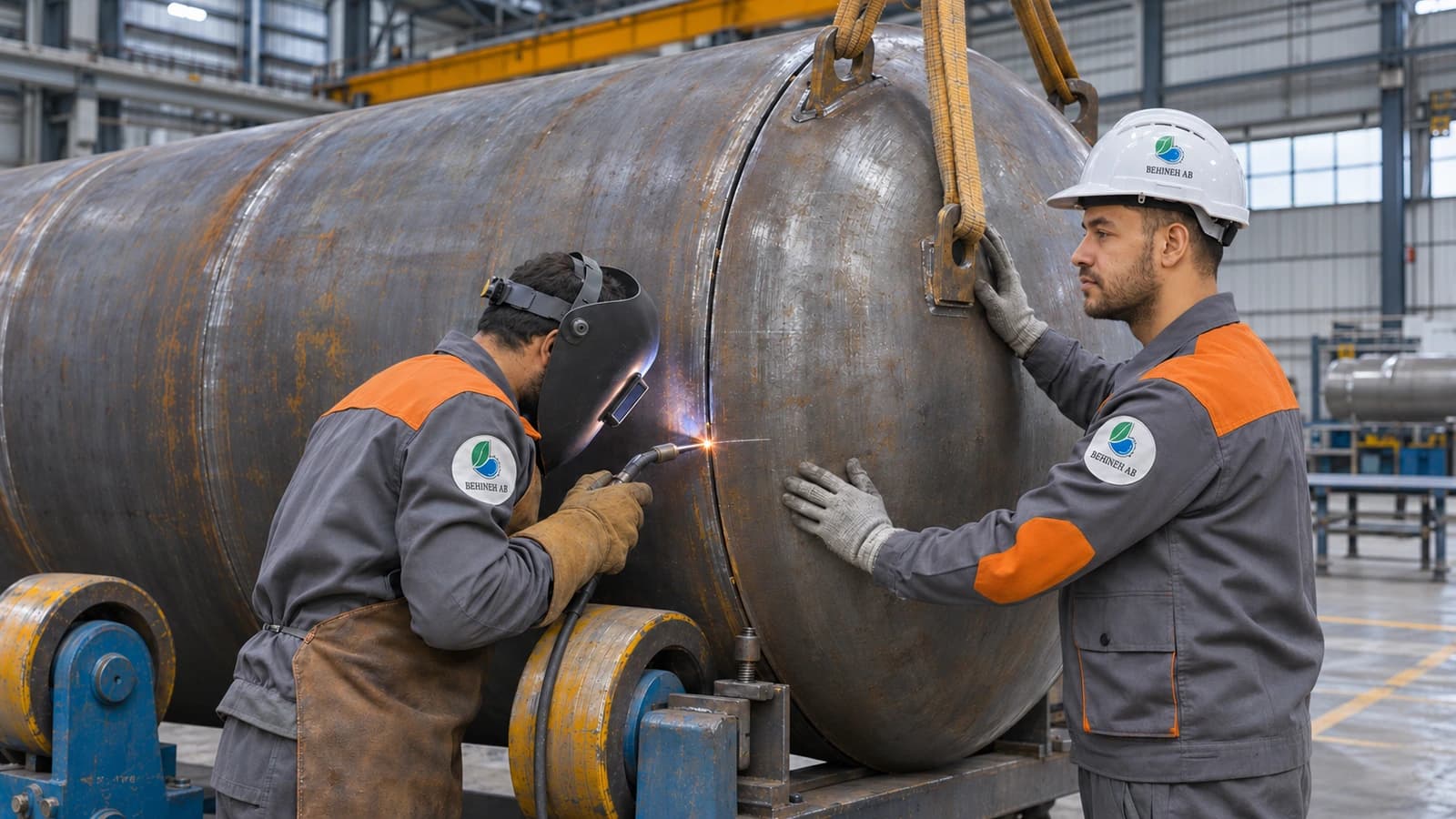
  • Assembling the shell and head of a steel tank in the Behineh Ab tank fabrication workshop

    Steel Tank Manufacturing Steps, from Order to Delivery

    The steps of building a steel tank, from the data sheet to testing and dispatch. A 20,000-litre tank takes about three weeks; here is what that time is spent on.

    Read more
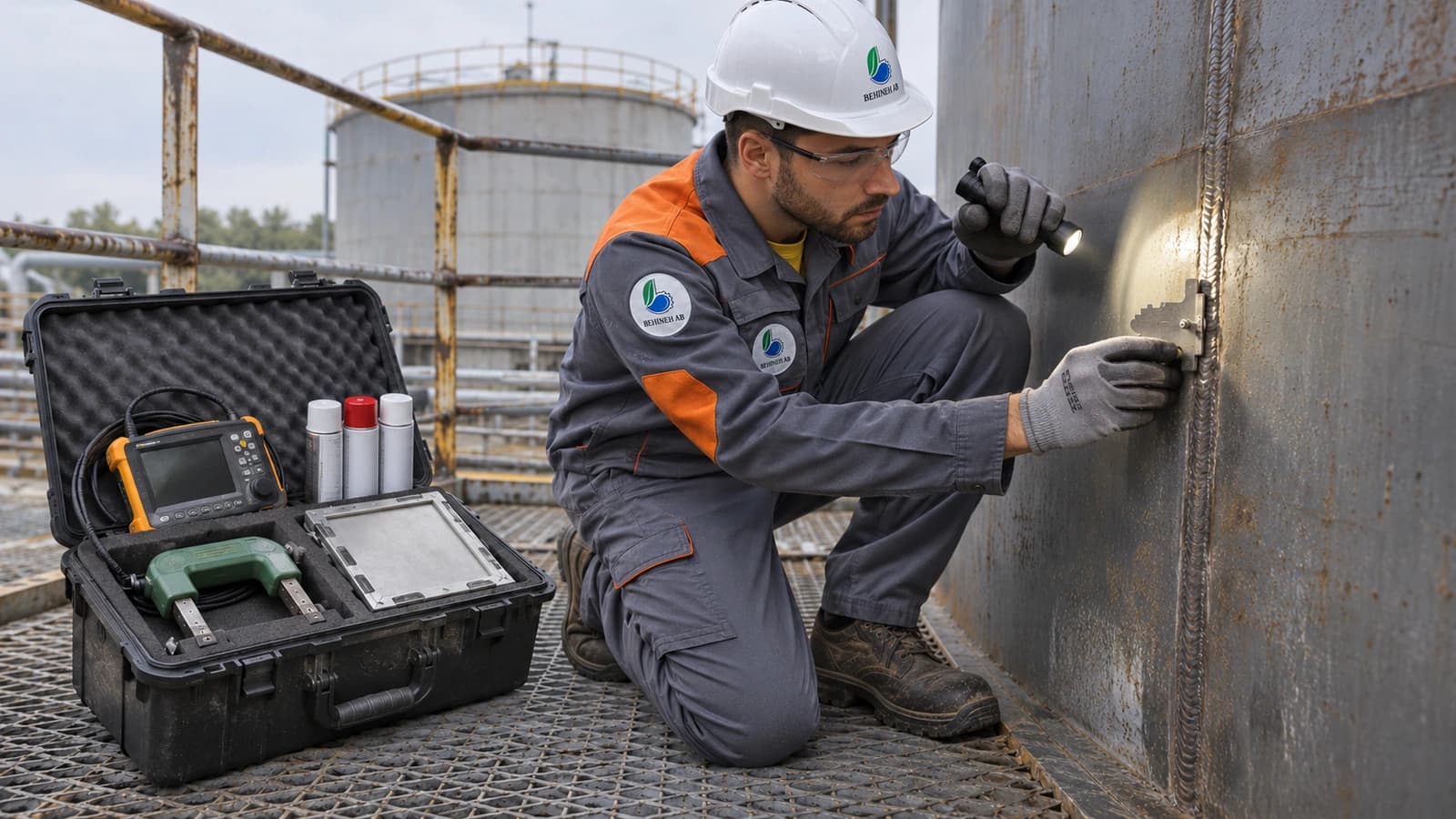
  • Inspector carrying out a non-destructive test on a steel tank shell weld

    Tank Tests: What Defect Does Each Test Find?

    Hydrotest, radiography, ultrasonic, liquid penetrant, magnetic particle and vacuum box. Each finds a particular defect and none can replace another. Here we compare them.

    Read more
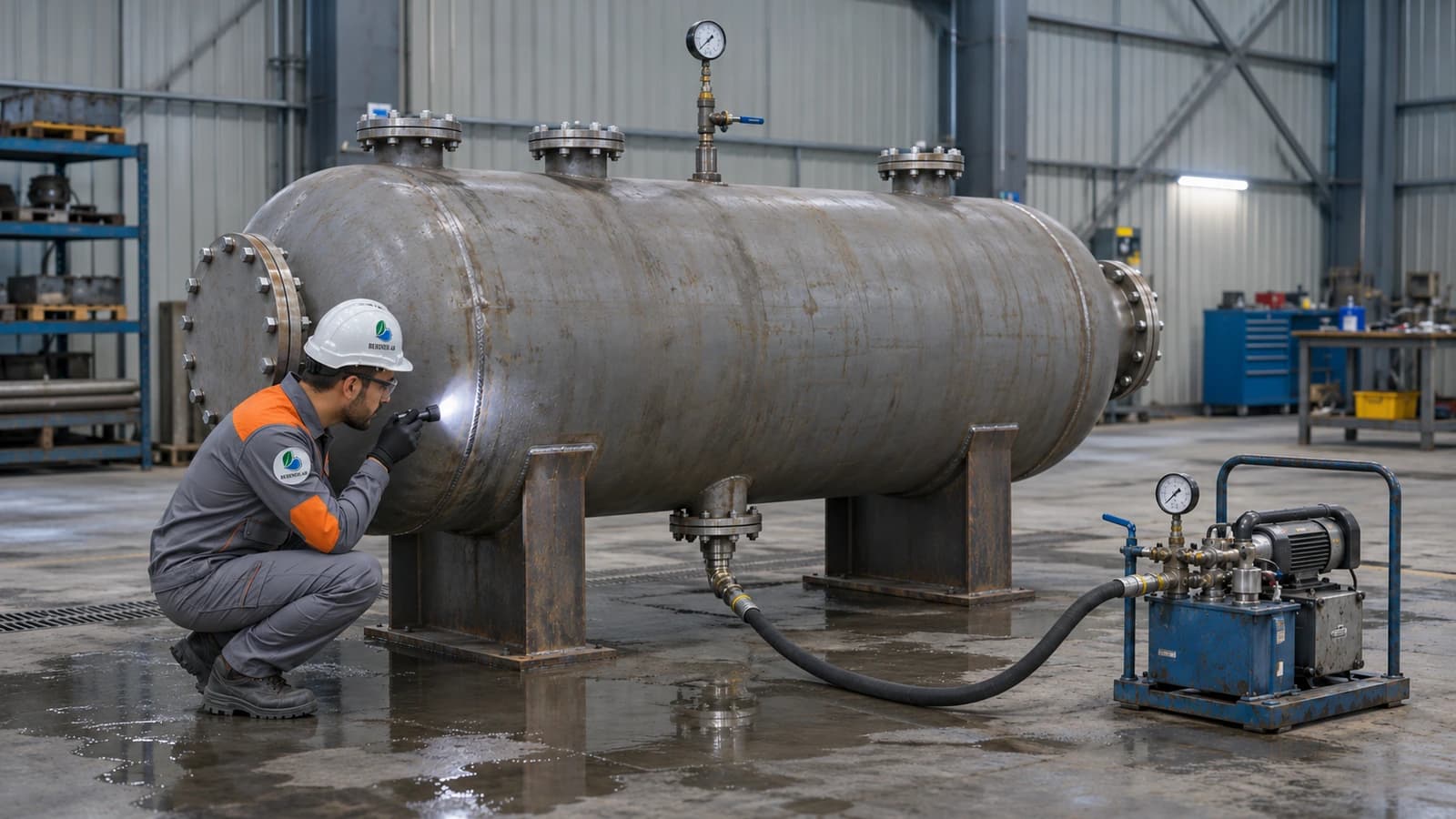
  • Pressure vessel under hydrostatic test with a pressure gauge in the Behineh Ab workshop

    Tank Hydrostatic Test, Step by Step

    The hydrotest is a tank's final exam before delivery, and we carry it out in our own factory. The test pressure, the work before filling, and the mistake that can ruin a tank while it is being drained.

    Read more
  • Radiography film of a tank shell weld on a film viewer

    Weld Radiography: What Percentage of Seams Must Be Tested?

    The radiography percentage sets the joint efficiency, and the joint efficiency sets the plate thickness. In other words, this decision directly affects the tank's weight and price.

    Read more