Designed to EN 1991-4 · EN 1993-4-1

Design and fabrication of
steel silos is our speciality!

Steel silos for storing bulk powders and granular materials: cement, lime, gypsum, wheat and grain, PVC and plastic granules, and animal feed. The design of every silo starts with the material inside it; density, friction with the wall and flow behaviour set the hopper angle and plate thickness.

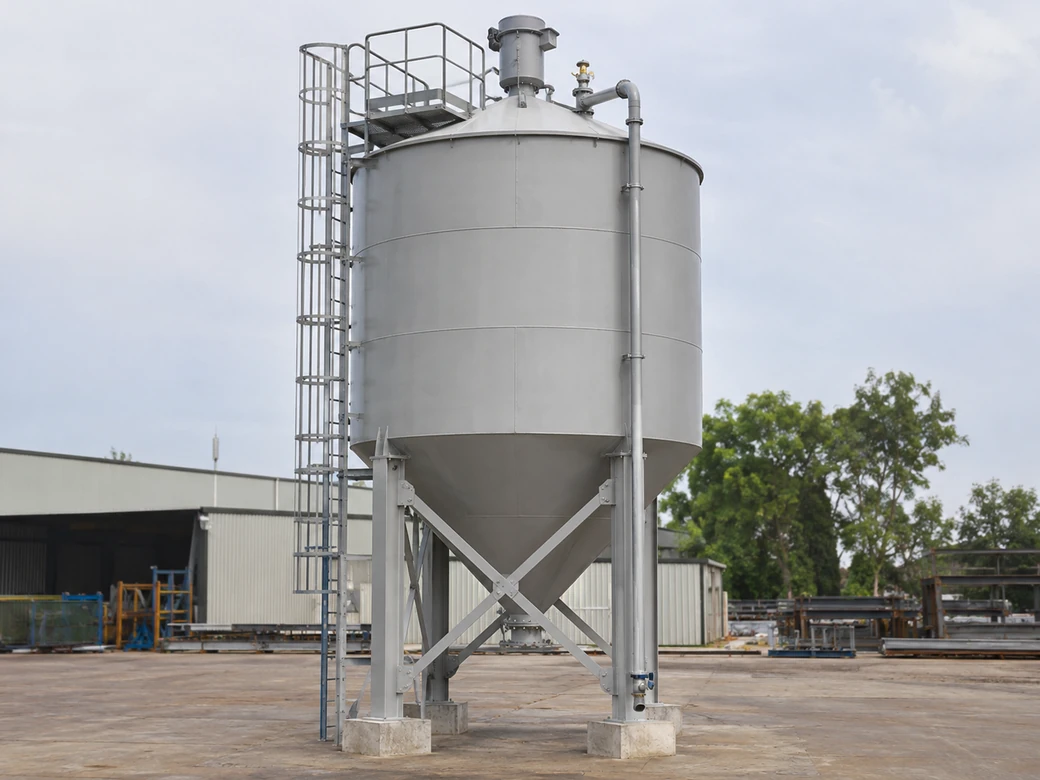
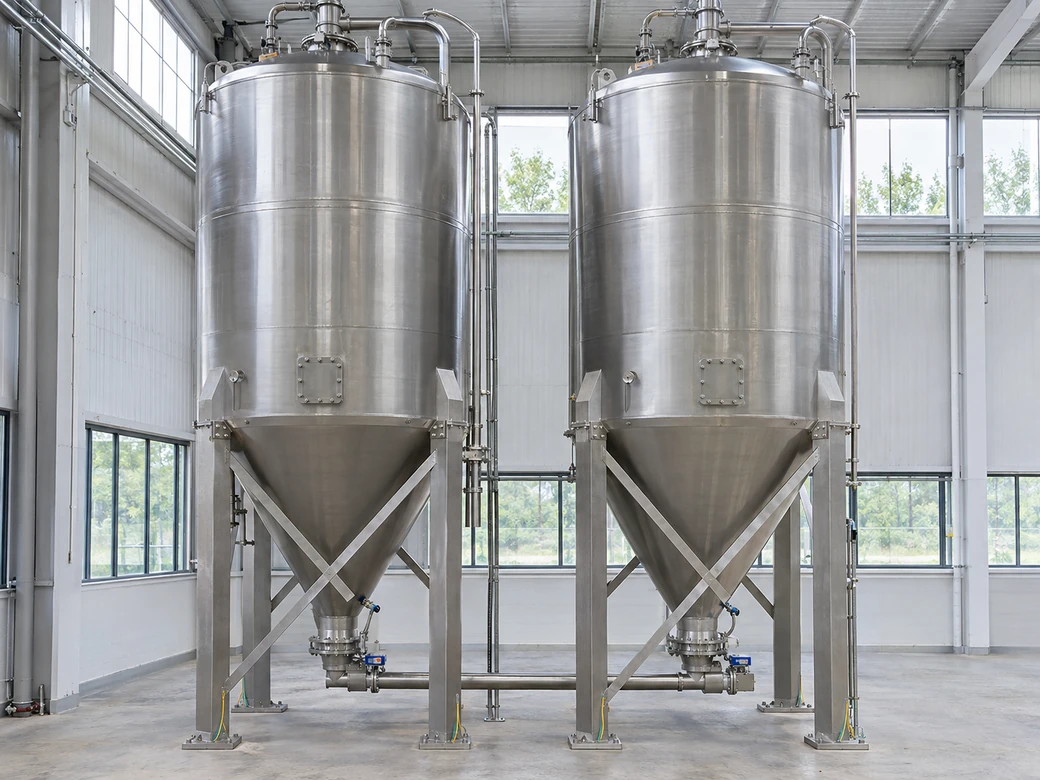
Product photo — steel silo on legs
Materials stored
Powders and granules
Cement hopper angle
About 60 degrees
Structural design
Wind and earthquake
Fabrication warranty
24 months
Hopper designed for the material
Bulk material pressure to EN 1991-4
Structural wind and earthquake analysis
Dust filter and relief valve
Suited to cement, grain and granules
Leg and foundation drawing

1. The steel silo and how it differs from a tank

Storing bulk solids

A liquid tank and a silo are both cylindrical, but their contents behave in fundamentally different ways. A liquid transmits pressure equally in all directions; bulk materials do not. Part of the material's weight is transferred to the wall through friction, and unlike water, the horizontal pressure on the wall does not rise linearly with depth but approaches a constant limit at great depth.

More importantly, the pressure during discharge is not the same as when the silo is full. When material leaves through the hopper, the local pressure rises where the hopper joins the body. Many silo failures, such as buckling and deformation of the body, start in this area, which is why silo design has its own standard.

2. Key design parameters

These figures are the starting point of the design and are replaced by actual values for each material:

Cement bulk density
1.2 to 1.5 t/m³
Wheat bulk density
0.75 to 0.8 t/m³
Cement hopper angle
About 60°
Capacity in tonnes
Volume × bulk density
Workshop note

A silo is never filled to the brim; at the top the material forms a conical heap at its natural angle of repose. The real capacity is slightly less than the geometric volume times the density.

3. Material flow and hopper angle

The most important decision in silo design is how the material will come out. There are two flow patterns:

Mass flow

All the material in the silo moves downwards at the same time, and the material that went in first comes out first. This pattern is achieved with a steep hopper and smooth wall, and suits cohesive materials such as cement and materials that should not stay long.

Funnel flow

Only a column of material in the centre moves and the material near the wall stays still. The hopper is shallower and the silo shorter, but cohesive materials may bridge or stay at the sides and go stale. It is acceptable for free-flowing materials such as plastic granules and grain.

Key design point

The hopper angle is set by the material's behaviour, not by preference. For cement, a hopper of about 60 degrees from horizontal is common. A steeper hopper flows better but makes the silo taller and more expensive.

4. Designing for each material

A silo of the same dimensions is almost twice as heavy with cement as with PVC granules. The table below shows the differences between common materials:

MaterialApprox. bulk densityMain design point
Cement1.2 to 1.5 t/m³Steep hopper, aeration pads, dust filter, relief valve
Hydrated lime0.4 to 0.6 t/m³Very cohesive; aeration and vibration
Wheat and grain0.75 to 0.8 t/m³Ventilation, moisture and temperature control
PVC granules0.55 to 0.65 t/m³Cleanliness, earthing, discharge without residue
Dry sand1.5 to 1.7 t/m³High abrasion in the hopper

5. Silo accessories

A silo's accessories are not just extras; some of them prevent serious damage to the body:

Roof dust filter

During pneumatic filling, the air carrying the cement must leave the silo without dust. The dust filter cleans this air.

Pressure and vacuum relief valve

If the filter is blocked or the filling rate is high, the pressure inside the silo rises. Rapid discharge can also create a vacuum. This valve prevents the roof from bursting or the body from crumpling.

Aeration pads and vibrator

For cohesive materials, low-pressure air from pads inside the hopper fluidises the material and prevents bridging.

Level indicator

High and low level sensors prevent overfilling during filling and unwanted running empty.

6. Support structure and foundation

A silo is a tall structure with a high centre of gravity, and its full weight is several times its empty weight. The legs and bracing are designed for the full weight, the wind load on the body and the earthquake force. The leg-to-body connection must also be such that the concentrated load does not buckle the shell.

The foundation drawing is delivered with the silo. The concrete work is usually the client's responsibility, and once the foundation is ready the silo is installed on it by crane.

Features of our silos

From choosing the hopper angle to the roof relief valve — what keeps a silo trouble-free

Hopper designed for the material's flow behaviour
Calculation of bulk material pressure on the wall
Wind and earthquake analysis for a tall structure
Dust filter and pressure/vacuum relief valve
Aeration pads for cohesive materials
Level indicator and inspection hatch
Carbon steel, galvanized or stainless body
Leg and foundation drawing supplied with the silo
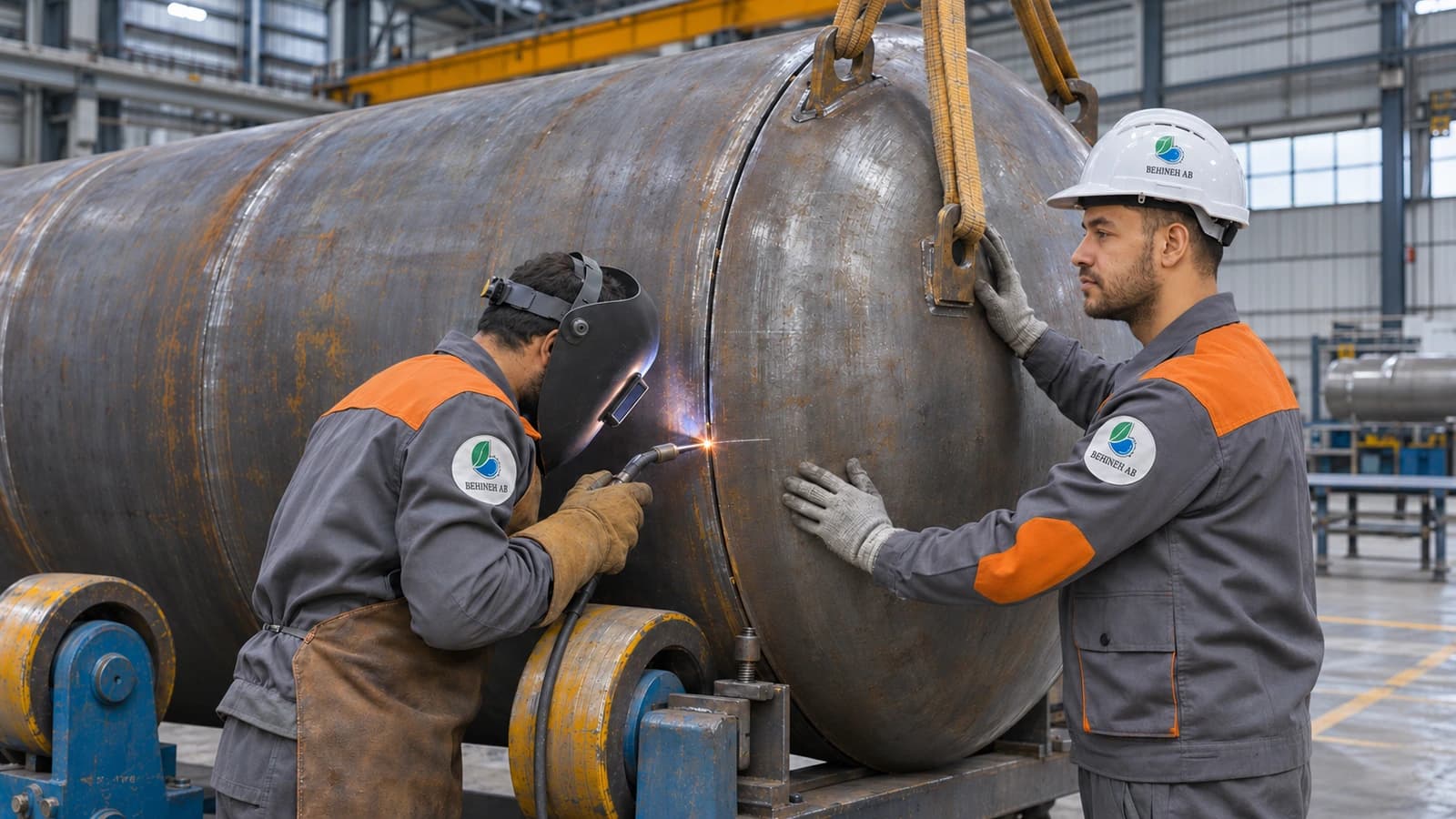
Workshop photo — building the silo body

What is a steel silo?

A silo is a vertical cylindrical vessel for bulk solids that is filled from the top and emptied through a hopper at the bottom. It looks simple, but solids behave differently from liquids: cement may stick to the wall and bridge, wheat is sensitive to moisture, and plastic granules pick up static electricity. That is why silo design starts with the question "what goes inside?"

The pressure of bulk material on the wall is not like water pressure either. Part of the material's weight is transferred to the wall by friction, and during discharge the pressure rises where the hopper meets the body. Silo-specific standards such as EN 1991-4 build this behaviour into the calculation of plate thickness and the support structure. For capacity in tonnes, we have written up the silo capacity calculation with a numerical example, and the online silo calculator shows the dimensions, plate thickness and weight. The price of tank and silo fabrication is also calculated from this weight.

Designed for the material
Hopper angle and thickness from the material's flow behaviour
Safe filling
Dust filter and relief valve for pneumatic filling
Calculated structure
Legs, bracing and foundation for wind and earthquake

Types of steel silo

Choosing the silo type by material, capacity, installation space and transportability

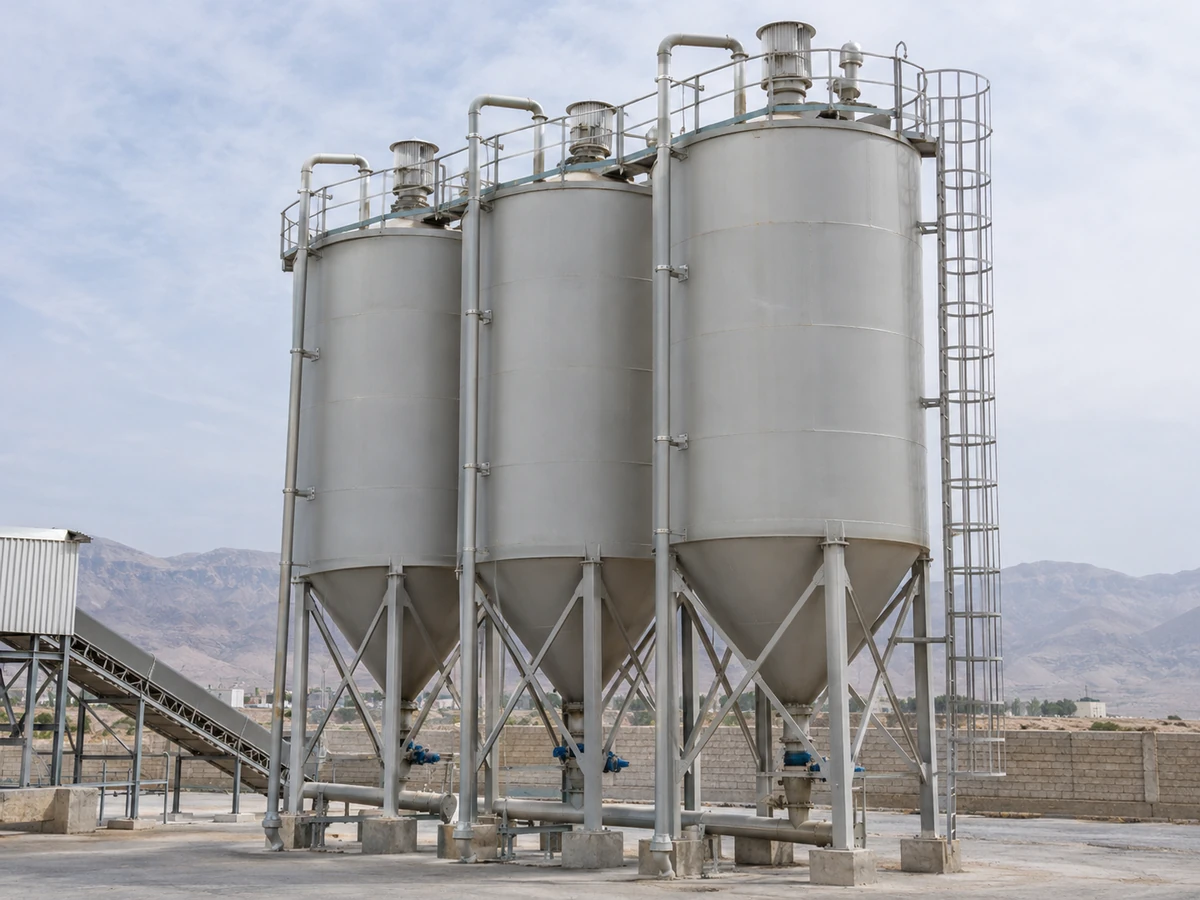
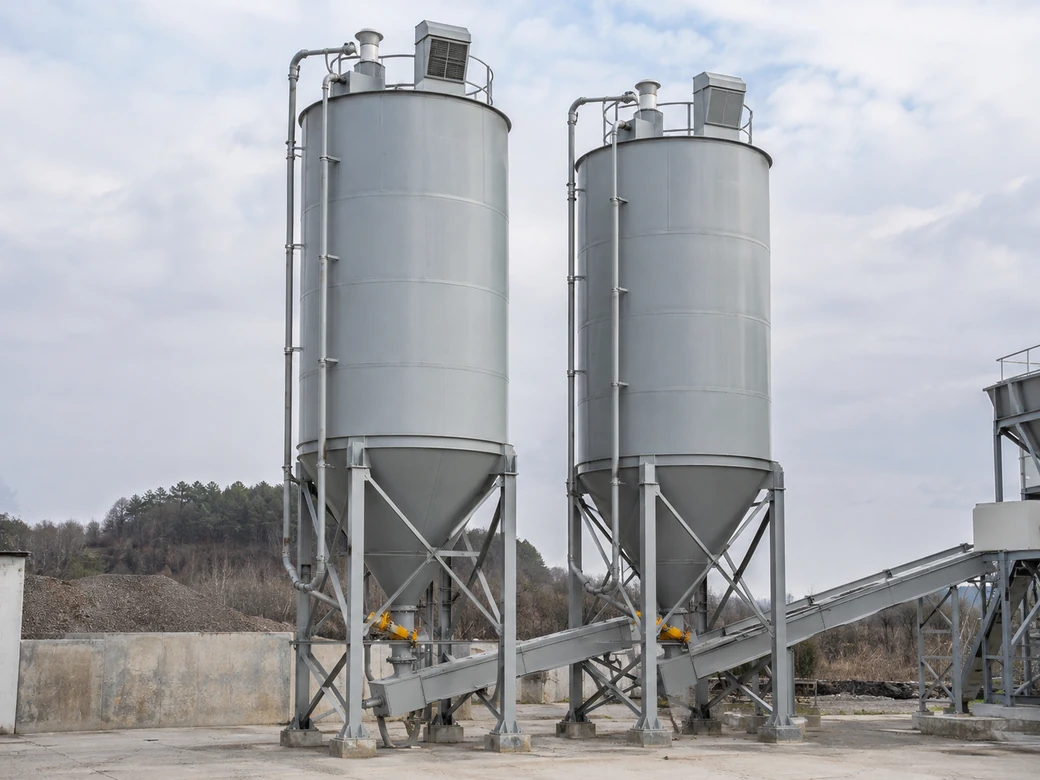
Cement silo on legs with a conical hopper

Cement and powder silo

A welded silo on four or six legs with a steep hopper. It is filled with compressed air from a cement tanker and has a dust filter and relief valve on the roof. The most common silo at concrete plants and building materials factories.

CapacityTo order
Main useCement, lime, gypsum
Hopper angleAbout 60 degrees
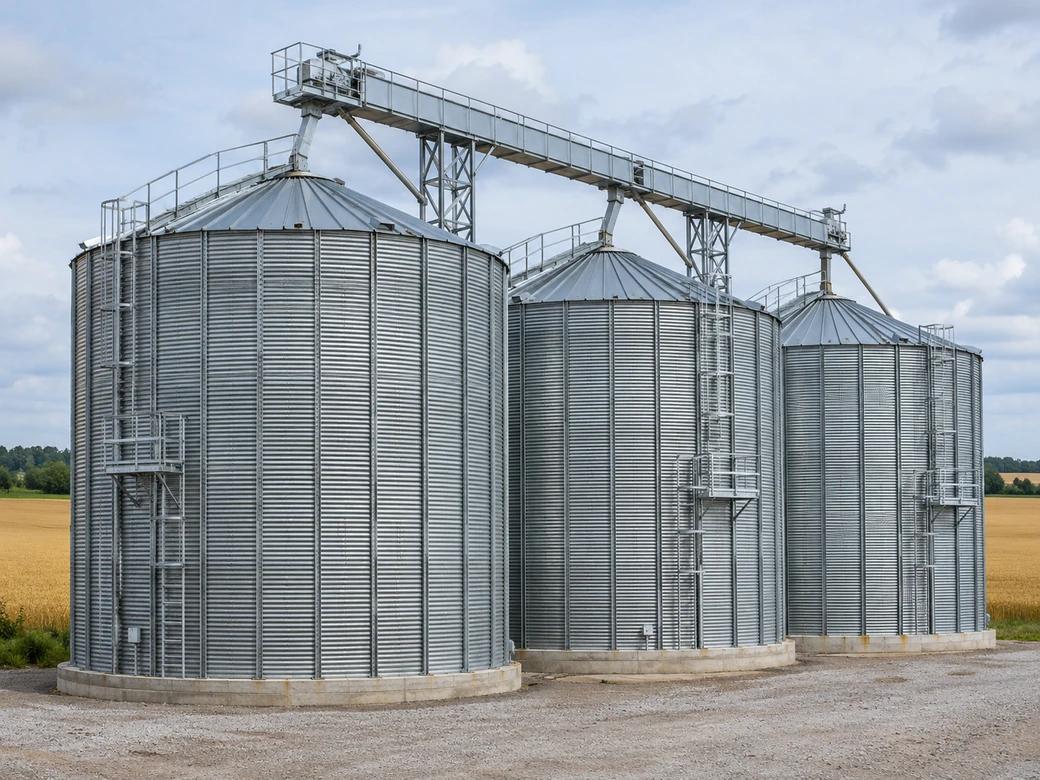
Grain silo with ventilation

Wheat, grain and animal feed silo

Grains flow more freely and move with a shallower hopper, but they are sensitive to moisture and temperature. These silos have ventilation, a sealed roof and an inspection hatch to control grain quality.

CapacityTo order
Main useWheat, maize, barley, animal feed
Design noteVentilation and moisture control
Plastic granule silo

PVC and plastic granule silo

Granules are light and free-flowing, but they must stay clean and uncontaminated. A stainless body or a suitable internal coating, earthing the body against static electricity and discharge without residue are the main points of these silos.

CapacityTo order
Main usePVC, polyethylene, polypropylene
Common materialStainless or coated steel

Technical specifications and design range

Each silo is designed for a specific material and capacity; these are the main design parameters

Cement bulk density
1.2 to 1.5 t/m³
The heaviest common material; the structure is designed for it
Wheat bulk density
About 0.75 to 0.8 t/m³
Depends on moisture and grain size
PVC granule density
About 0.55 to 0.65 t/m³
Light and free-flowing; sensitive to static electricity
Hopper angle
45 to 65 degrees from horizontal
Steeper for cohesive materials such as cement
Body material
Carbon steel · galvanized · stainless
Based on the material and hygiene requirements
Accessories
Dust filter · relief valve · level indicator
Plus ladder, hatch and aeration pads

Fabrication steps to installation

From choosing the material to installation on the foundation — with quality control at every stage

1
Material, capacity and design
Setting the material and density, capacity in tonnes, hopper angle, calculating plate thickness, legs, wind and earthquake, and the foundation drawing.
2
Building the body and hopper
Cutting and rolling the body plates, building the conical hopper, welding the courses and fitting the hatches and nozzles.
3
Support structure and accessories
Building the legs and bracing, ladder and guardrail, and fitting the dust filter, relief valve and level indicator.
4
Painting, transport and installation
Surface preparation and painting, transport, installation on the foundation by crane and commissioning.

Design and quality control

The material pressure on the wall is calculated to EN 1991-4 and the shell is designed to EN 1993-4-1. Wind and earthquake loads on the tall silo structure are applied according to the relevant codes. No silo leaves the workshop without weld and dimensional checks.

Calculation of bulk material pressure on the wall (EN 1991-4)
Design of the shell and hopper (EN 1993-4-1)
Wind and earthquake analysis of the support structure
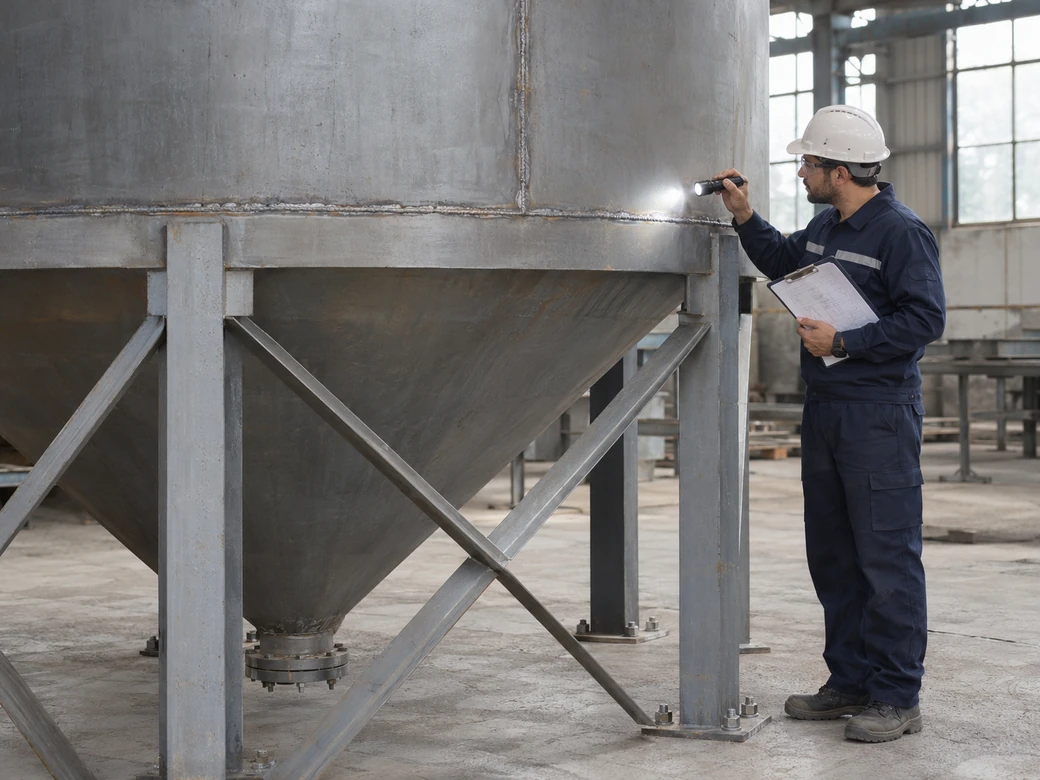
Weld, dimension and plumb checks before delivery
Workshop photo — assembling the silo hopper

Applications of steel silos

In these industries, steel silos store and distribute bulk materials

Concrete and building materials
Cement, lime, gypsum and microsilica
Agriculture and flour
Wheat, maize, barley and animal feed
Plastics and polymers
PVC, polyethylene and polypropylene granules
Chemical industry
Industrial powders and bulk raw materials

Speak directly with technical specialists

Tell us the material, capacity in tonnes and installation site to receive the proposed dimensions, hopper angle and silo price.

Frequently asked questions

The most common questions about steel silo design and fabrication

Price inquiry
steel silo

Enter your project details; our specialists will send a technical proposal and price within 24 business hours.

  • Written technical response with a proposed concept drawing
  • Site visit in Tehran and suburbs
  • 24-month fabrication & weld warranty
Direct line to engineering office
+98 21 4686 6276

Your information is confidential and used only to prepare a technical proposal.

All articles
  • Assembling the shell and head of a steel tank in the Behineh Ab tank fabrication workshop

    Steel Tank Manufacturing Steps, from Order to Delivery

    The steps of building a steel tank, from the data sheet to testing and dispatch. A 20,000-litre tank takes about three weeks; here is what that time is spent on.

    Read more
  • Inspector carrying out a non-destructive test on a steel tank shell weld

    Tank Tests: What Defect Does Each Test Find?

    Hydrotest, radiography, ultrasonic, liquid penetrant, magnetic particle and vacuum box. Each finds a particular defect and none can replace another. Here we compare them.

    Read more
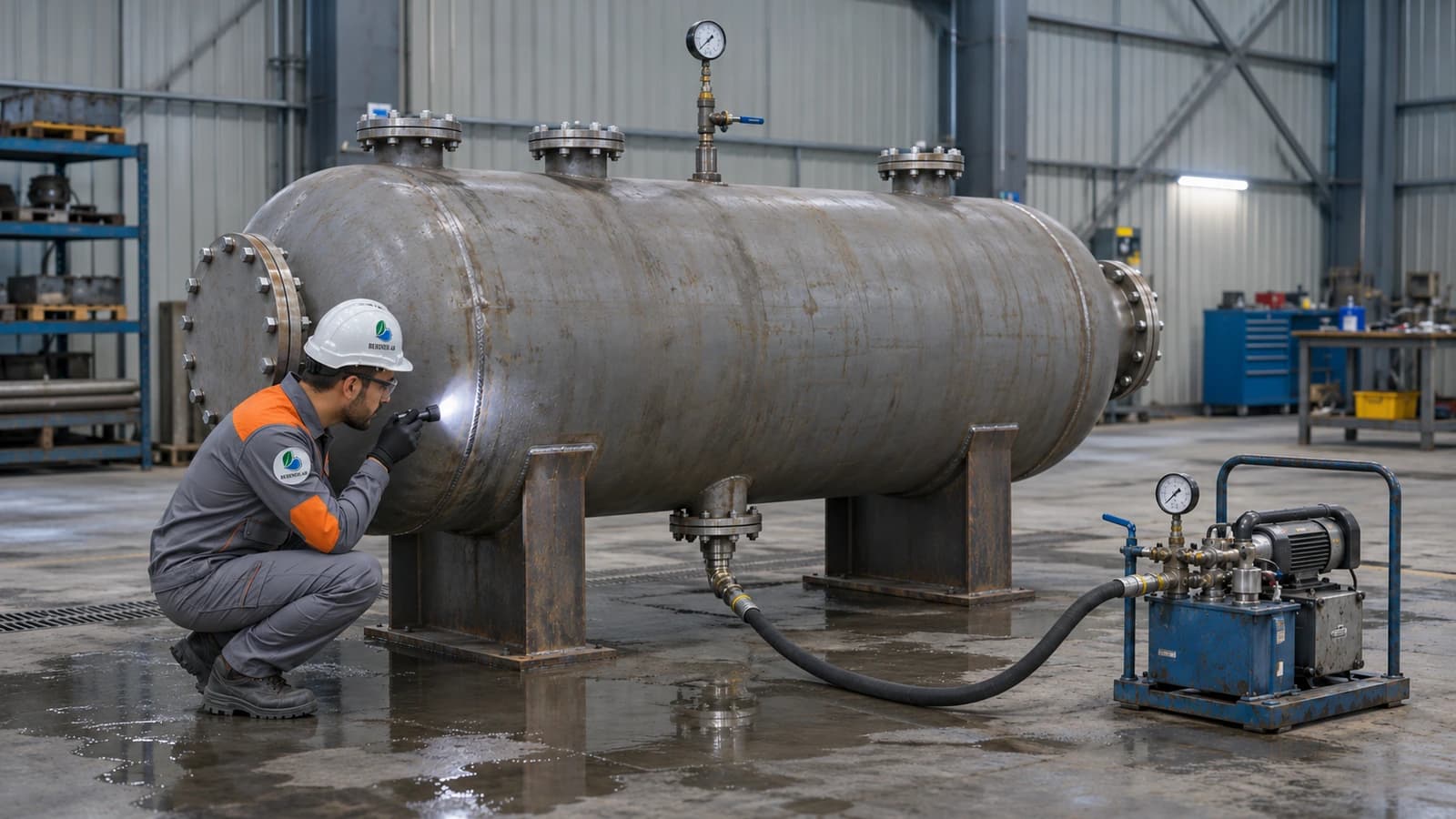
  • Pressure vessel under hydrostatic test with a pressure gauge in the Behineh Ab workshop

    Tank Hydrostatic Test, Step by Step

    The hydrotest is a tank's final exam before delivery, and we carry it out in our own factory. The test pressure, the work before filling, and the mistake that can ruin a tank while it is being drained.

    Read more
  • Radiography film of a tank shell weld on a film viewer

    Weld Radiography: What Percentage of Seams Must Be Tested?

    The radiography percentage sets the joint efficiency, and the joint efficiency sets the plate thickness. In other words, this decision directly affects the tank's weight and price.

    Read more