Hydrotest, radiography, ultrasonic, liquid penetrant, magnetic particle and vacuum box. Each finds a particular defect and none can replace another. Here we compare them.
Why isn't one test enough?
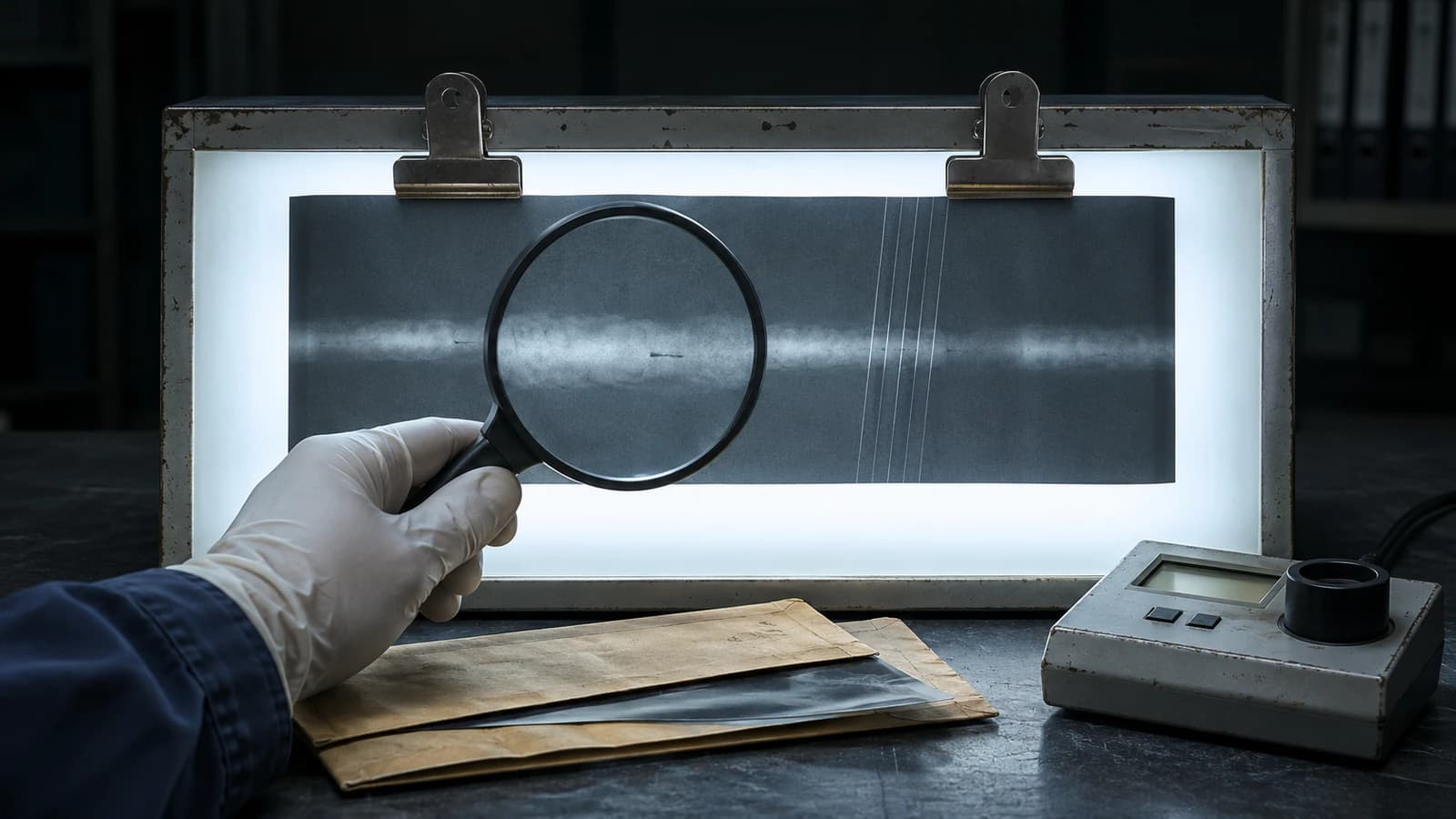
Each test method "sees" defects differently. Radiography shows porosity inside a weld well but may miss a crack that is not parallel to the beam. Liquid penetrant only finds a crack that has reached the surface. That is why design codes require a specific combination of tests for each type of weld and each plate material.
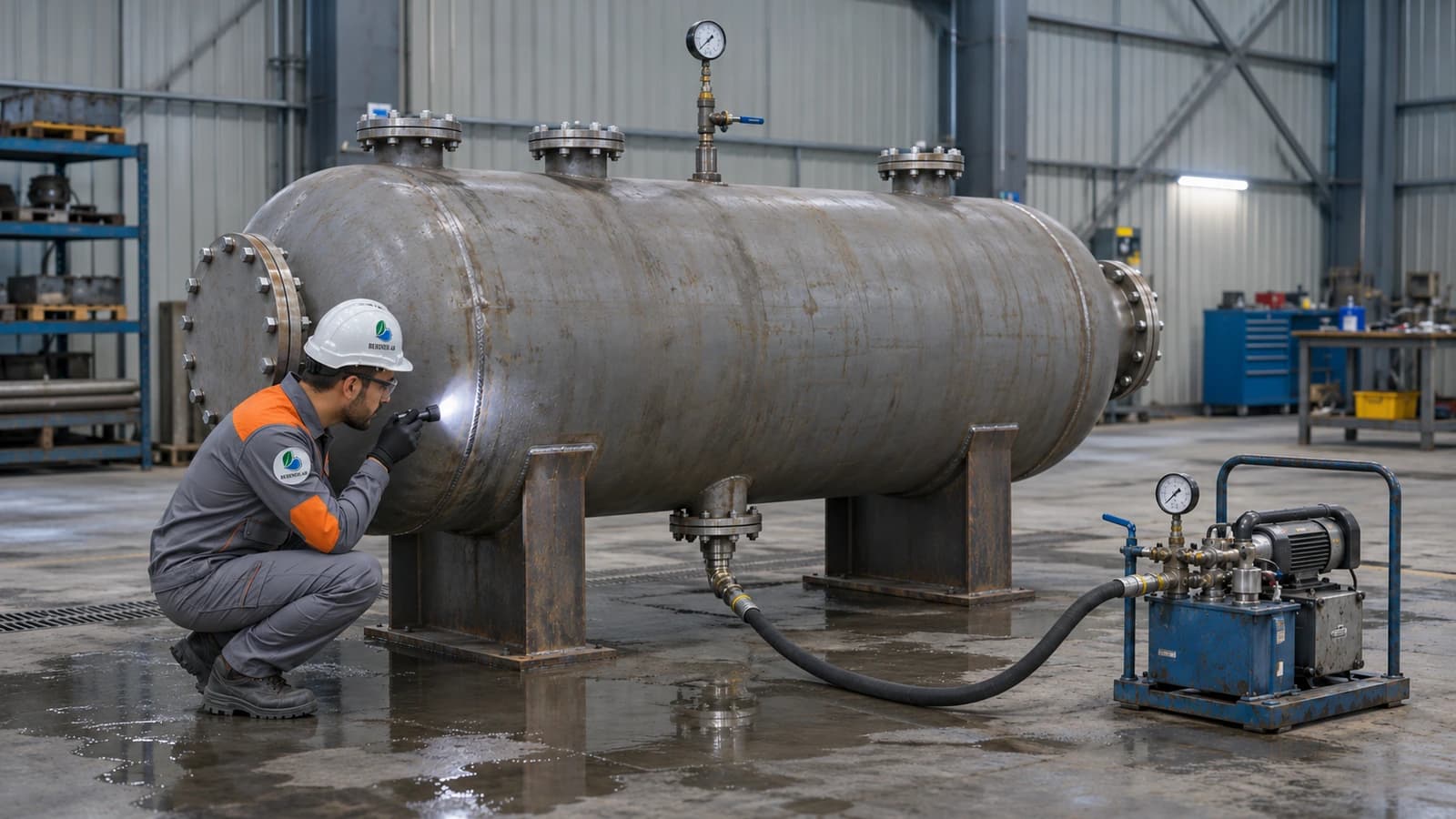
Tests fall into two groups. Non-destructive tests (NDT) examine the weld and plate without damaging them. Pressure tests, i.e. the hydrostatic test and the pneumatic test, put the whole tank under load to make sure it is strong and does not leak.
Comparison of tank tests
| Test | Defects it finds | Main limitation |
|---|---|---|
| Hydrostatic | Leaks and lack of strength in the whole tank | The weight of water; a problem for light structures |
| Pneumatic / air leak test | Leaks, when water is not allowed | High stored energy and risk of explosion |
| Radiography (RT) | Porosity, slag and lack of fusion inside the weld | Dangerous radiation; sometimes misses planar cracks |
| Ultrasonic (UT) | Cracks and lack of fusion inside the weld, plate thickness | Depends on the operator's skill |
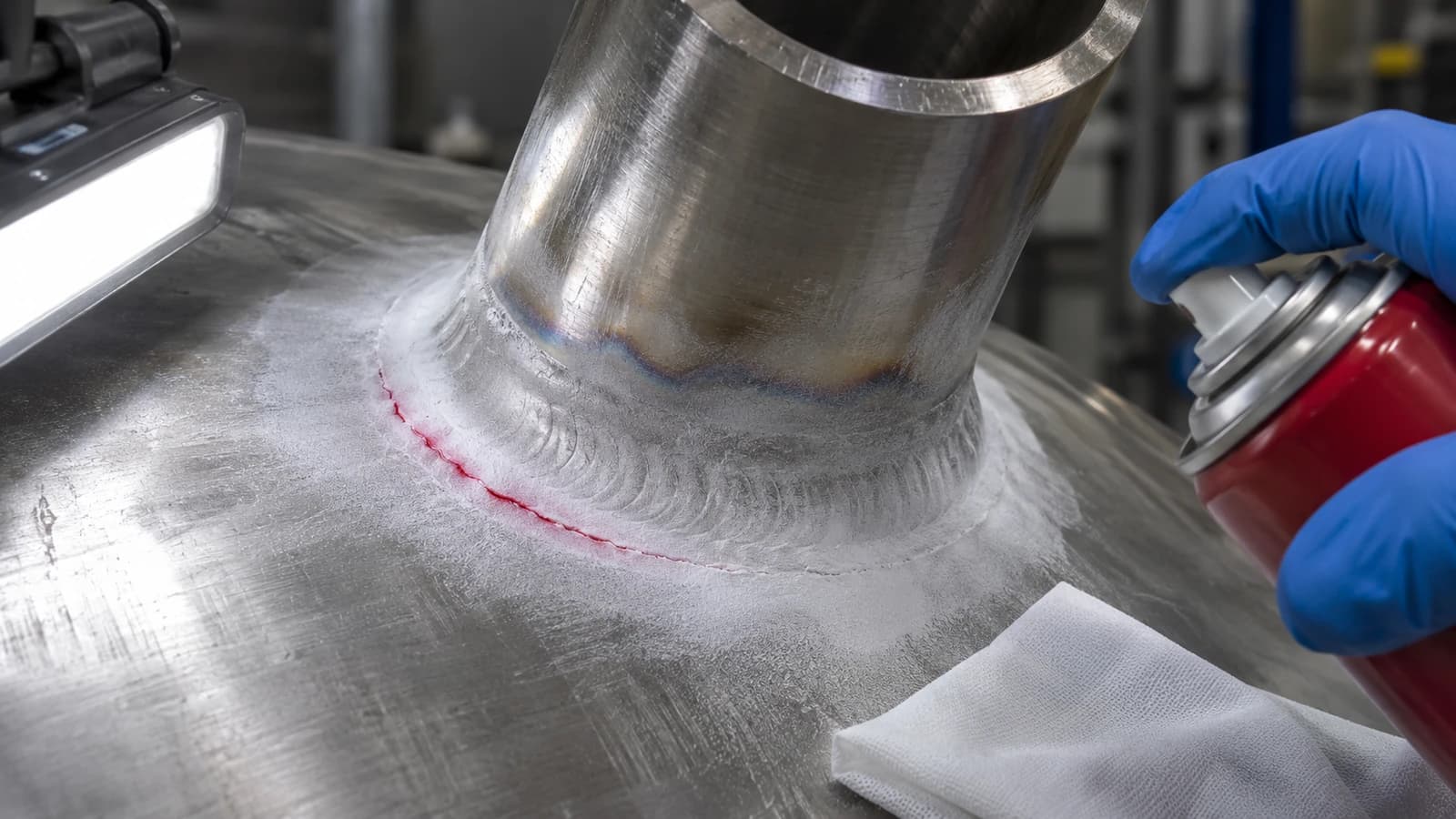
| Liquid penetrant (PT) | Cracks and pores open to the surface | Surface defects only |
| Magnetic particle (MT) | Surface cracks and slightly below the surface | Magnetic steel only; does not work on 304 and 316 stainless |
| Vacuum box | Leaks in the welds of bottom and roof plates | Only for welds accessible from one side |
Which test for which part of the tank?
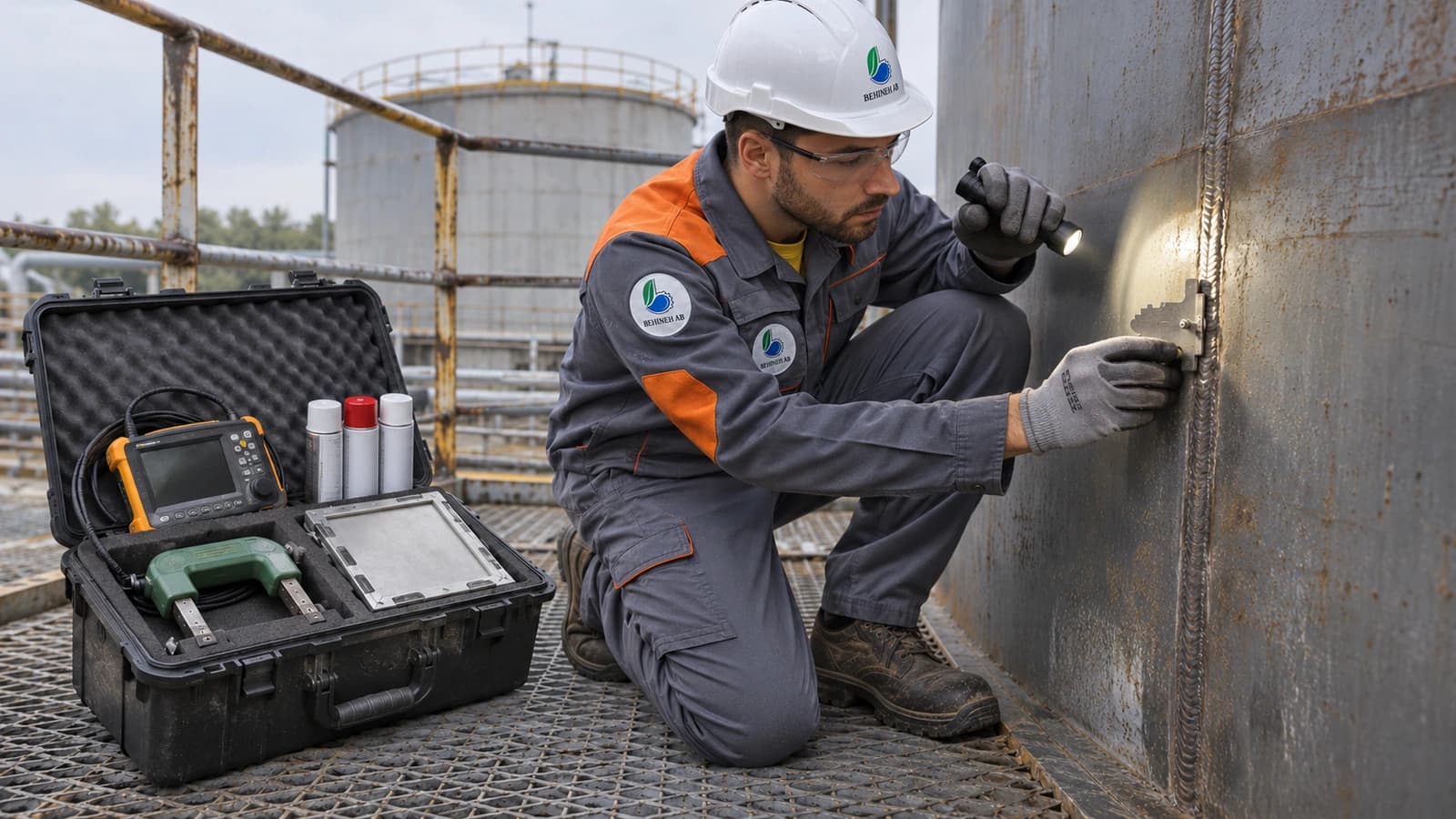
The main shell seams are usually examined by radiography or ultrasonic testing. The percentage of coverage is set by the code and the chosen joint efficiency. Nozzle welds and reinforcing pads have a complex shape and are not suitable for radiography; there, liquid penetrant or magnetic particle testing is used.
The bottom of a large storage tank sits on the foundation and cannot be reached from below. The bottom plate welds are tested with a vacuum box. Reinforcing pads around nozzles are usually checked with an air leak test through a tell-tale hole. Finally, the whole tank is hydrotested.
Who does the testing at Behineh Ab?
We carry out the hydrostatic test in our own factory with our own equipment. The other tests are done by a third-party inspection company, and its reports are handed to the client with the tank's documents. An independent report is more reliable for the client's inspector, and it also protects the manufacturer from later objections.
No test replaces another. NDT shows the quality of the weld, and the pressure test shows the behaviour of the whole tank. Both are needed.