Design and fabrication of
stainless steel reactors
Design, fabrication, process calculations and inspection of pressurised reactor vessels · process and equipment engineering unit
A stainless steel reactor is a pressure vessel in which a chemical, physical or biological reaction is carried out with control of temperature, pressure, mixing and residence time; it is designed to ASME Section VIII.
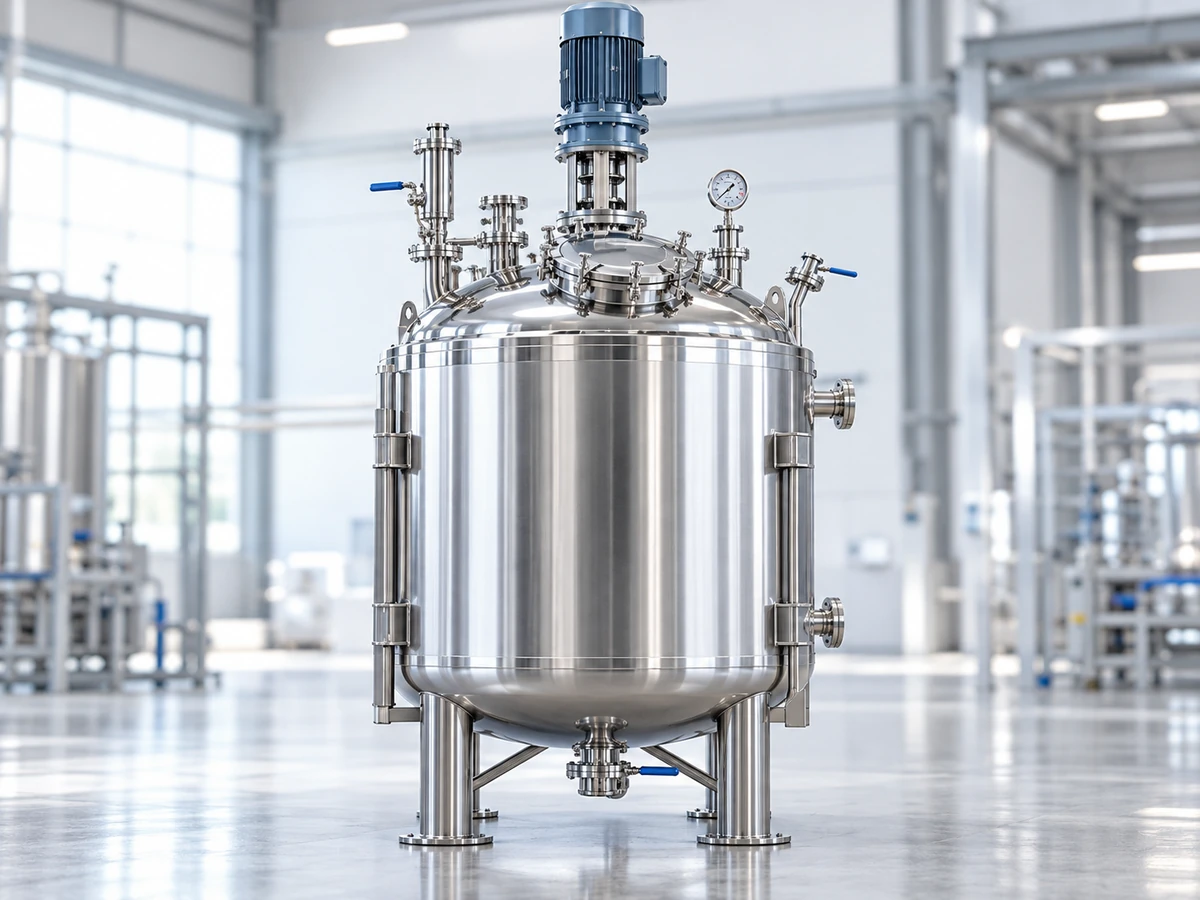
Stainless steel reactor
Behineh Ab Engineering — process and equipment engineering unit · design, fabrication and inspection of pressurised reactor vessels
A reactor is an engineered vessel in which a chemical, physical or biological reaction takes place under controlled temperature, pressure, mixing and residence time. Correct design determines reaction efficiency, product quality, safety and process economics.
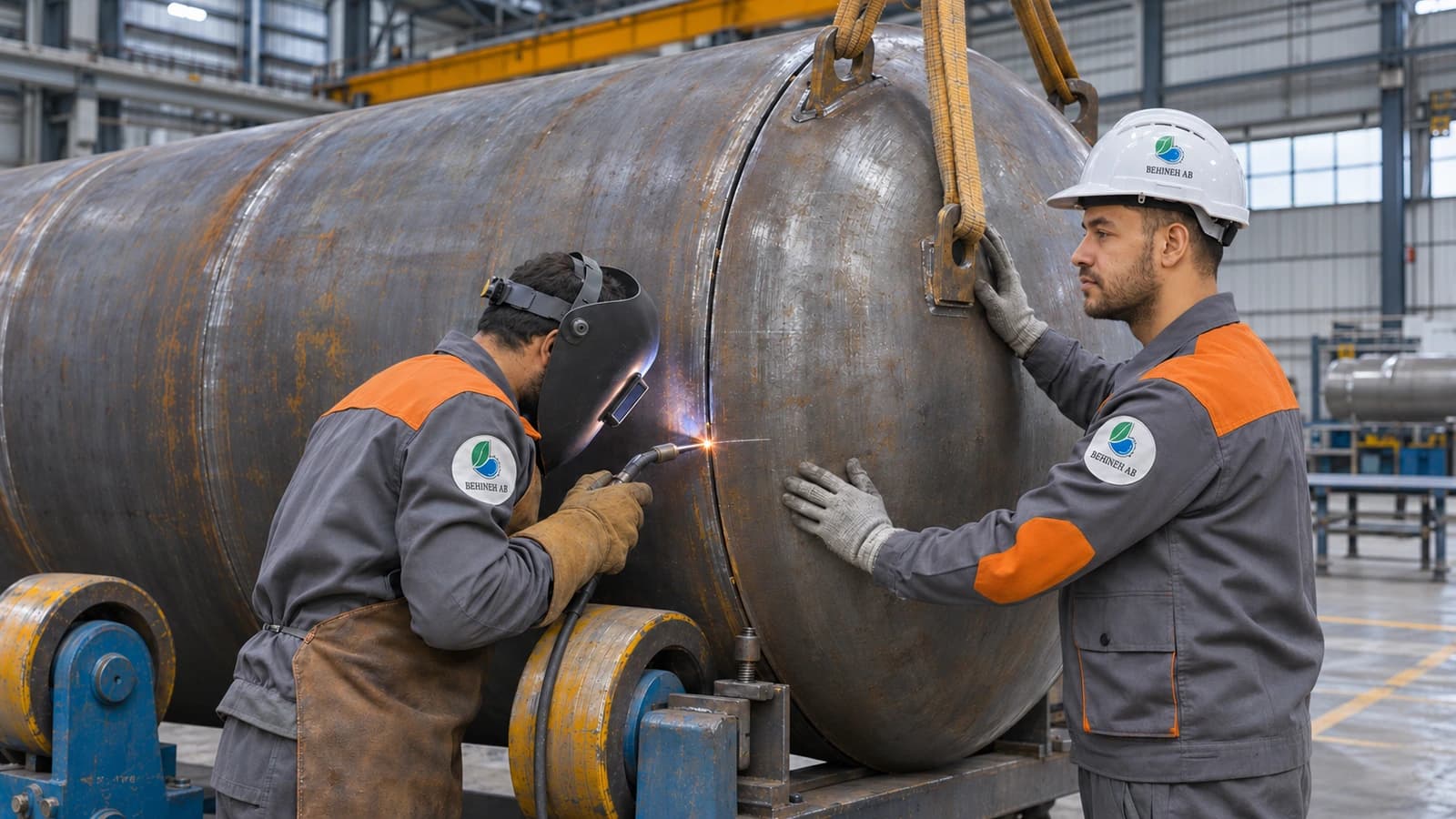
At Behineh Ab, stainless steel reactors are designed and built as pressure vessels to ASME Section VIII, because they must withstand internal pressure (jacket steam, process vapours or gas injection) together with thermal and mechanical stresses.
2. Definition and role of a stainless reactor
Reaction volume and residence time; uniform mixing of phases; heat exchange through a jacket/coil; withstanding pressure and temperature to code; charging, sampling, discharging and CIP.
Batch, semi-batch and continuous (CSTR and PFR). Jacketed agitated stainless reactors are used mostly in batch and CSTR service.
3. Main components of a reactor
Heads are usually 2:1 ellipsoidal or torispherical; a conical bottom for discharging solids. Plain jacket: easy to build, more limited U and pressure. Half-pipe coil: higher velocity and pressure. Dimple jacket: light and economical with more turbulence.
| Blade type | Flow pattern | Main use |
|---|---|---|
| Rushton | Radial | Gas dispersion and intense mixing |
| Pitched blade | Axial | Solids suspension and heat transfer |
| Hydrofoil | Low-shear axial | Gentle mixing |
| Anchor | Tangential near the wall | Viscous fluids |
| Helical ribbon | Axial-rotational | Very viscous fluids |
Usually four baffles of width T/10 to T/12 to break the vortex. Sealed manway and sight glass. Nozzles, mechanical seal, internal coil, legs/lugs/skirt and a CIP spray ball.
4. Mechanical design to ASME VIII
Div. 1 (design by rule) is the most common for industrial reactors. Div. 2 (design by analysis) for higher pressure. Div. 3 for very high pressure. Basis: design pressure/temperature, CA, joint efficiency E, allowable stress from Section II Part D.
In the jacketed zone the shell carries internal and external pressure at once; buckling is checked to UG-28 with stiffening rings where needed. The jacket is itself an independent pressure vessel. Openings use area replacement and reinforcement pads; wind, earthquake and agitator torque must be included in the supports.
4 and 6–7. Key design relations
ASME thickness, agitator power and heat-transfer rate are the three main axes of reactor calculations:
Re = ρ·N·D²/μ: below 10 laminar, 10–10,000 transitional, above 10,000 turbulent. 1/U = 1/hᵢ + x/k + 1/hₒ + R_f. Nu = C·Reᵃ·Prᵇ·(μ/μw)ᶜ for the process side. CA usually 1–3 mm; E between 0.7 and 1.0.
5. Material selection with a focus on 316L
Mo of about 2–3% gives pitting/crevice resistance in chlorides. C ≤ 0.03% prevents sensitization in welds. Stable against many acids, alkalis, coagulants and disinfectants used in water treatment.
| Material | Key property | Typical use |
|---|---|---|
| Carbon steel | Cheap, corrodes | Non-corrosive service, jacket shell |
| 304 / 304L | Good general corrosion resistance | Water and mildly corrosive materials |
| 316 / 316L | Chloride and pitting resistance | Wastewater, chemical, process |
| Duplex 2205 | Strength + corrosion resistance | Saline, high-stress environments |
| Hastelloy / Inconel | Severe environments | Strong acids and high temperature |
6. Mixing calculations
Re sets the flow regime. Np is roughly constant in baffled turbulent flow and is the basis for choosing the motor/gearbox. Blend time and Njs (Zwietering) for homogeneity and suspension. Geometry: D_impeller/T ≈ 0.3–0.5; liquid height ≈ tank diameter; impeller clearance from the bottom ≈ T/3; four standard baffles.
7. Heat-transfer calculations
U comes from the resistances of the process film, wall, fouling and jacket film. Raising agitator speed improves hᵢ and U. Heat-transfer fluid: steam for fast heating, water/glycol for cooling. Exothermic reactions must be designed for the worst-case heat release; an internal coil adds area in large vessels; monitor fouling.
8. Applications
Base and intermediate chemicals, polymers, paint and resin, pharmaceuticals, food and cosmetics — with temperature control, uniform mixing and chemically resistant surfaces.
Coagulation/flocculation with alum, PAC or ferric chloride. Disinfection with chlorine/hypochlorite/ozone with residence time. pH adjustment and chemical precipitation. Anaerobic and biological reactors for organic load and nutrients.
9. Testing and inspection
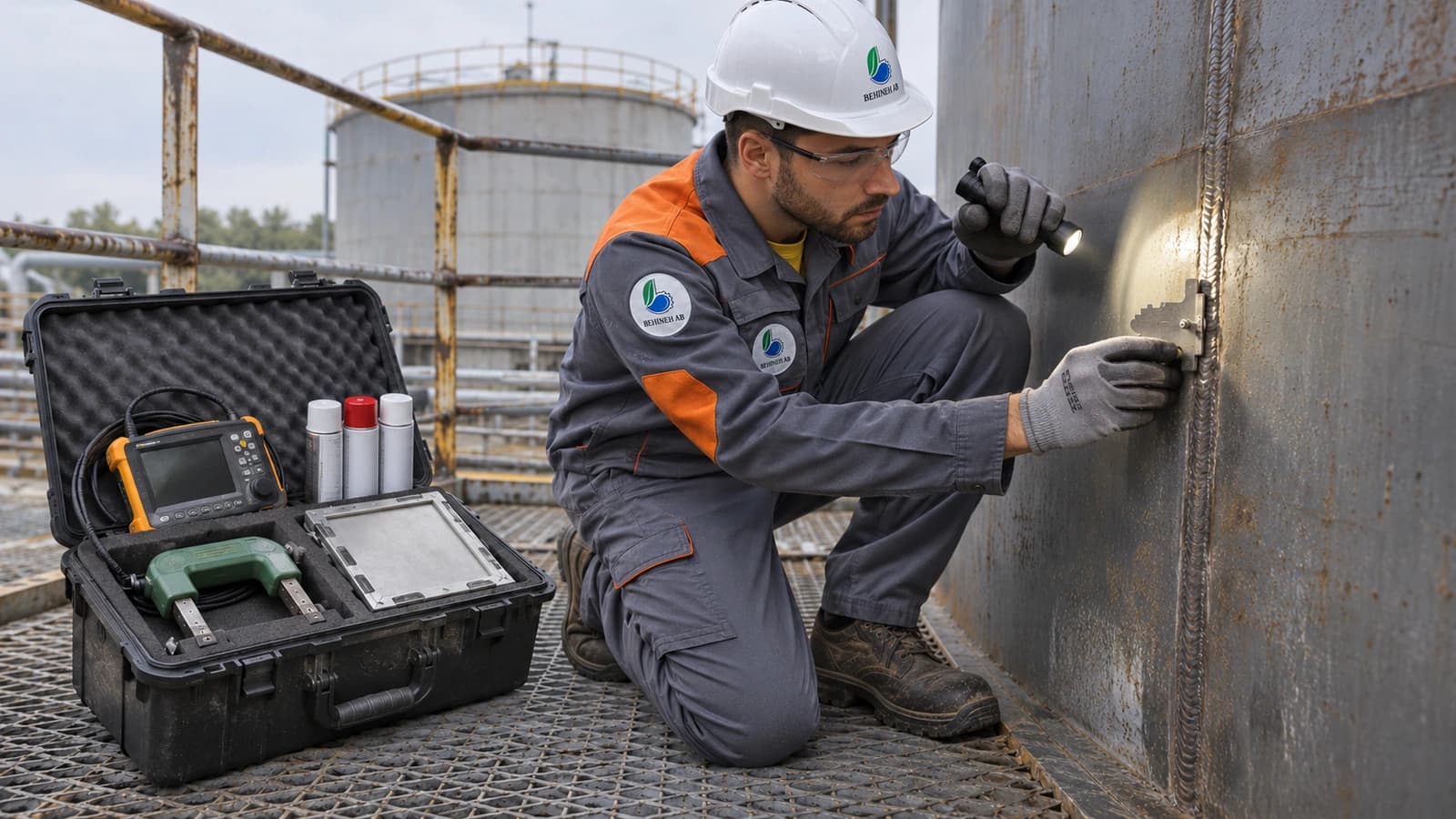
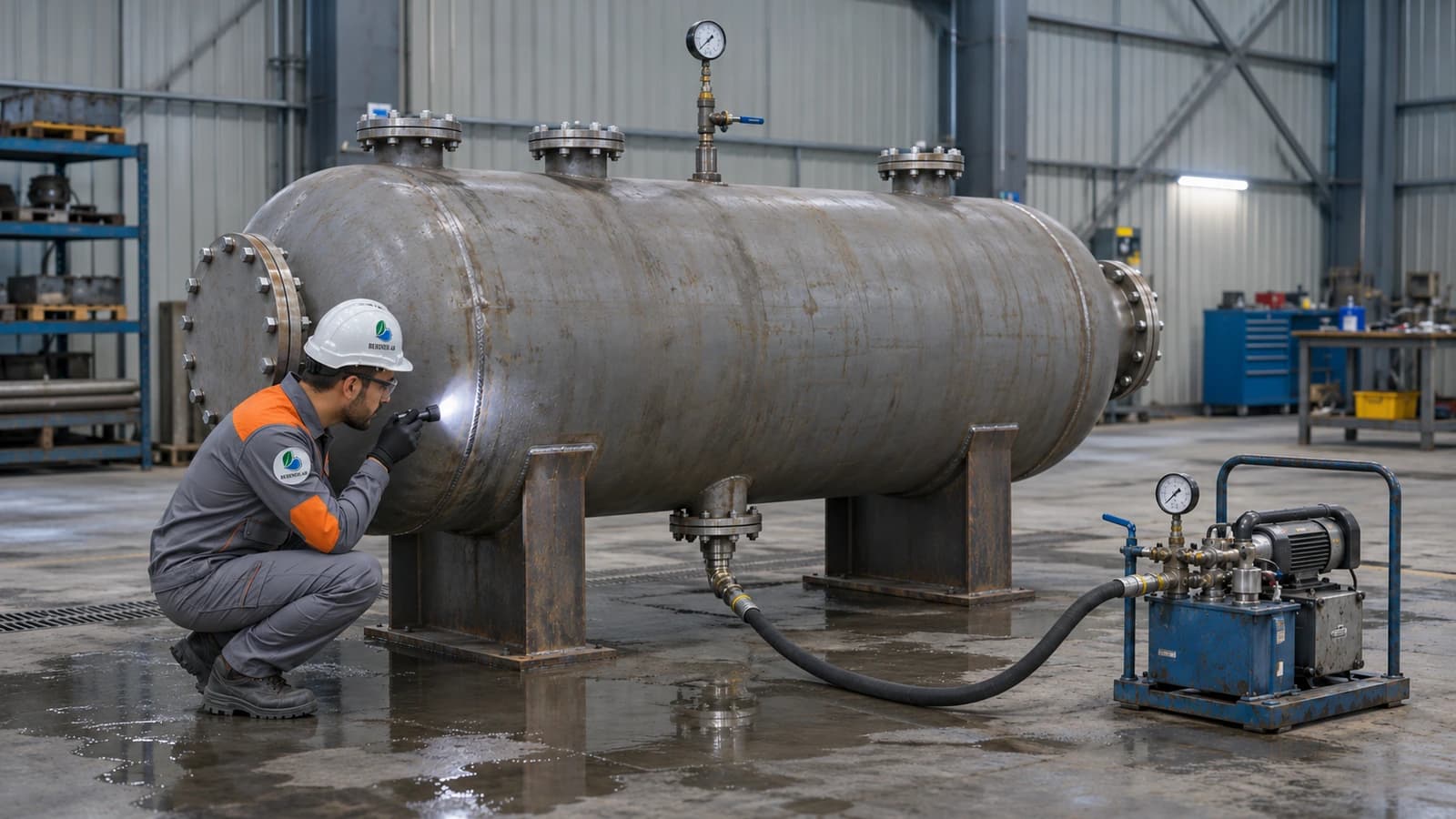
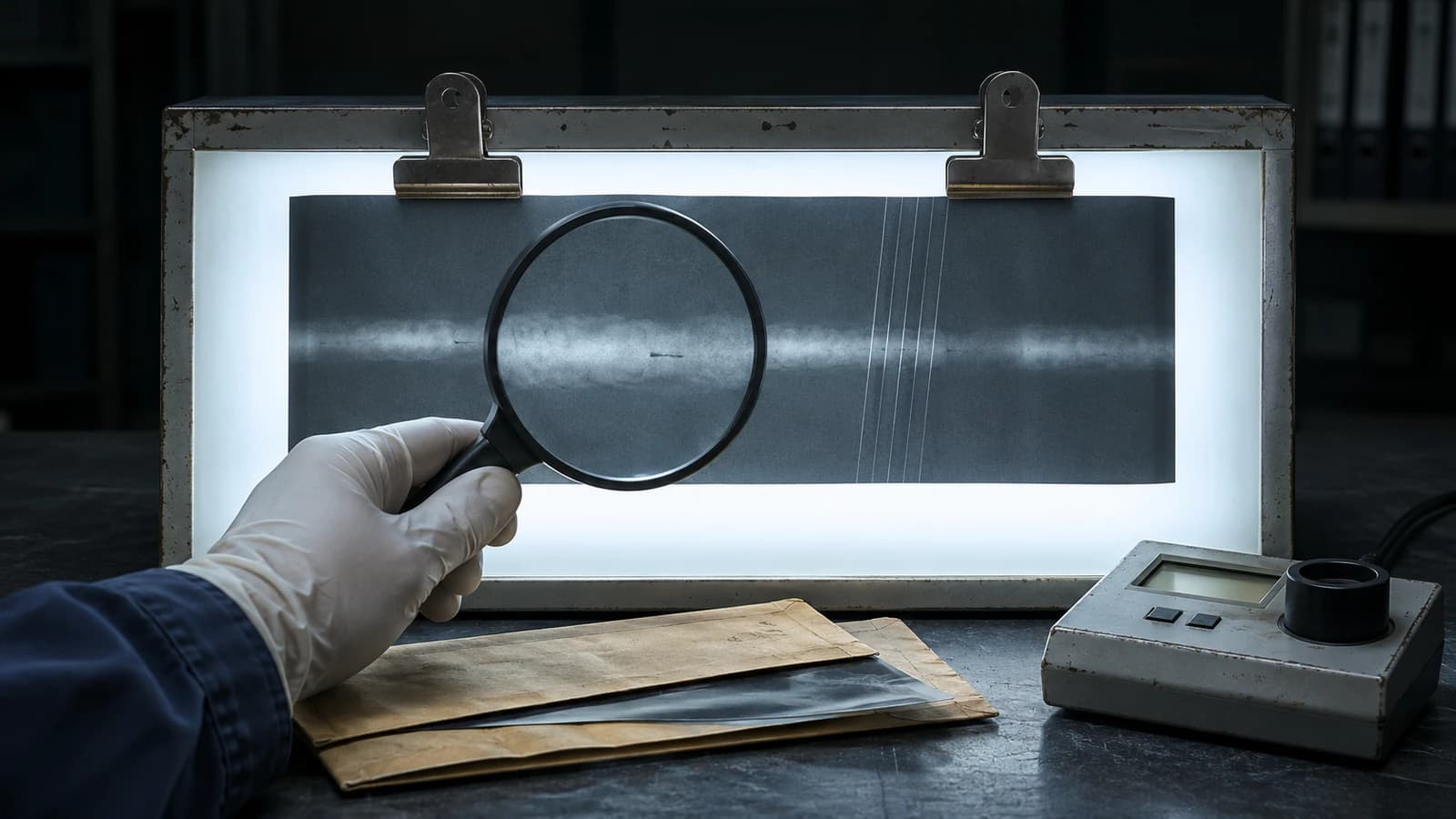
MTCs and PMI. NDT: VT, PT, MT, RT, UT/PAUT. Hydrotest usually at 1.3× corrected design pressure; jacket and process side separately. Surface roughness, passivation, leak test, calibration of instruments and agitator. Data report and nameplate with design pressure/temperature.
| Method | Use |
|---|---|
| VT | Weld and surface appearance |
| PT | Open surface defects |
| MT | Surface defects in ferromagnetic materials |
| RT | Internal weld defects |
| UT / PAUT | Internal defects and thickness measurement |
10. Summary
A stainless steel reactor is where mechanics, process and metallurgy meet: safe ASME VIII design, mixing and heat calculations, and material selection (especially 316L) are the three keys to success.
In water and wastewater treatment it plays a key role in coagulation, disinfection, pH adjustment and biological treatment. Behineh Ab Engineering designs and builds stainless steel reactors to suit each process.
Technical specifications
How a reactor differs from a simple agitated tank
Besides mixing, a reactor is designed to withstand reaction pressure and temperature, with a controlled heating/cooling jacket and residence time, and is usually built and tested under ASME VIII as a pressure vessel.
Choosing the jacket type
A plain jacket is economical; a half-pipe jacket suits higher pressure and a higher heat-transfer coefficient; a dimple jacket is light and economical with good flow turbulence.
Applications and industries
Photo gallery
Stainless steel reactor gallery
Frequently asked questions
Request a quote
Stainless steel reactor
Enter the pressure, temperature and fluid; our engineers send a technical proposal and price within 24 working hours.
- Written technical reply with a proposed concept drawing
- Site visit in Tehran and surroundings
- 24-month warranty on fabrication and welding