Milk tank with condenser
Active cooling for long routes and hot climates
Thermal insulation on its own only stops milk from warming up; it cannot bring the temperature down. On long routes or in hot climates, if the milk is loaded warmer than the standard limit for any reason, insulation is not enough and active cooling has to be added to the tank.
Key features
Technical details
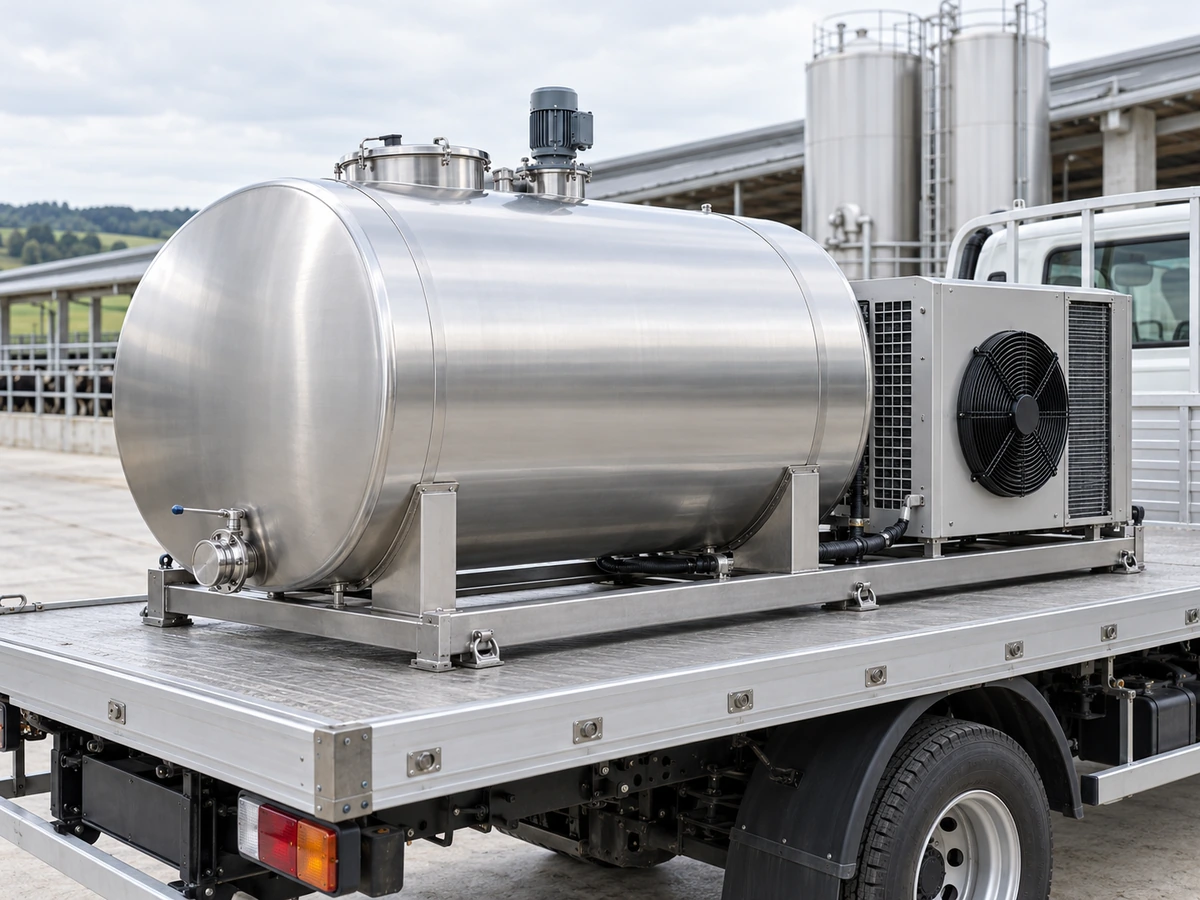
A milk tank with a condenser adds a mechanical refrigeration unit to the double-wall system, so the milk can be held in the desired range — or even cooled further — along the way, rather than just kept from warming.
Behineh Ab designs this type of tank for clients with long transport routes, fleets with lengthy stops, or operations in hot regions who need a temperature guarantee beyond ordinary insulation.
Technical specifications
Main components and operating temperature of the condenser system
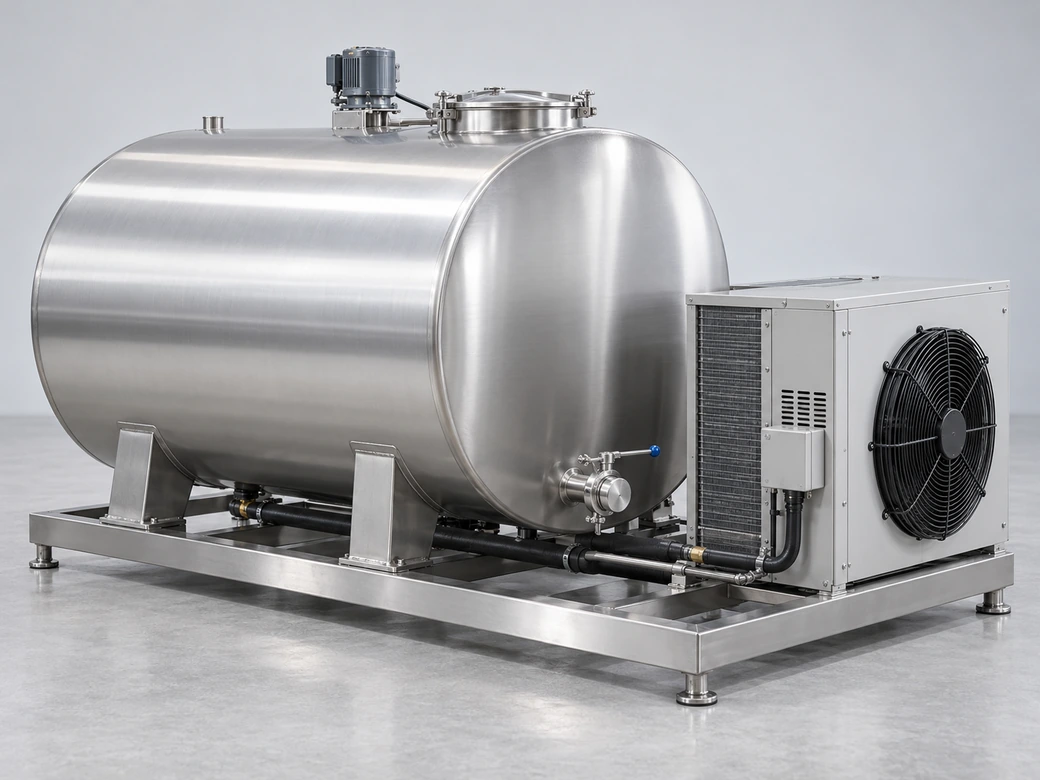
A milk transport tank with a condenser has seven main parts: an insulated double-wall shell, a lid with a sealing gasket, the cooling system (compressor and condenser), an agitator at the bottom of the tank, filling and emptying valves, a milk-level measuring system, and a cleaning and sanitising system.
The system's refrigerant (usually ammonia or Freon) absorbs heat from the milk and keeps the inside of the tank between 0 and 4 °C — the standard storage range for raw milk.
How a condenser tank differs from an ordinary tank
An ordinary milk transport tank with insulation only slows the rise in milk temperature; it cannot lower or hold the temperature. A tank with a condenser has an active refrigeration cycle that works like a refrigerator and can keep the tank in the target range throughout the trip, even if the milk was loaded slightly warmer than the standard limit.
This makes the condenser tank the safer choice for long routes or wherever unexpected delays in transit are likely.
Use on long routes and in hot regions
On intercity routes of more than a few hours or in regions with high air temperatures, even the best insulation cannot fully stop heat getting in. In these conditions the condenser system ensures the milk stays at a safe temperature until unloading and keeps its quality for processing at the destination plant.
Applications and industries
Photo gallery
Milk tank with condenser gallery
Request a quote
Milk tank with condenser
Enter the pressure, temperature and fluid; our engineers send a technical proposal and price within 24 working hours.
- Written technical reply with a proposed concept drawing
- Site visit in Tehran and surroundings
- 24-month warranty on fabrication and welding