


Design & manufacture ofPressure Vessel & Storage Tankis our specialty!
Water, fuel, chemical or pressurised gas — from the data sheet and thickness calculation to rolling, welding and testing, every tank is built in the Behineh Ab Engineering factory. You set the capacity and material; we do the engineering.
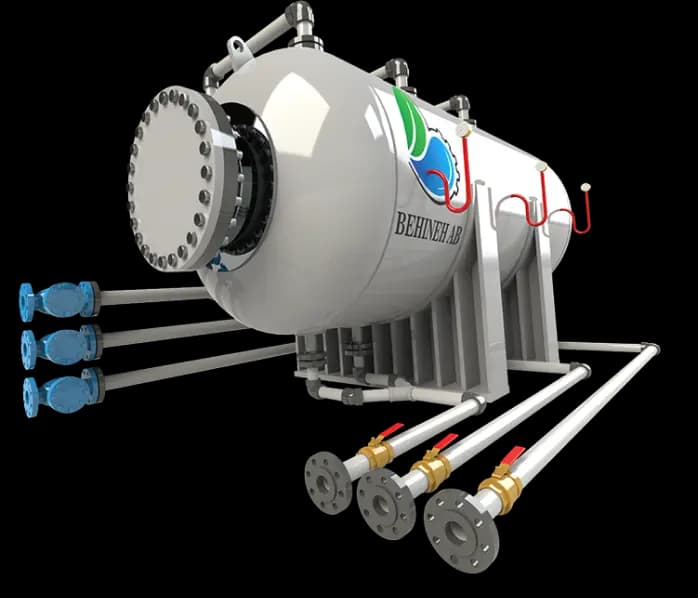
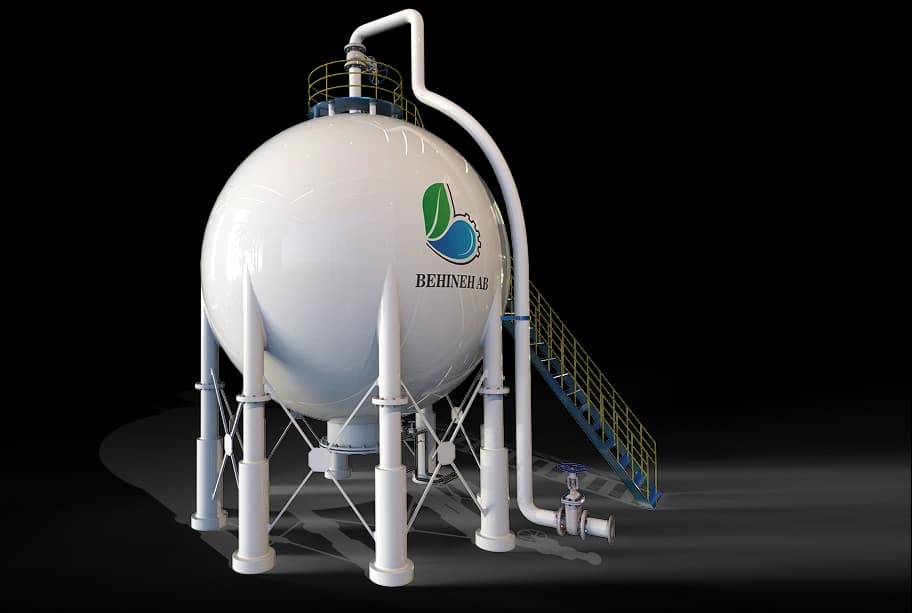










Behineh Ab tank manufacturer
Behineh Ab designs and builds metal tanks and elevated water tanks — from calculation and drawings through fabrication, testing, and handover.
Behineh Ab Engineering has operated since 2003 as a tank manufacturer and process-equipment fabricator. Our office designs to API 650 and ASME, and tank fabrication — from plate cutting to hydrostatic test — runs in our own shop.
If you need a metal tank manufacturer that delivers calculations, shop drawings, WPS/PQR, and test reports with the vessel, that is the daily work of Behineh Ab.
As an elevated tank manufacturer, we size legs, bracing, plate thickness, and coatings for site wind and seismic loads — not just sell a stock tower tank.
From datasheet review through feasibility, detailed design, shop or site fabrication, NDT, and delivery, our team stays with the client so the vessel matches fluid duty, design pressure, and install limits.
Technical clarity, reliable documentation, and fast response stay central — including operating advice after installation.
Tank applications
Facilities that rely most on tanks for fluid storage
Many technologies keep shrinking, but fluid storage still needs volume. Liquids cannot be compressed enough for tiny vessels, so growing demand calls for building more tanks and larger ones. These tanks serve many industries, including processing, food, cosmetics, and more.
- 1Pharmaceutical plants
- 2Refineries
- 3Offshore platforms
- 4Petrochemical plants
- 5Power plants
- 6Oil & gas pumping stations


Buying from Behineh Ab
Steps to register an order and purchase metal tanks
- 1
Purchase request
Customers can first submit the specifications of the product they need as a purchase request.
- 2
Proforma invoice
A preliminary feasibility study begins based on the customer's needs, and an initial proforma estimate is prepared.
- 3
Tank design
The tank is designed using up-to-date knowledge and in accordance with current tank manufacturing standards.
- 4
Tank fabrication
The tank is built according to the executive drawings produced during the design stage.
- 5
Tank testing
Various non-destructive testing methods are used to ensure the tank's integrity and safety.
- 6
Tank delivery
Once quality is confirmed, the finished tank is cleared to leave the factory and is shipped to the buyer.


Tools & equipment
Machinery and equipment used to manufacture tanks
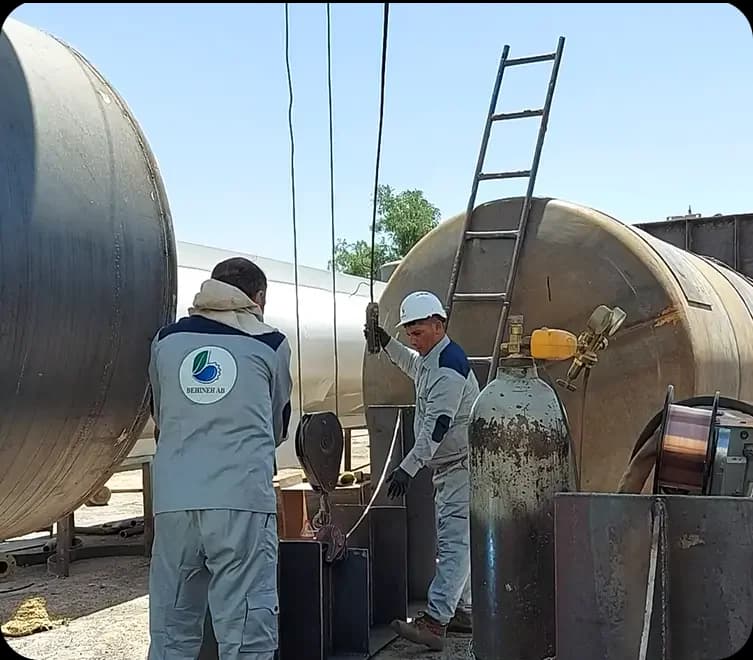
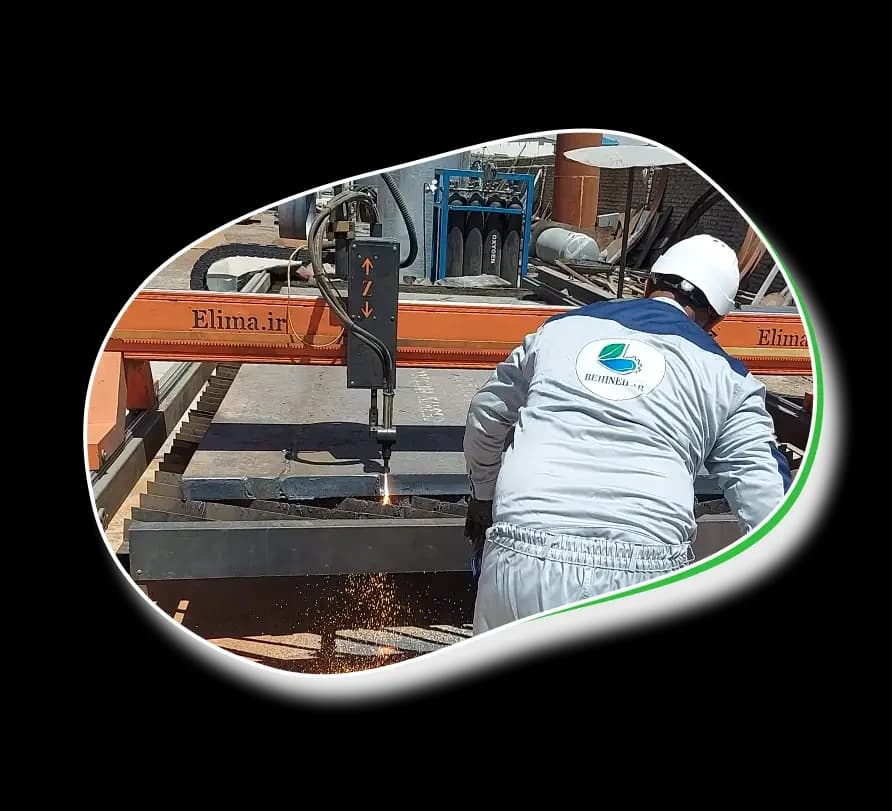
To build tanks, a wide range of tools and equipment is required. The equipment used mainly falls into two core areas: forming and assembly. Some tools may be shared across both areas — such as cranes and cutting equipment — meaning they are used in both forming and assembly. In forming, different tools are chosen depending on the type and shape of the tank. Cylindrical tanks are typically made of a shell plus two end sections. The tank shell is formed by rolling flat plate into a cylindrical shell. Tank heads may take different shapes; when they are dish-shaped, a dishing machine and a flanging machine are used for forming.
In some cases the tank end needs to be conical; then a rolling machine is used to form the cone at the tank end.
- Press brake
- Cutting machine
- Flanging machine
- Dishing machine
- CO2 welding machine
- Automatic cutting machine
- Welding machine
- Gantry crane
- Assembly equipment
- Oxy-fuel cutting
- Plate rolling machine
- Gantry drill












Behineh Ab company introduction video
Applied online calculations
Use this section for practical online calculations for tank fabrication and tank dish heads.


What sets us apart
- Using up-to-date knowledge
- Following modern tank production standards
- Specialist design-team expertise
- Calculating tank stress before fabrication
- Non-destructive testing and tank analysis methods
- Modern machinery across the tank production process
- Experienced specialist fabrication personnel
- Raw-material quality checks in our materials lab
- Precise scheduling linked to clients’ project-control systems


Latest articles
All articles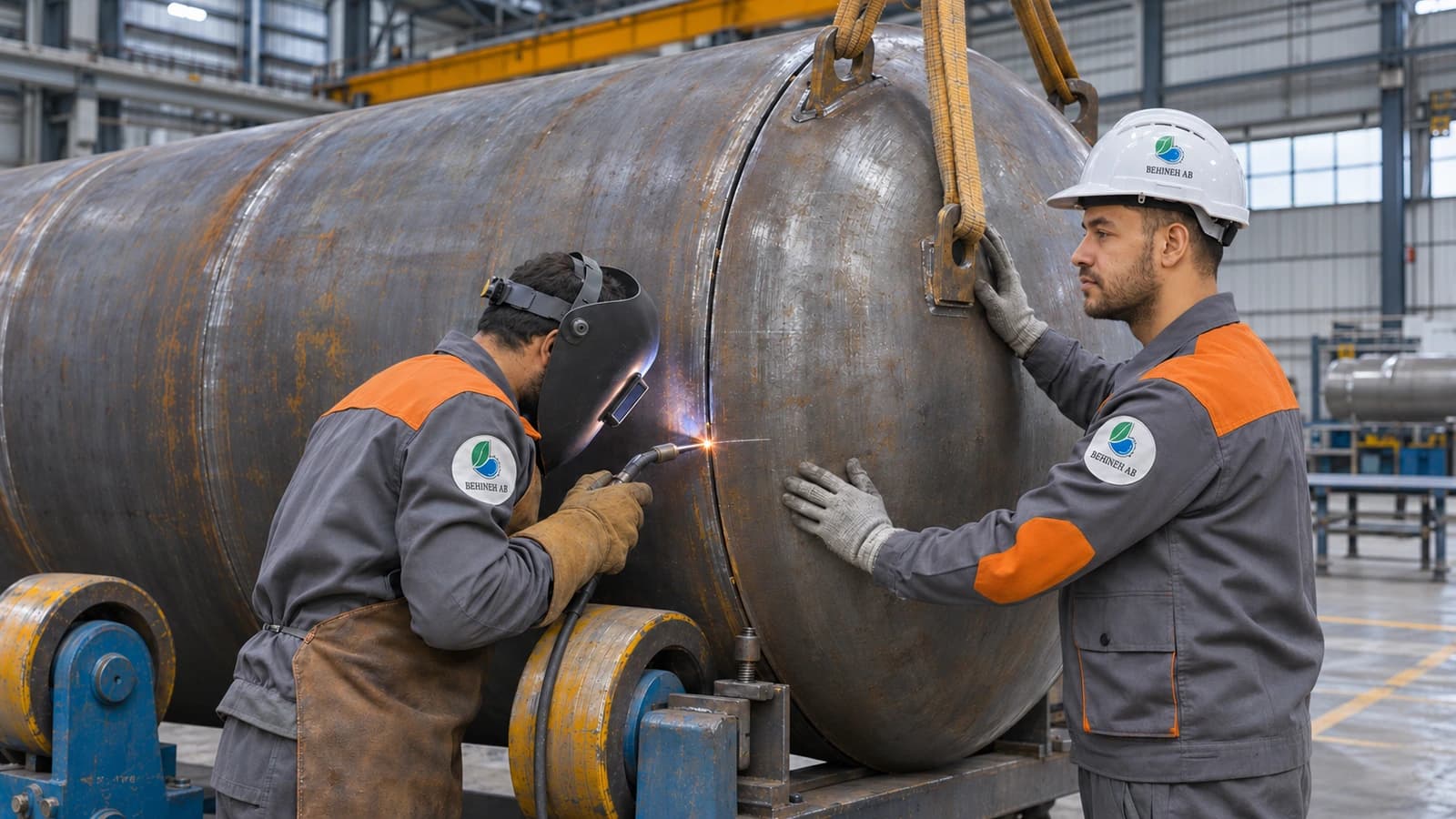
Steel Tank Manufacturing Steps, from Order to Delivery
The steps of building a steel tank, from the data sheet to testing and dispatch. A 20,000-litre tank takes about three weeks; here is what that time is spent on.
Read more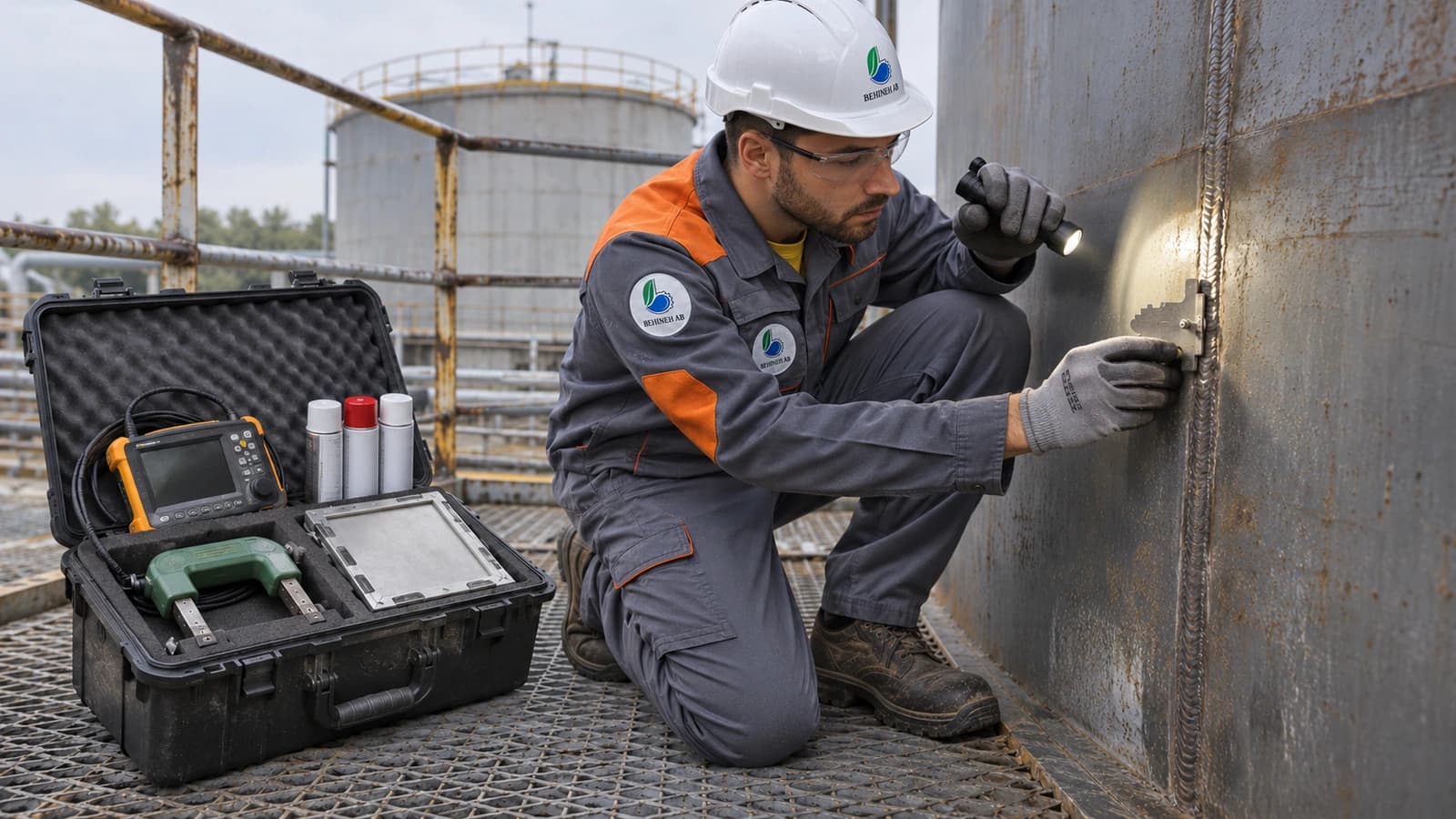
Tank Tests: What Defect Does Each Test Find?
Hydrotest, radiography, ultrasonic, liquid penetrant, magnetic particle and vacuum box. Each finds a particular defect and none can replace another. Here we compare them.
Read more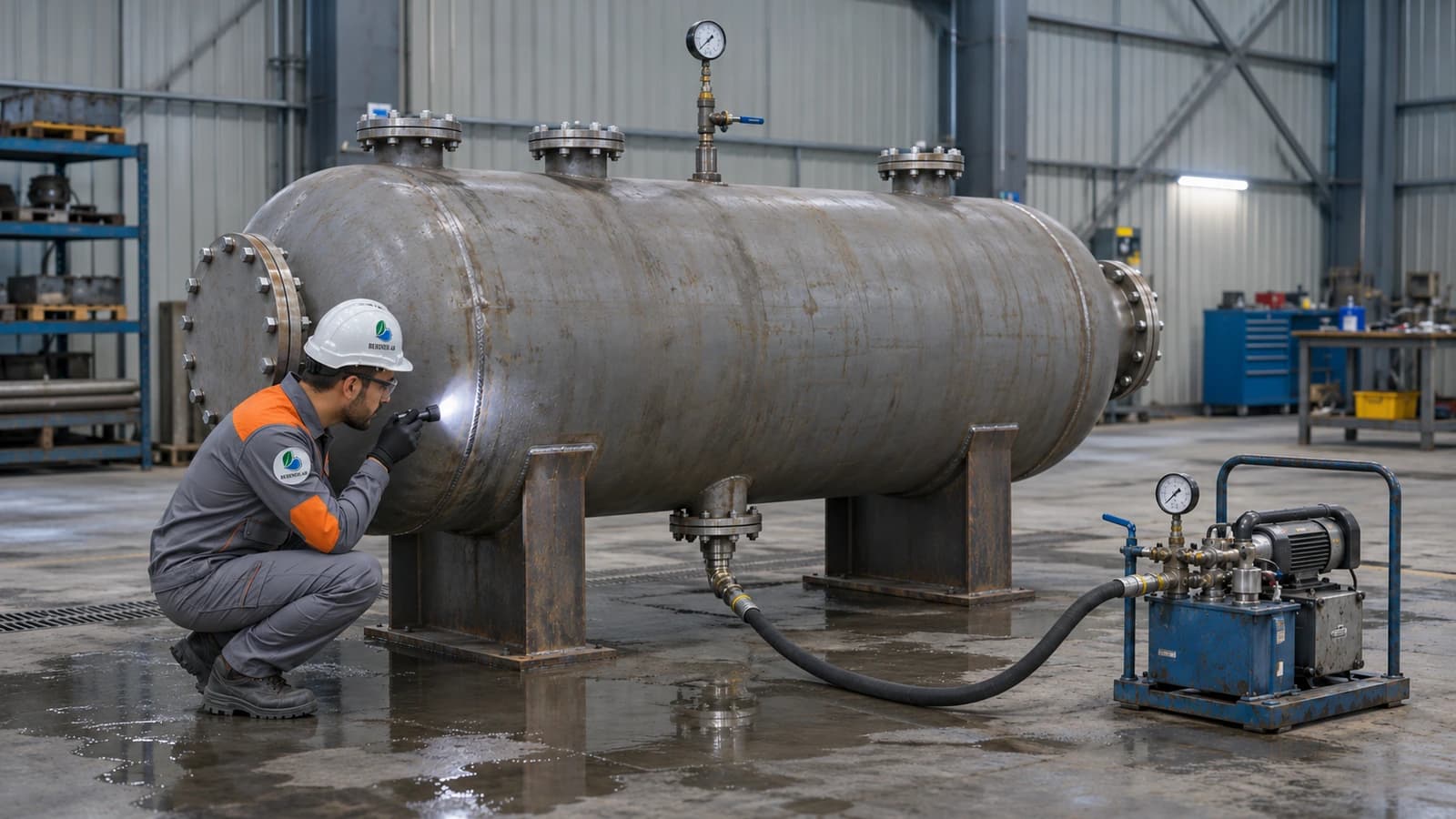
Tank Hydrostatic Test, Step by Step
The hydrotest is a tank's final exam before delivery, and we carry it out in our own factory. The test pressure, the work before filling, and the mistake that can ruin a tank while it is being drained.
Read more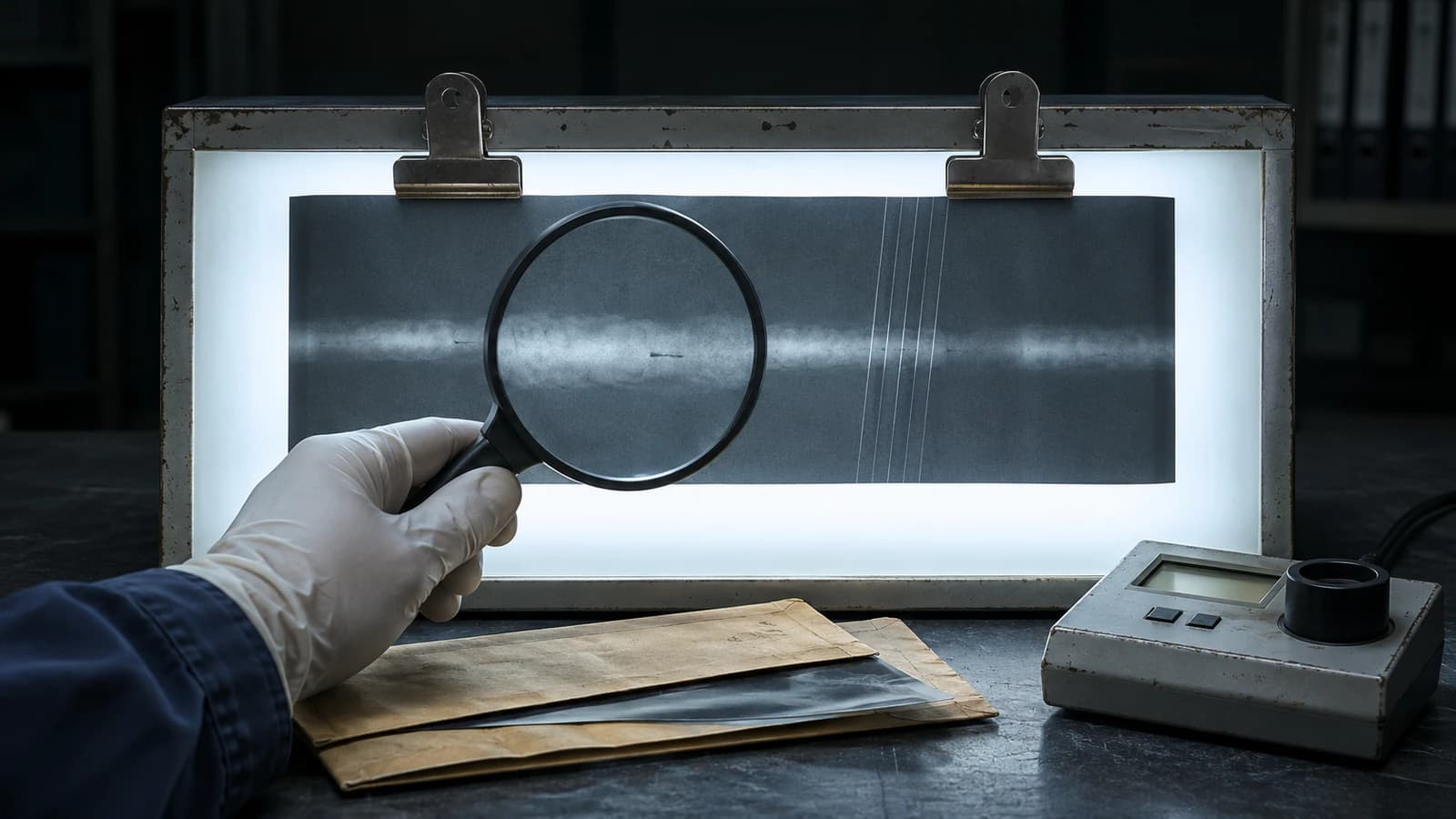
Weld Radiography: What Percentage of Seams Must Be Tested?
The radiography percentage sets the joint efficiency, and the joint efficiency sets the plate thickness. In other words, this decision directly affects the tank's weight and price.
Read more