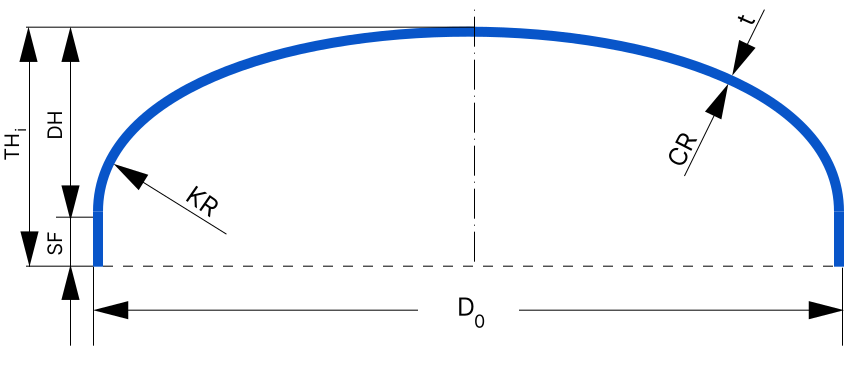
A shallow section of a sphere, with no separate knuckle

Convex disc head (Convex Disc)

A shallow section of a sphere, with no separate knuckle

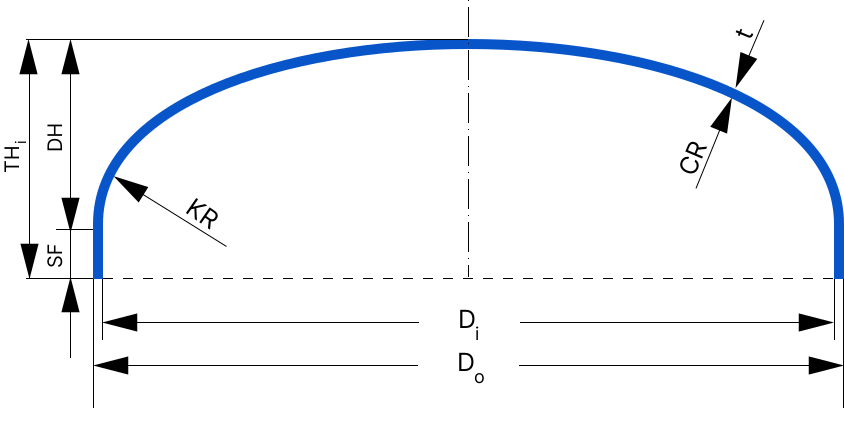
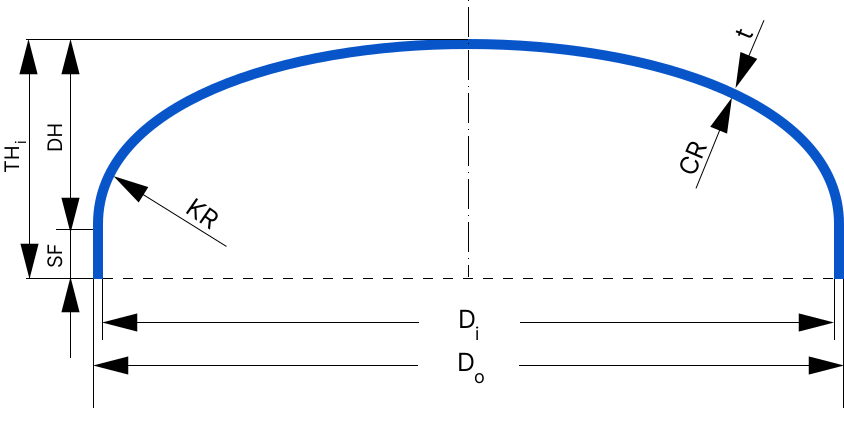
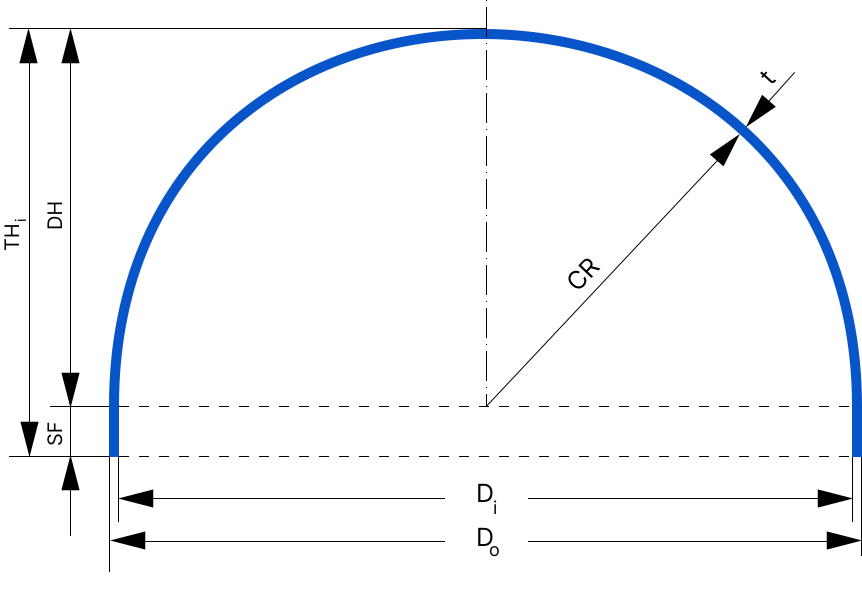
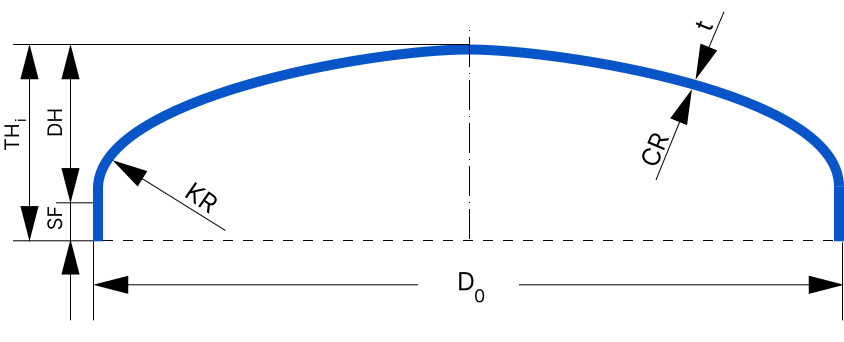
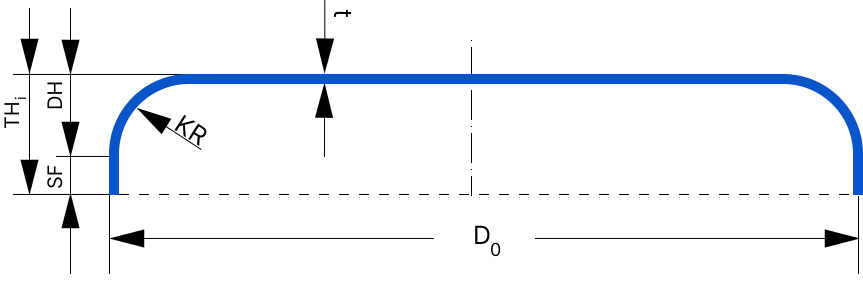
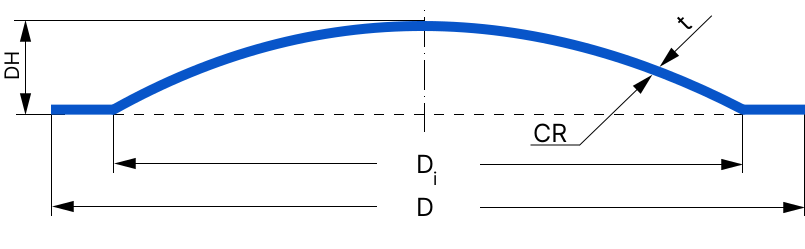
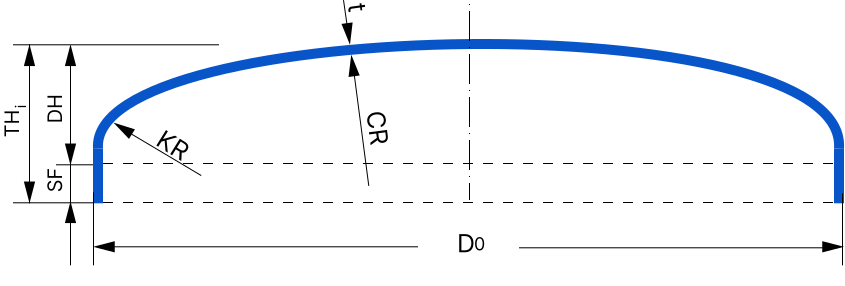
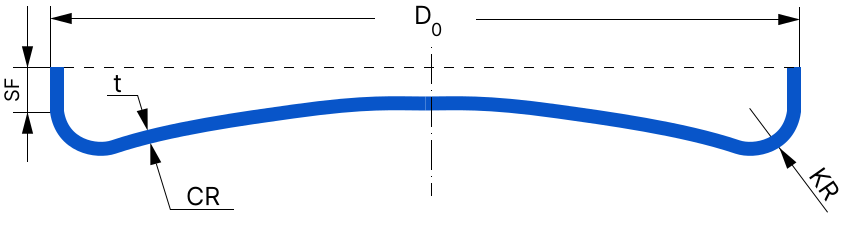
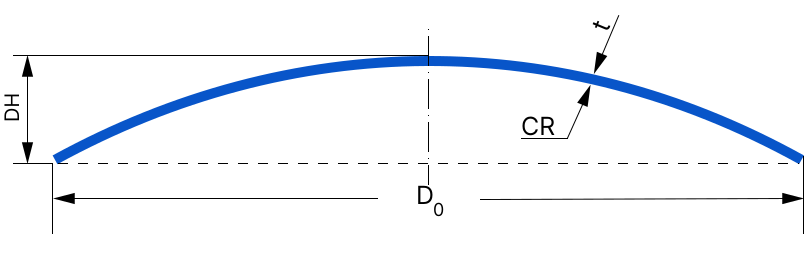
A convex disc head consists of a shallow spherical section whose crown radius (CR) can reach the vessel's outside diameter (Do), with a minimum of 0.8×Do. Unlike torispherical, this head has no separate knuckle and joins the cylindrical body directly.
Convex disc

Convex disc

  • CR = Do → DH = 0.134 × Do
  • CR = 0.8×Do → DH = 0.176×Do
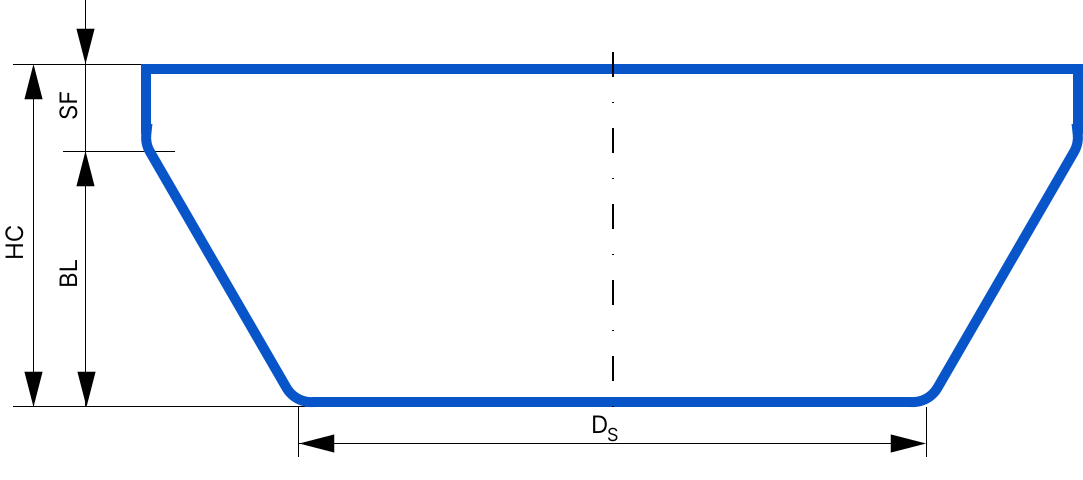
  • DH 185 mm
  • THi 185 mm
  • CR 1416 mm
CR formula
CR = Do (min. 0.8×Do)
Approximate depth (DH)
≈ 0.134 × Do
Knuckle radius (KR)
None; joined directly to the body
Main use
Low to medium pressure, simple fabrication
A shallow section of a sphere, with no separate knuckle
Crown radius adjustable up to the outside diameter
Approximate depth 0.134 times the outside diameter
Joined directly to the shell without a knuckle
Relatively simple to make
Suited to low to medium pressure

What is a convex disc head?

A convex disc head consists of a shallow spherical section whose crown radius can reach the vessel's outside diameter, with a minimum of 0.8×Do. Unlike torispherical, it has no separate knuckle and is joined directly to the shell.

Its approximate depth is about 0.134 times the outside diameter; an option between the plate type and torispherical in terms of depth.

Geometry formulas of the convex disc head

The crown radius is chosen between two standard values and the depth derives from it:

Crown radius
CR = Do (or 0.8 Do)
Approximate depth
DH ≈ 0.134 × Do
Knuckle radius
None — direct connection
Surface area
A ≈ π · CR · DH
Workshop note

The closer CR is to Do, the shallower the head. Having no knuckle makes fabrication simpler, but the load capacity at high pressure is lower than torispherical.

Online calculation

See the head's dimensions, volume and weight for a real diameter and thickness

Convex disc head (Convex Disc)

Convex disc

Convex disc

  • CR = Do → DH = 0.134 × Do
  • CR = 0.8×Do → DH = 0.176×Do
  • DH 185 mm
  • THi 185 mm
  • CR 1416 mm

Liquid level and volume inside this head

How the head is mounted
Internal surface area of the head0m²
Plate weight of this head0kg
Liquid weight at this level0kg
Full capacity of this head0m³
Liquid volume in this head0m³
Total weight (fluid + head)0kg

Development of this head (flat blank before forming)

The diameter of a flat plate of the same thickness and material that weighs the same as the formed head — an initial workshop estimate based on equal weight, not allowing for thickening or extra stretching at the knuckle.

Flat blank radius (development)0mm
Flat blank diameter (development)0mm
Flat blank area0m²

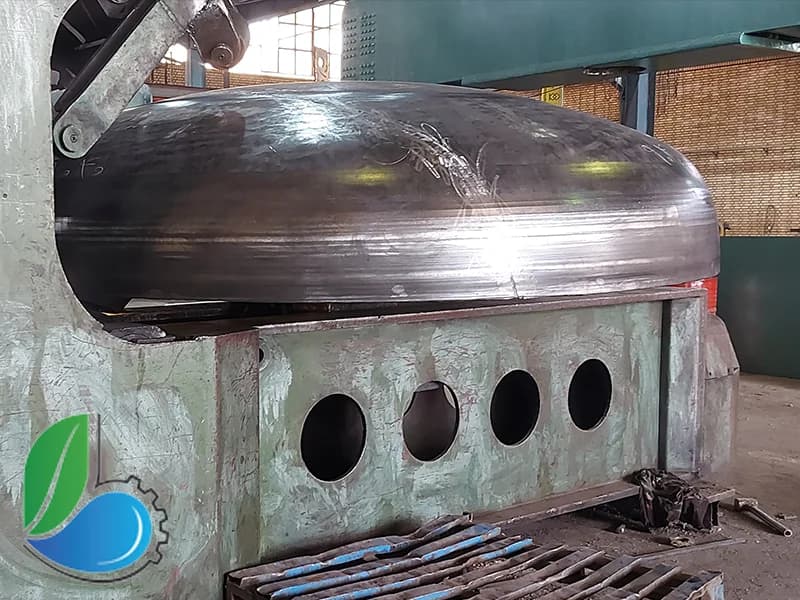
The vessel head production process

From calculating the blank diameter to final edge preparation — the steps of making a vessel head in the workshop

  1. Calculating the blank diameter

    Cutting a disc from plate with the diameter and thickness calculated for the head type and vessel diameter

  2. Cutting the plate blank

    Precise cutting of steel or stainless plate by plasma, laser or gas according to the technical drawing

  3. Pressing the head

    Hot or cold forming of the disc with a die and industrial press until it reaches the final head profile

  4. Edge preparation

    Machining the edge, bevelling and preparing the weld area for fitting to the vessel shell
Pressing a vessel head in the Behineh Ab workshopVideo coming soon

Choosing a head: the balance between pressure, cost and time

The main difference is the absence of a separate toroidal knuckle: in a torispherical head the transition from dome to body happens through a knuckle arc of smaller radius, while in a convex disc this transition is more direct. This simplifies fabrication at the cost of lower load capacity at high pressures.
1Take the design pressure and temperature from the data sheet
2Check the height limit at the installation site
3Compare the cost of plate with the cost of pressing
4Consider die availability and delivery time
Pressed heads in the workshop store

Applications and industries served

Atmospheric and low-pressure industrial tanks
Light convex covers for equipment
Tanks for water and non-corrosive fluids
Intermediate parts of light process equipment

Buying heads from Behineh Ab

Six steps from first contact to delivery

1Send the head specifications

Give the outside diameter, plate thickness, head type and required material.

2Technical quotation

The calculated weight, unit price and delivery time are sent the same business day.

3Plate supply

Plate is supplied with the mill certificate and inspected on arrival before cutting.

4Cutting and pressing

Cutting the disc, hot or cold pressing depending on thickness, and checking dimensions with a template.

5Edge machining and bevelling

Machining the cylindrical edge and bevelling it ready for welding to the shell.

6Packing and shipping

Packing, issuing the part identification sheet and shipping nationwide.

What sets us apart

Ready dies for the most common diameters
Thickness checked after pressing with a thickness gauge
Profile checked against a reference template for each form
Plate material certificate with every shipment
Hot pressing for thicknesses above 16 mm
Stainless and galvanized heads available

Price inquiry
vessel head

Enter the diameter, thickness and head type; you will receive the calculated weight and unit price.

  • Quotation with the exact weight of the part
  • Standard heads delivered in 7 business days
  • Shipping nationwide
Direct line to engineering office
021 - 3345 6789

Your information is confidential and used only to prepare a technical proposal.

Other head types

All articles
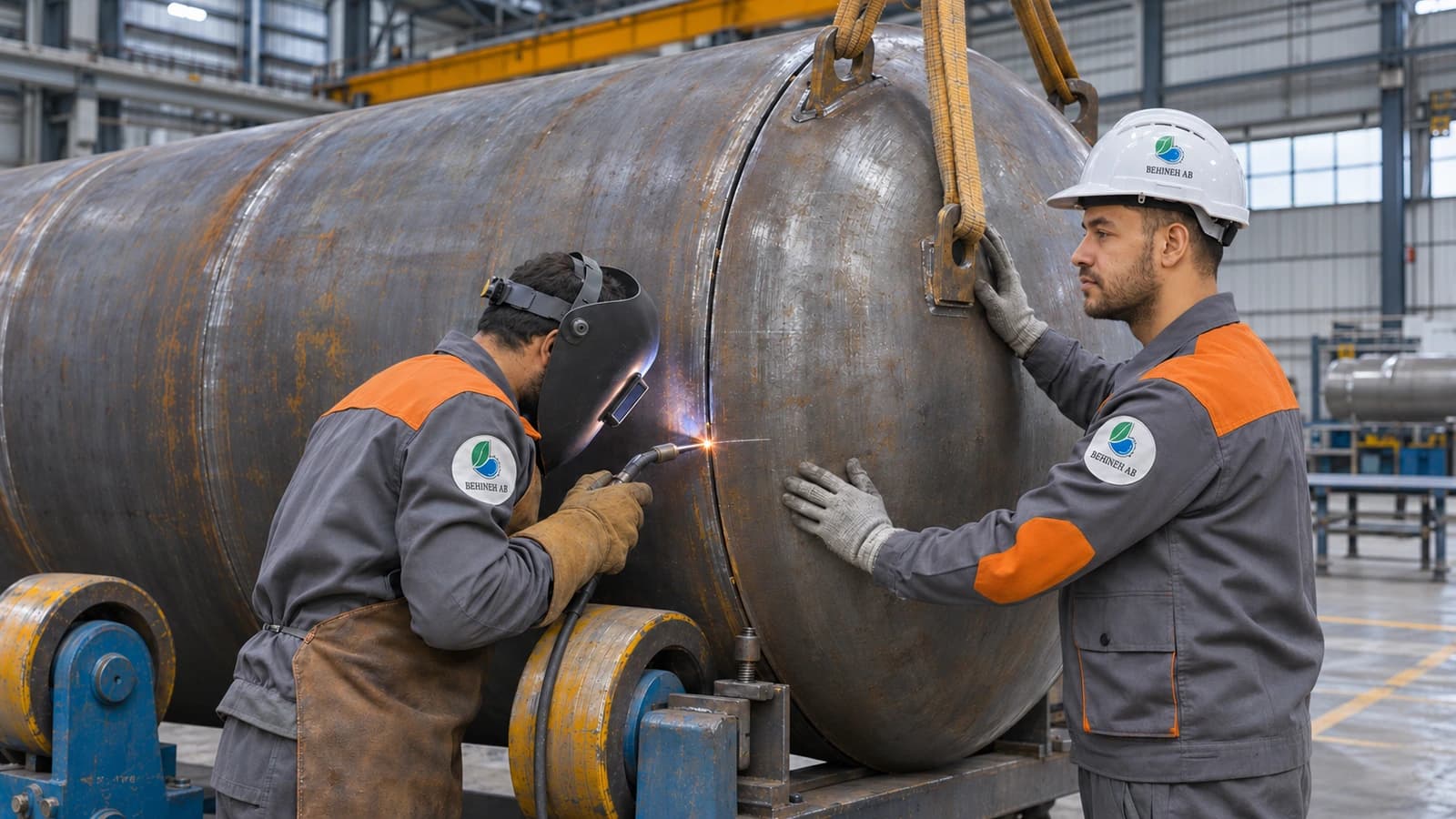
  • Assembling the shell and head of a steel tank in the Behineh Ab tank fabrication workshop

    Steel Tank Manufacturing Steps, from Order to Delivery

    The steps of building a steel tank, from the data sheet to testing and dispatch. A 20,000-litre tank takes about three weeks; here is what that time is spent on.

    Read more
  • Inspector carrying out a non-destructive test on a steel tank shell weld

    Tank Tests: What Defect Does Each Test Find?

    Hydrotest, radiography, ultrasonic, liquid penetrant, magnetic particle and vacuum box. Each finds a particular defect and none can replace another. Here we compare them.

    Read more
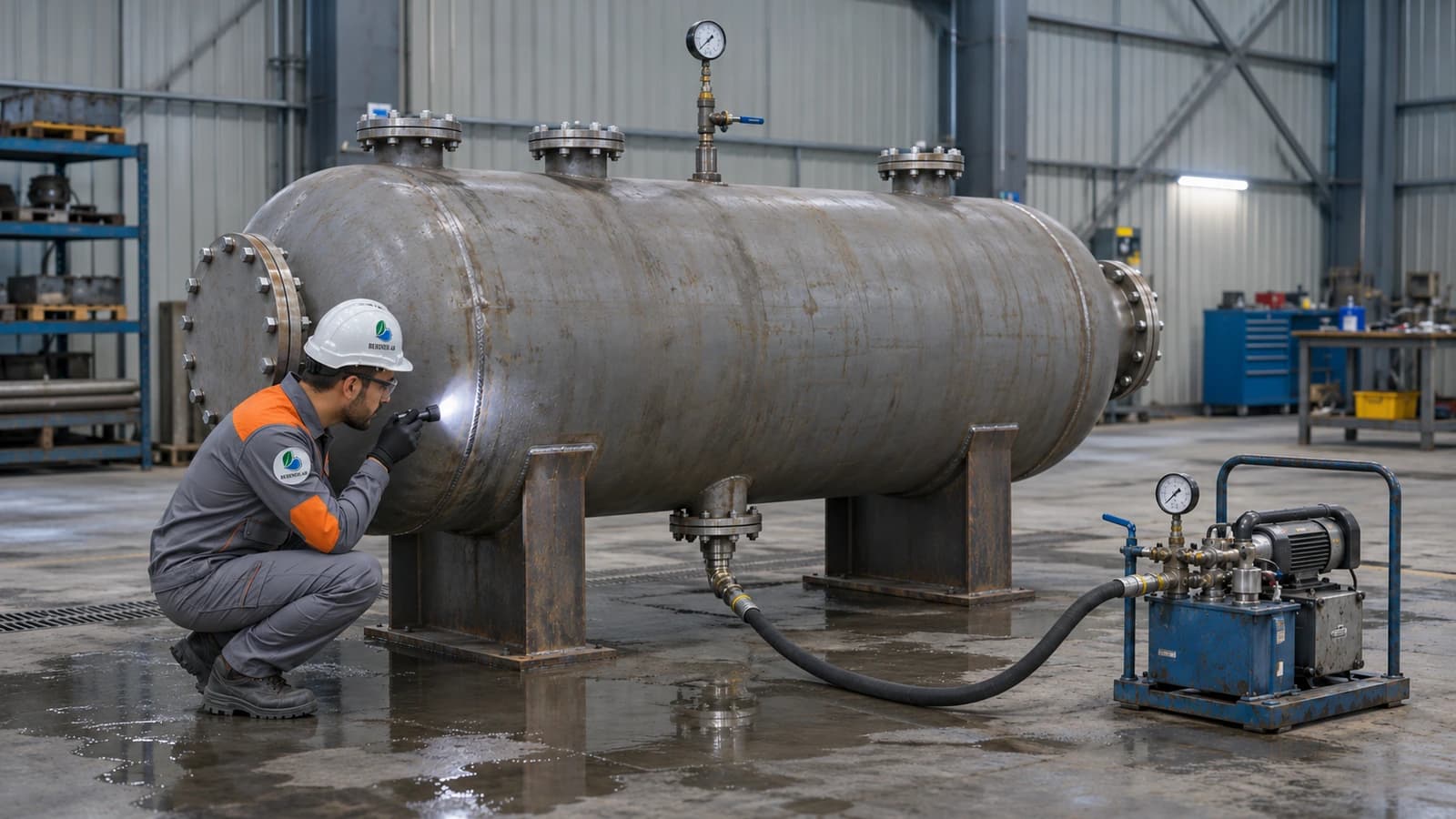
  • Pressure vessel under hydrostatic test with a pressure gauge in the Behineh Ab workshop

    Tank Hydrostatic Test, Step by Step

    The hydrotest is a tank's final exam before delivery, and we carry it out in our own factory. The test pressure, the work before filling, and the mistake that can ruin a tank while it is being drained.

    Read more
  • Radiography film of a tank shell weld on a film viewer

    Weld Radiography: What Percentage of Seams Must Be Tested?

    The radiography percentage sets the joint efficiency, and the joint efficiency sets the plate thickness. In other words, this decision directly affects the tank's weight and price.

    Read more