Priced by fabricated weight

Tank fabrication price
by weight

We price tank fabrication by fabricated weight, because we buy plate, pipe and flanges by the kilogram. Volume alone does not set the price; two tanks of the same volume can have completely different weights and prices depending on pressure, material and dimensions.

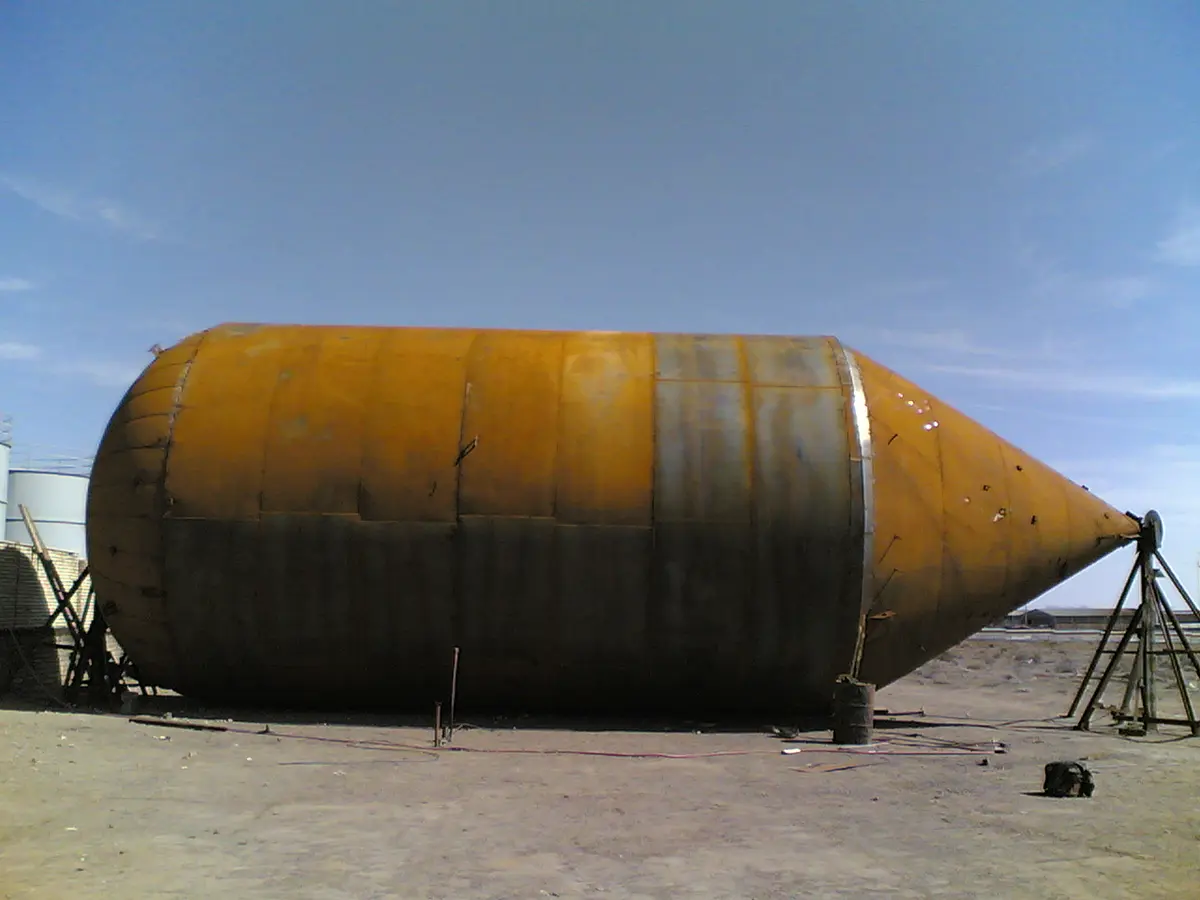
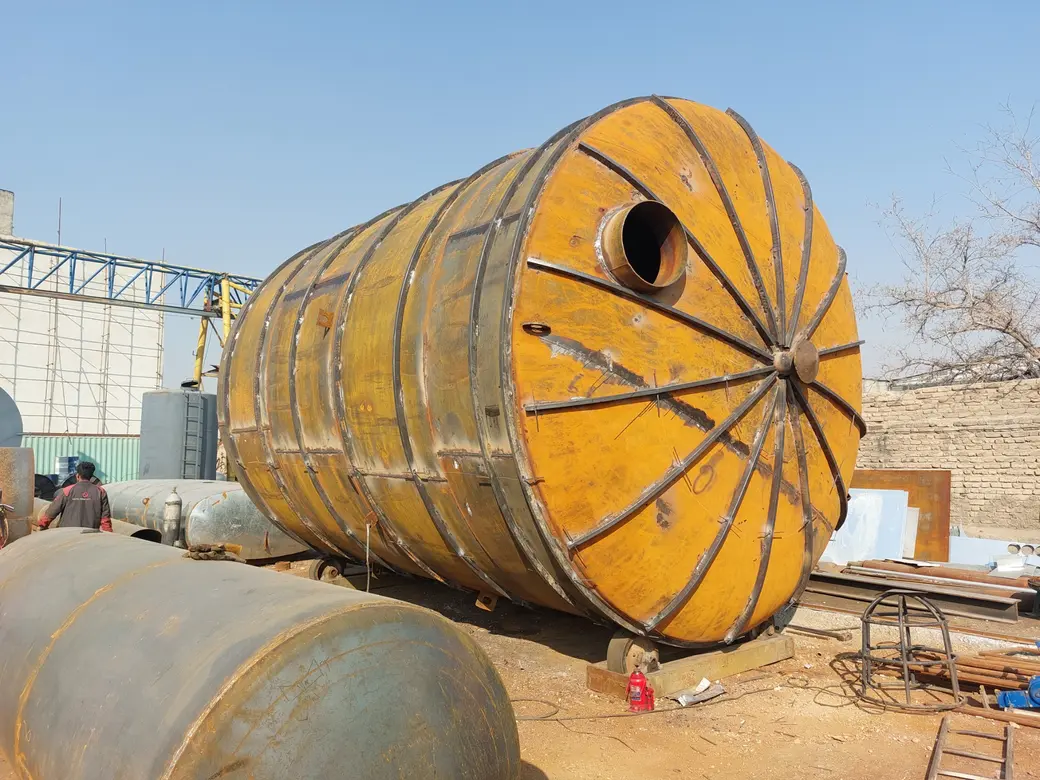
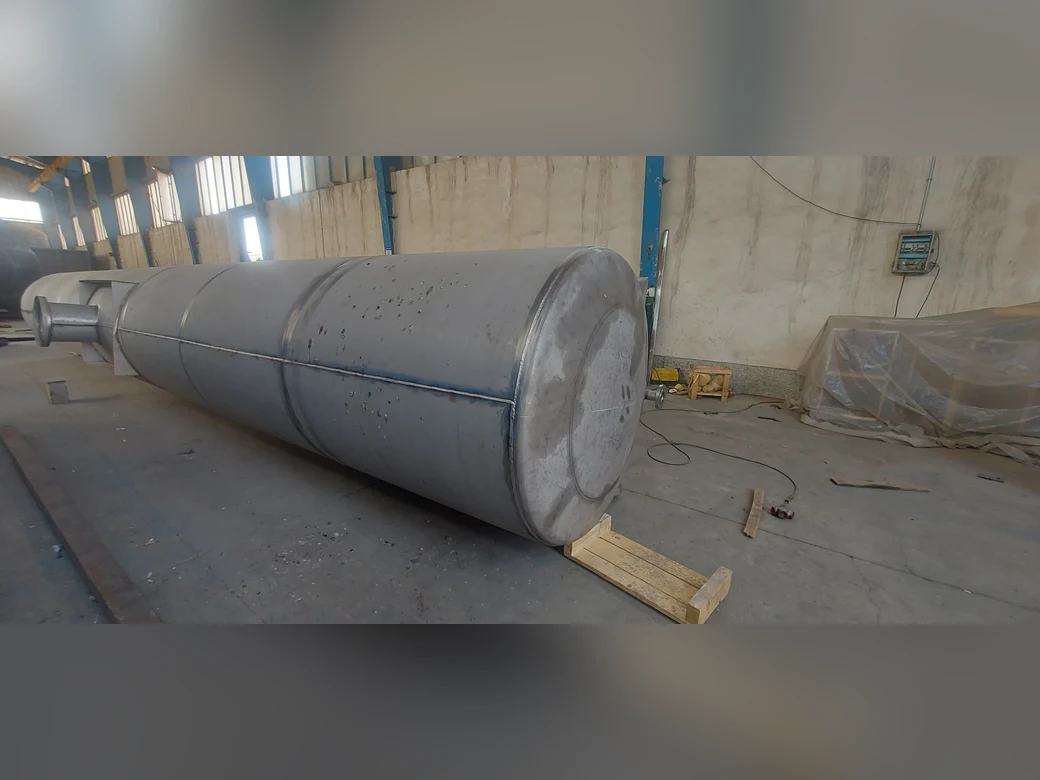
Workshop photo — plates ready for tank fabrication
Pricing basis
Fabricated weight
20,000-litre water tank
About 1.9 t
Build time for 20,000 litres
About 3 weeks
Fabrication warranty
24 months
Price by weight
Weight from the drawing
Online estimate
Fair comparison
Transparent costs
24-month warranty

1. How tank weight is calculated

Area × thickness × density

The weight of any tank is the sum of the weights of its shell plates, its heads or bottom and roof, and its accessories. The weight of each plate is area times thickness times density. The density of carbon steel is about 7,850 and that of stainless steel about 7,900 to 8,000 kilograms per cubic metre.

The thickness is set by the design calculations: pressure or liquid head, diameter, the plate's allowable stress, joint efficiency and corrosion allowance. In small and medium water tanks the minimum fabrication thickness governs; in pressure vessels and large tanks, pressure does.

2. Weight relations

The relations that set the weight, and therefore the price:

Plate weight
A × t × ρ
Shell area
π × D × L
2:1 head area
≈ 1.084 × D²
1 mm carbon steel plate
≈ 7.85 kg/m²
Workshop note

Full radiography raises the joint efficiency and lowers the required thickness. In large tanks, the saving in plate weight is often greater than the extra cost of testing.

3. The right ways to lower the price

A tank's price can be lowered without reducing its life or safety:

Optimal dimensions

For a given volume there is a diameter-to-height ratio that gives the lowest weight. The site's calculators suggest the optimal dimensions.

Realistic design pressure

Do not set the design pressure higher than you really need. Every extra bar makes the plate thicker.

Suitable material

Stainless steel is not needed everywhere. For industrial water, coated or galvanized steel is often enough and much cheaper.

What not to do

Reducing thickness below the calculated value or dropping tests makes the tank cheaper but more dangerous.

4. Costs you should ask about

Do not compare quotations only by the final figure. Ask whether non-destructive testing, the hydrotest, sandblasting and painting, transport, installation and fabrication documents are included in the price. A quotation without these looks cheaper but ends up costing more.

For large tanks built on site, also allow for the cost of cranes, setting up the site workshop, accommodating the crew and the water needed for the hydrotest.

Why price by weight?

A transparent method both sides can check

Price taken from the drawing's bill of materials
Weight the client can verify
Fair comparison of quotations
Online weight estimate before you enquire
Testing and painting costs shown separately
Quotation once the data sheet is received
No thinning of plate to cut the price
24-month fabrication and weld warranty
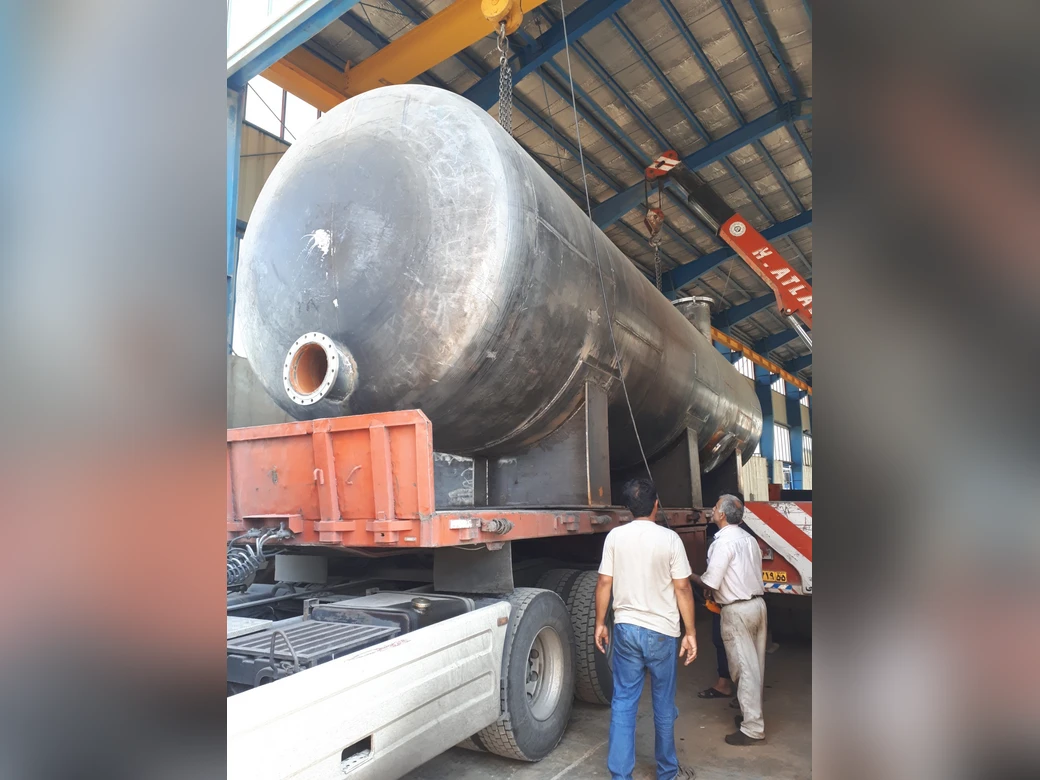
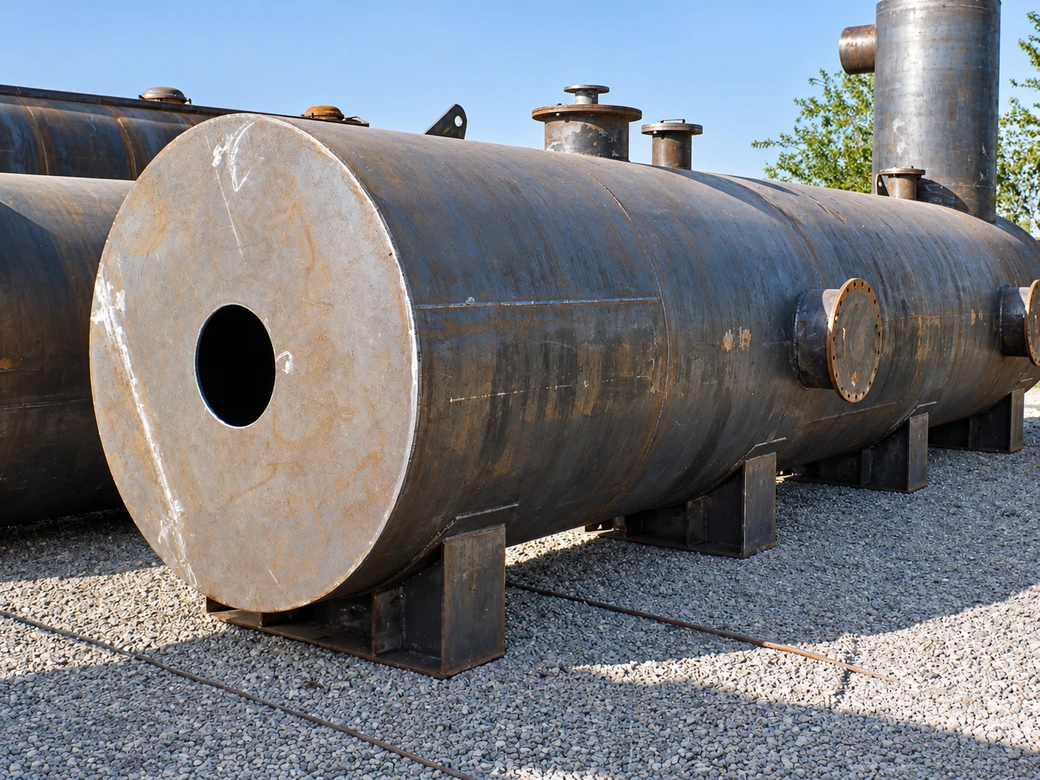
Workshop photo — weighing a tank before dispatch

Where does a tank's price come from?

Plate makes up the largest share of a metal tank's price. We buy plate, pipe and flanges by the kilogram, and fabrication is directly related to weight too: heavier plate means more cutting, rolling and welding. That is why the most logical and transparent way to price a tank is by its fabricated weight.

Consider two 20,000-litre tanks: one stores water at atmospheric pressure and the other holds compressed air at 10 bar. Their volume is the same, but the second needs thicker plate and stronger heads and may weigh several times as much as the first. Their prices differ in the same proportion.

Transparent
Price from a weight you can check on the drawing
Fair
Quotations compared on the same weight
Estimable
Approximate weight with the online calculator

Three tanks, three different weights

Examples to show how weight changes; the thicknesses are assumed and the real thickness is set by calculation

Vertical water tank

20,000-litre water tank

2.5 m diameter and 4.1 m high, carbon steel, atmospheric. 5 mm shell, 6 mm bottom and 5 mm roof. The minimum fabrication thickness governs, not the water pressure.

VolumeAbout 20 m³
Approx. weightAbout 1.9 t
Main weight driverMinimum fabrication thickness
Horizontal pressure vessel

4,000-litre pressure vessel

1.2 m diameter and 3 m shell length, 10 mm plate and two elliptical heads. One fifth of the water tank's volume, but close to its weight.

VolumeAbout 4 m³
Approx. weightAbout 1.3 t
Main weight driverDesign pressure
Stainless steel tank

Stainless tank of the same size

A stainless tank weighs about the same as a carbon steel tank of the same size, but each kilogram of stainless plate costs several times more and welding it takes more care and time.

VolumeSame as carbon steel
Approx. weightAbout the same as carbon steel
Main price driverPrice per kilogram of plate

Factors that affect weight and price

Anything that increases plate thickness or area raises the price

Working pressure
Largest effect
Higher pressure means thicker plate and heads
Material
Steel · galvanized · stainless
Each material has a different price per kilogram
Diameter-to-height ratio
Affects thickness and area
A larger diameter for the same volume means thicker plate
Corrosion allowance
Every mm on all plate
Based on the fluid and design life
Accessories
10 to 15 percent of weight
Nozzles, hatches, ladder, legs and saddles
Testing and coating
Separate from weight
Radiography, painting and galvanizing

Steps to get a quotation

From an online estimate to a firm price

1
Online estimate
Use the tank calculator to see the thickness and approximate weight, so you come to us with a real number.
2
Send the specifications
Send the fluid type, volume, pressure, temperature, material and installation site to the engineering office.
3
Design and weight
The engineering office calculates the thickness and sets the bill of materials and the tank's weight.
4
Quotation
Price based on weight and the current plate price, plus testing, coating and transport.

Before comparing quotations

Two quotations can only be compared when they are for the same weight and the same specification. If one price is much lower than the others, first ask about the weight and plate thickness. Reducing thickness is the easiest way to make a tank cheaper, and the easiest way to shorten its life.

Ask for the total weight and the thickness of each part
Compare the plate material and grade
Check whether testing, painting, transport and installation are included
Agree on the documents to be delivered
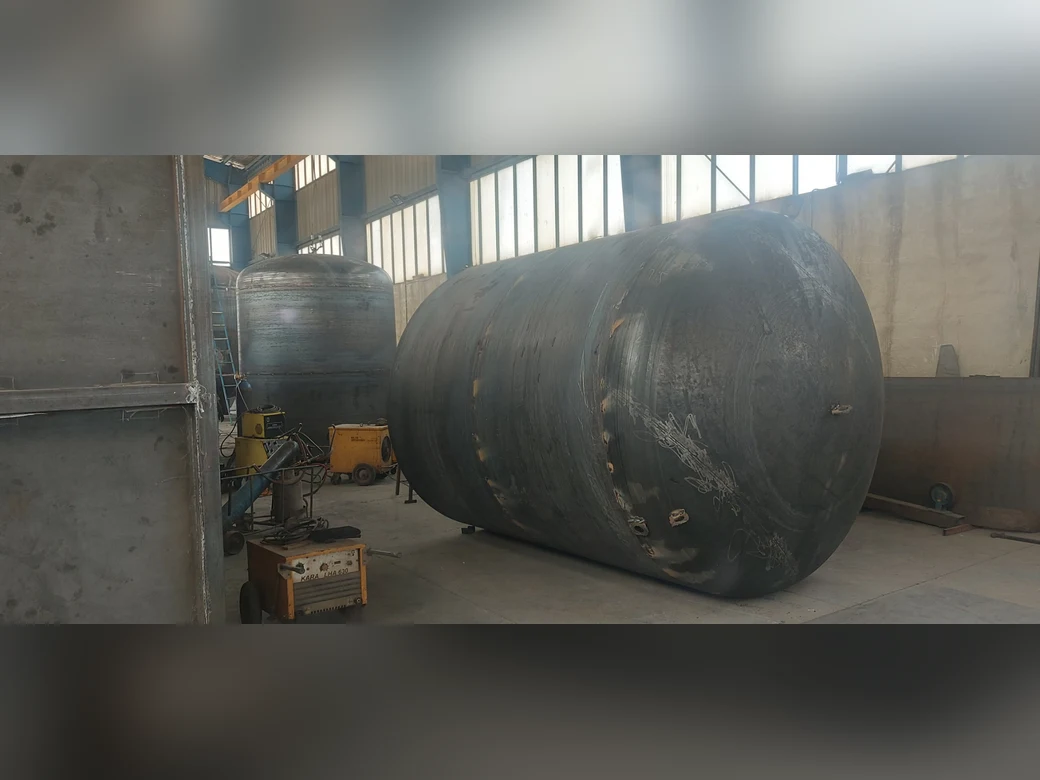
Workshop photo — checking plate thickness

Pricing every tank

The same method is used for all Behineh Ab products

Water tanks
Ground, elevated, galvanized and stainless
Pressure vessels
Compressed air, gas and process
Fuel and oil tanks
Fixed roof, floating roof and underground
Stainless tanks
Food, pharmaceutical and chemical

Speak directly with technical specialists

Send the tank specifications to have the weight calculated and a quotation prepared at the current price.

Frequently asked questions

The most common questions about tank fabrication prices

Price inquiry
tank fabrication

Enter your project details; our specialists will send a technical proposal and price within 24 business hours.

  • Written technical response with a proposed concept drawing
  • Site visit in Tehran and suburbs
  • 24-month fabrication & weld warranty
Direct line to engineering office
+98 21 4686 6276

Your information is confidential and used only to prepare a technical proposal.

All articles
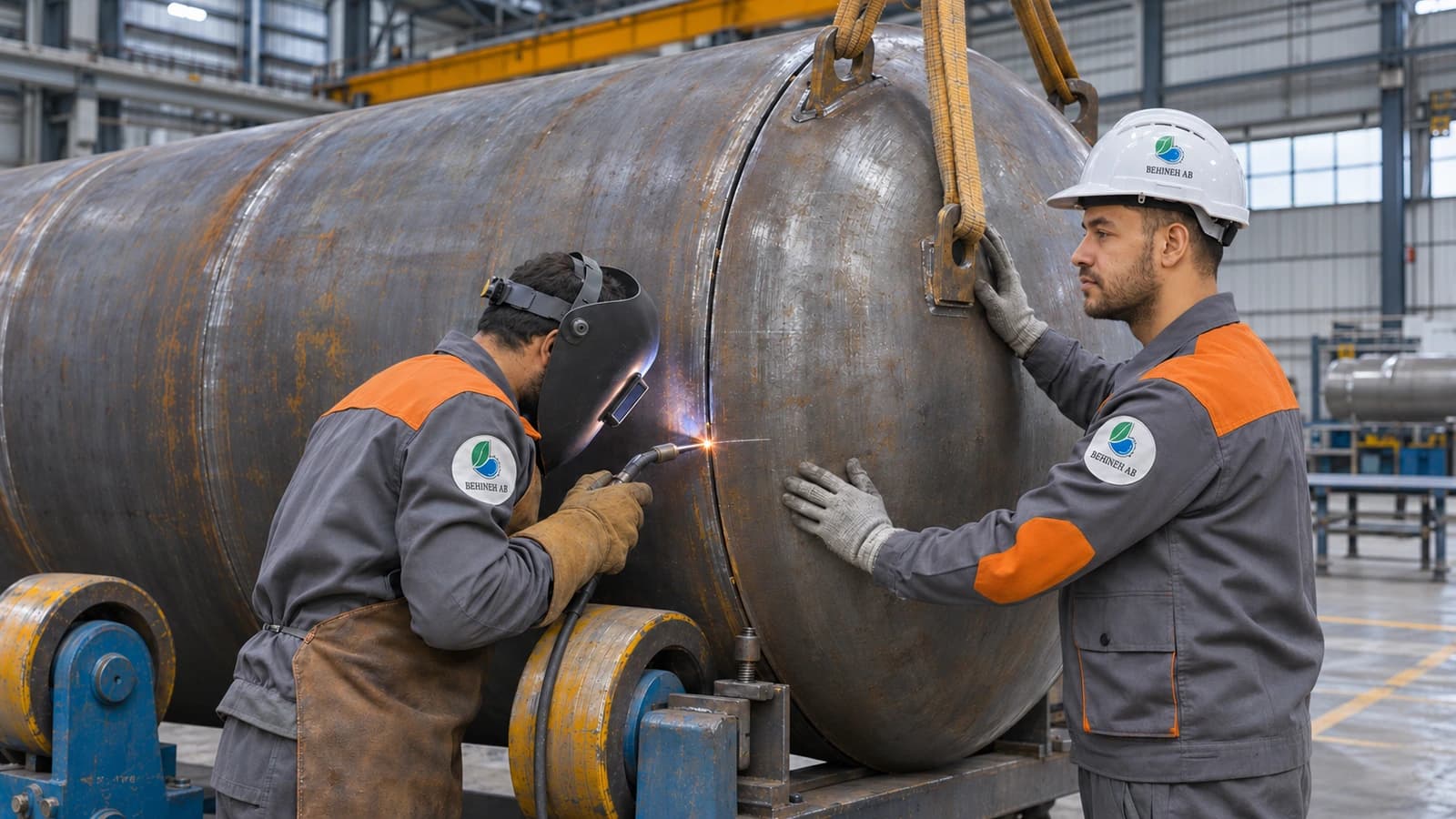
  • Assembling the shell and head of a steel tank in the Behineh Ab tank fabrication workshop

    Steel Tank Manufacturing Steps, from Order to Delivery

    The steps of building a steel tank, from the data sheet to testing and dispatch. A 20,000-litre tank takes about three weeks; here is what that time is spent on.

    Read more
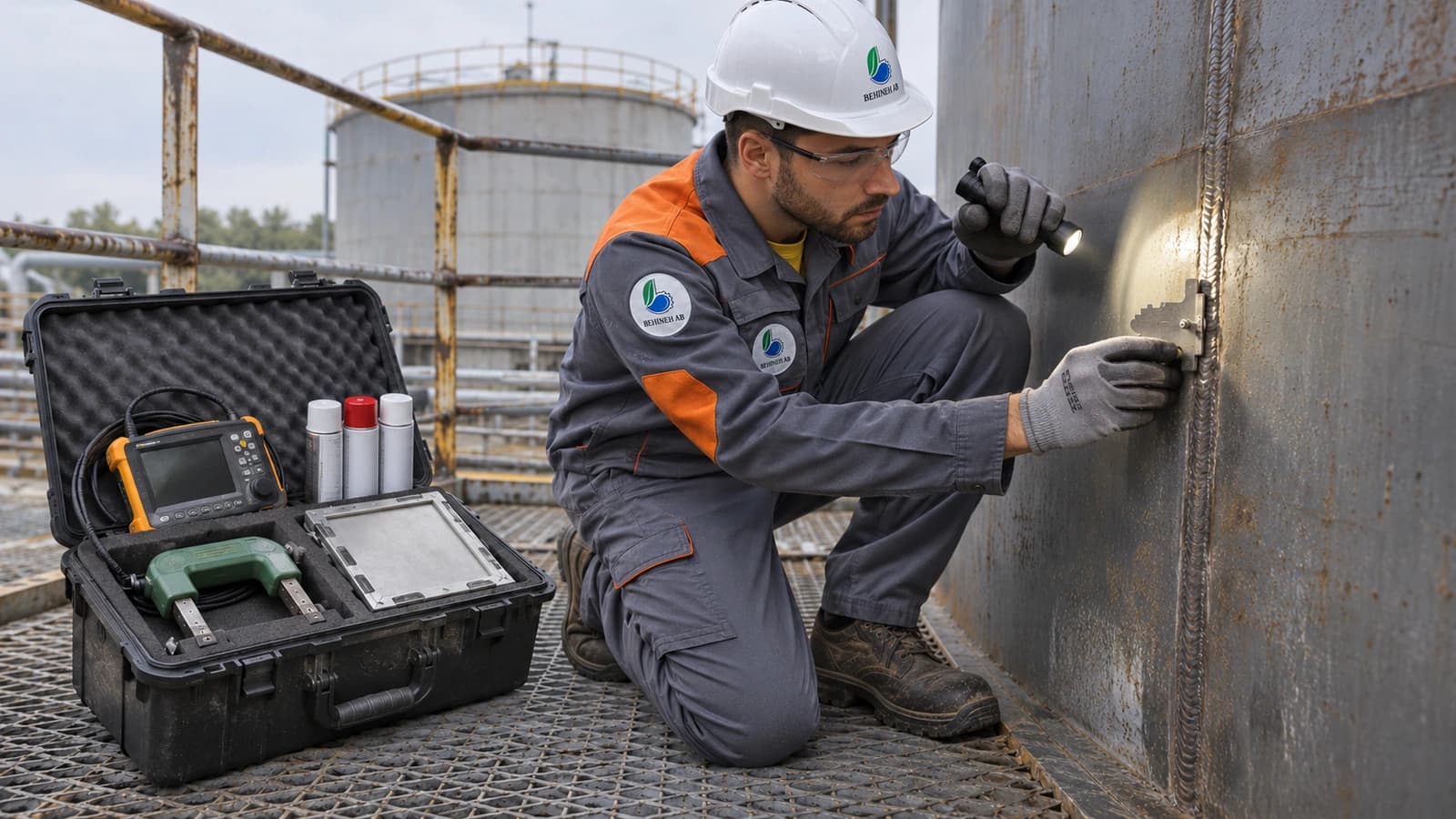
  • Inspector carrying out a non-destructive test on a steel tank shell weld

    Tank Tests: What Defect Does Each Test Find?

    Hydrotest, radiography, ultrasonic, liquid penetrant, magnetic particle and vacuum box. Each finds a particular defect and none can replace another. Here we compare them.

    Read more
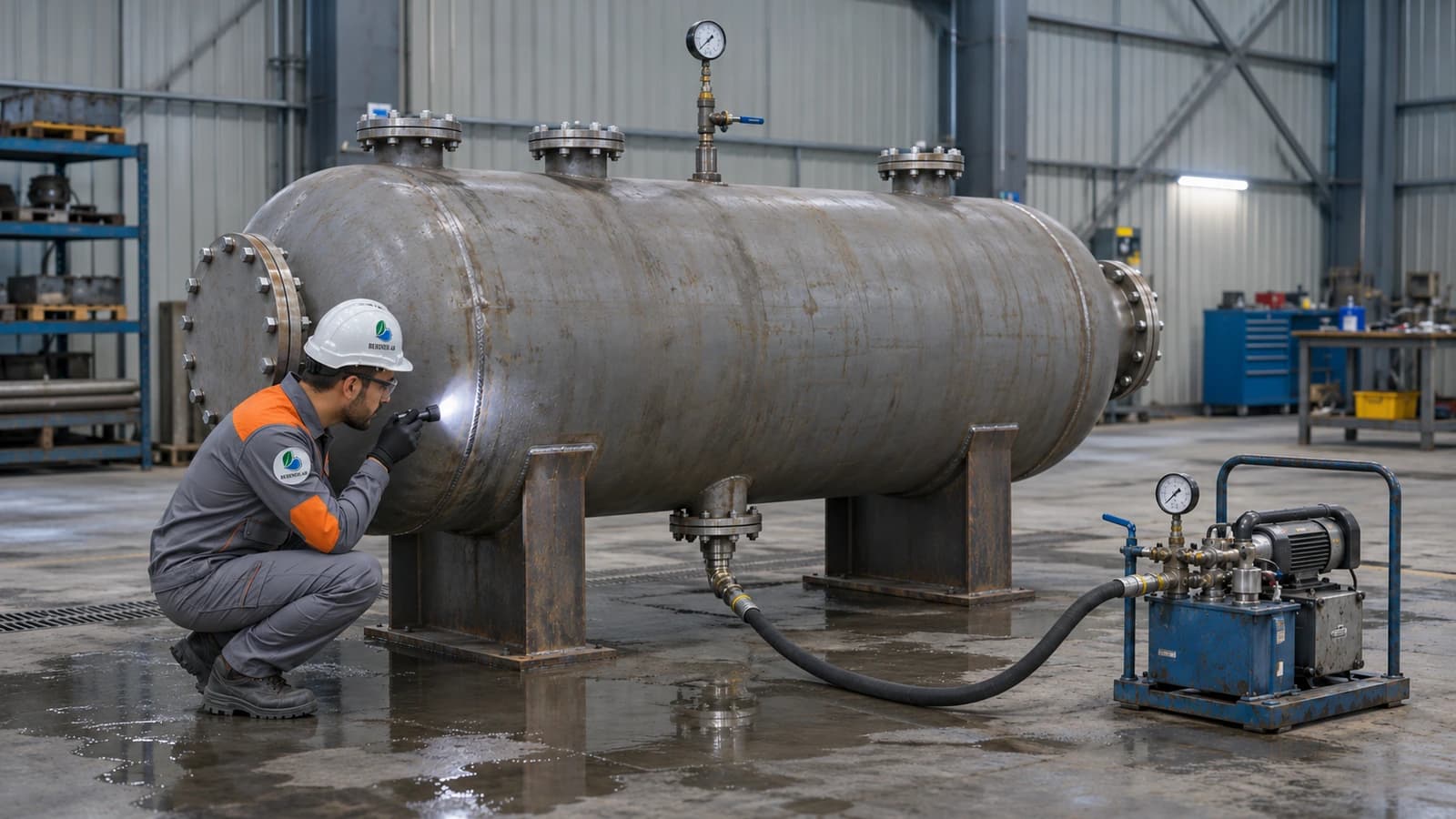
  • Pressure vessel under hydrostatic test with a pressure gauge in the Behineh Ab workshop

    Tank Hydrostatic Test, Step by Step

    The hydrotest is a tank's final exam before delivery, and we carry it out in our own factory. The test pressure, the work before filling, and the mistake that can ruin a tank while it is being drained.

    Read more
  • Radiography film of a tank shell weld on a film viewer

    Weld Radiography: What Percentage of Seams Must Be Tested?

    The radiography percentage sets the joint efficiency, and the joint efficiency sets the plate thickness. In other words, this decision directly affects the tank's weight and price.

    Read more