Spherical pressure vessel fabrication
Design, fabrication and use in the core industries
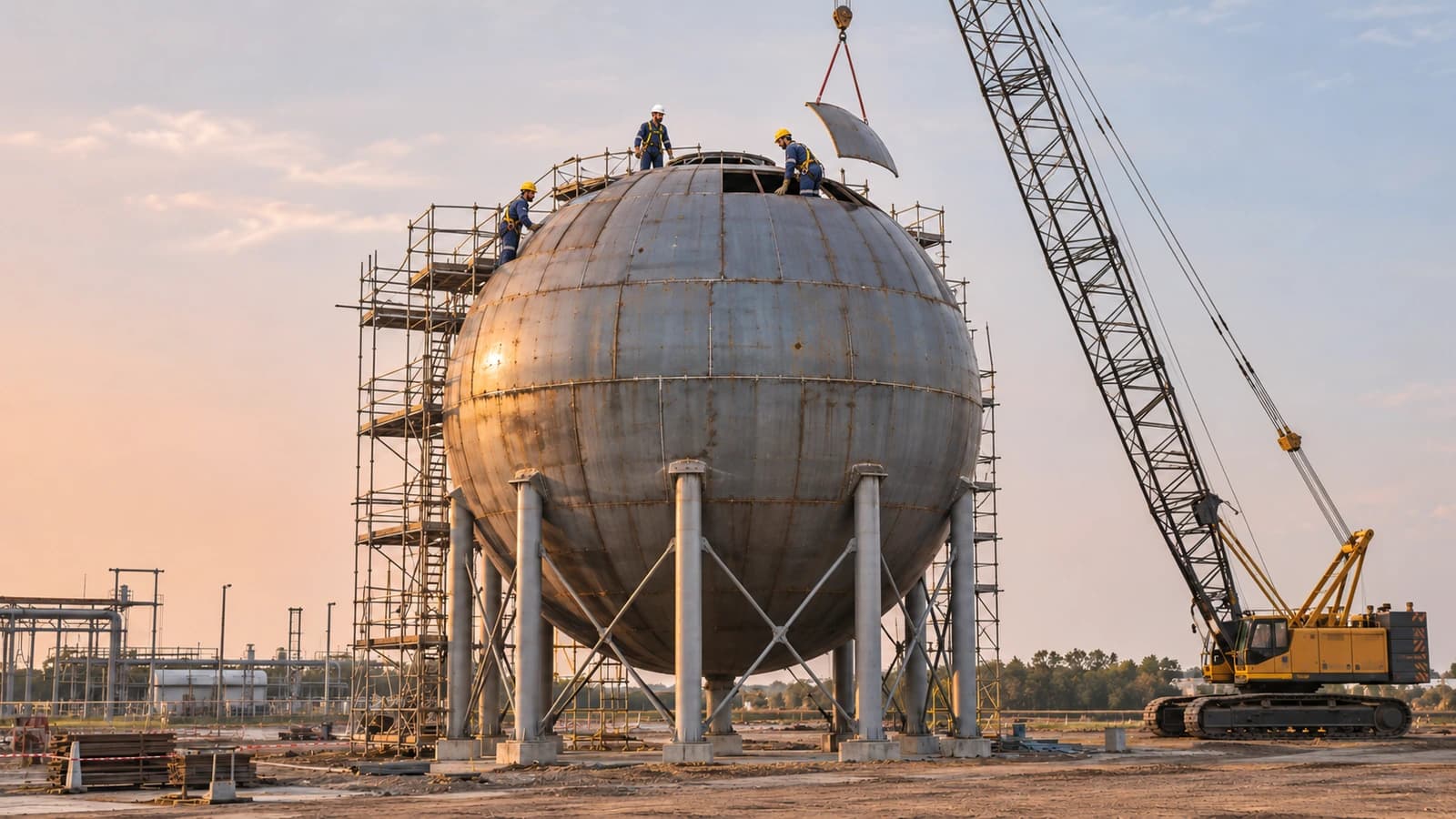
The spherical pressure vessel (Horton sphere) is one of the most reliable geometries for storing pressurised liquefied gases such as LPG, propane, butane, ammonia, LNG and hydrogen.
The choice of a spherical shape is rooted in solid mechanics: a sphere distributes stress evenly, and its wall thickness is about half that of an equivalent cylinder.
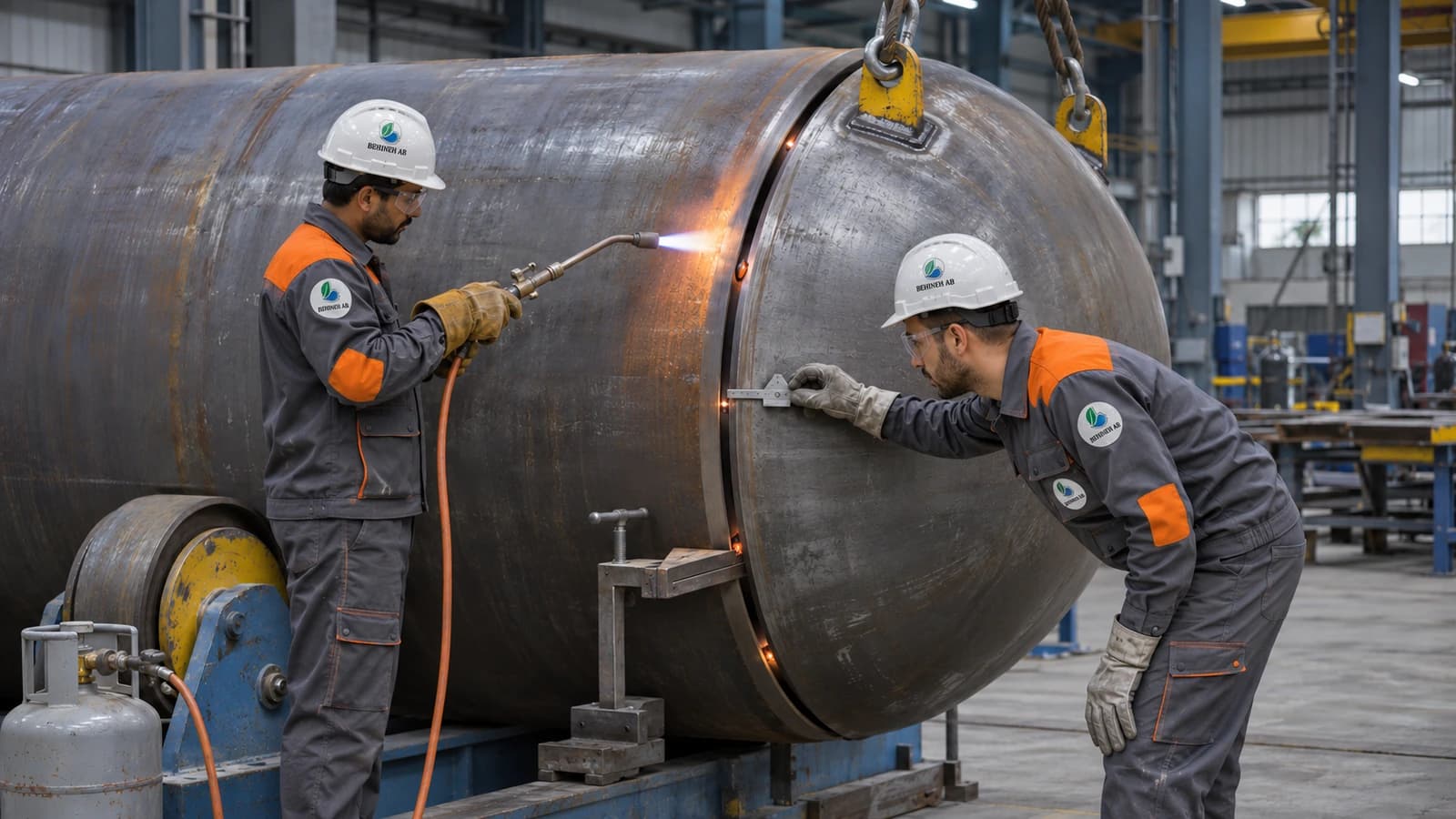
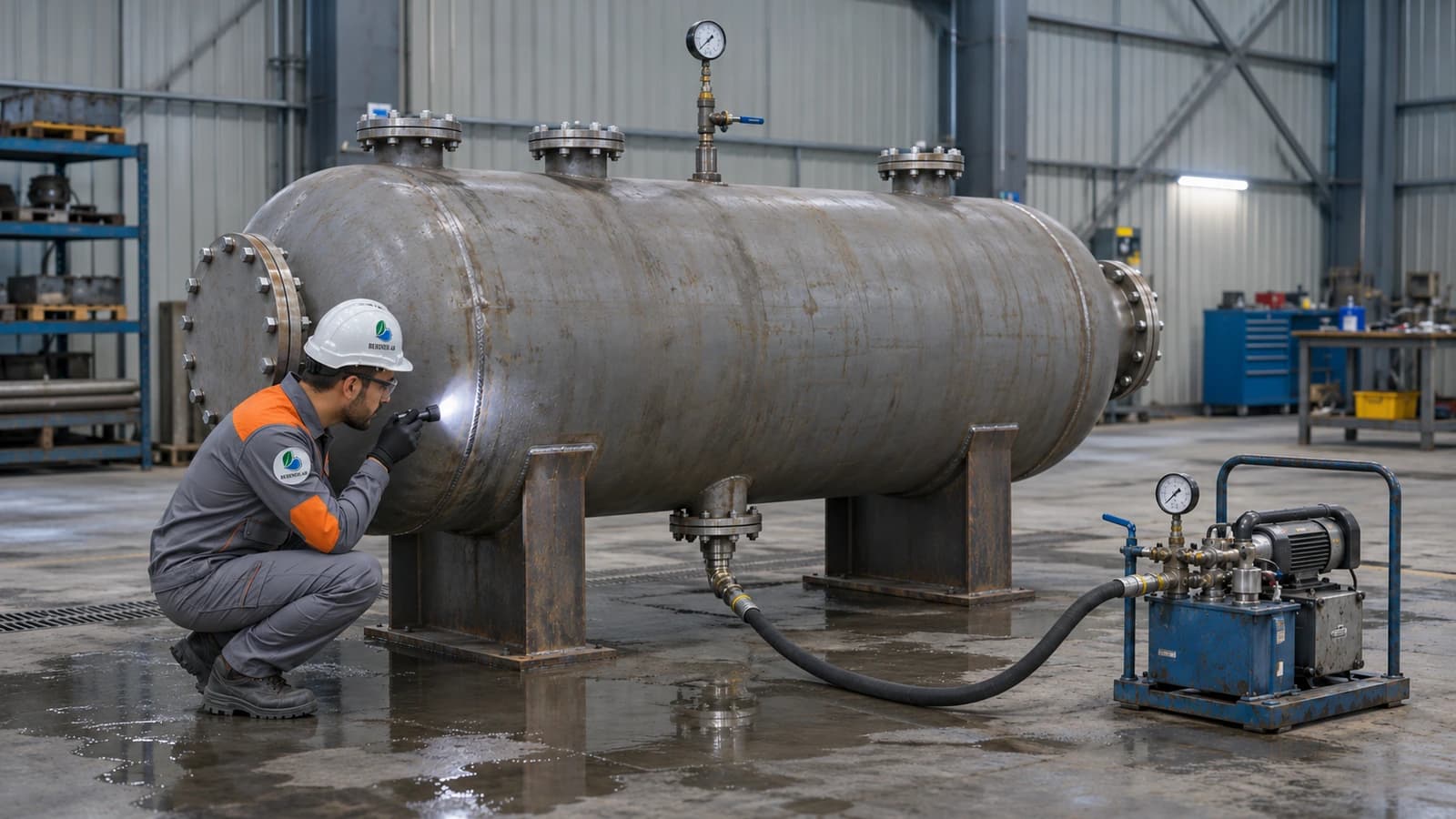
Behineh Ab designs and builds spherical vessels to ASME Section VIII, with calculation of the shell, the legs and the NDT requirements.
- Why is a spherical vessel used to store compressed gas?
- A spherical shape has the lowest surface-to-volume ratio and distributes the stress on the shell evenly, which lowers material cost compared with other shapes at the same design pressure.
- How is the support structure of a spherical vessel designed?
- It is calculated from the weight of the full vessel and lateral loads such as earthquake and wind, and is usually built as cylindrical or braced steel legs.
- What capacities is a spherical vessel suitable for?
- This type of vessel is usually cost-effective for industrial gas storage in capacities from several hundred to several thousand cubic metres.