Design and construction of
industrial citric acid plants!
Engineering, equipment supply and construction guide for an industrial citric acid production unit
Industrial production of citric acid is a biotechnological-chemical process: submerged fermentation of Aspergillus niger on molasses or glucose, followed by biomass separation, ion exchange, evaporation, crystallisation and drying.
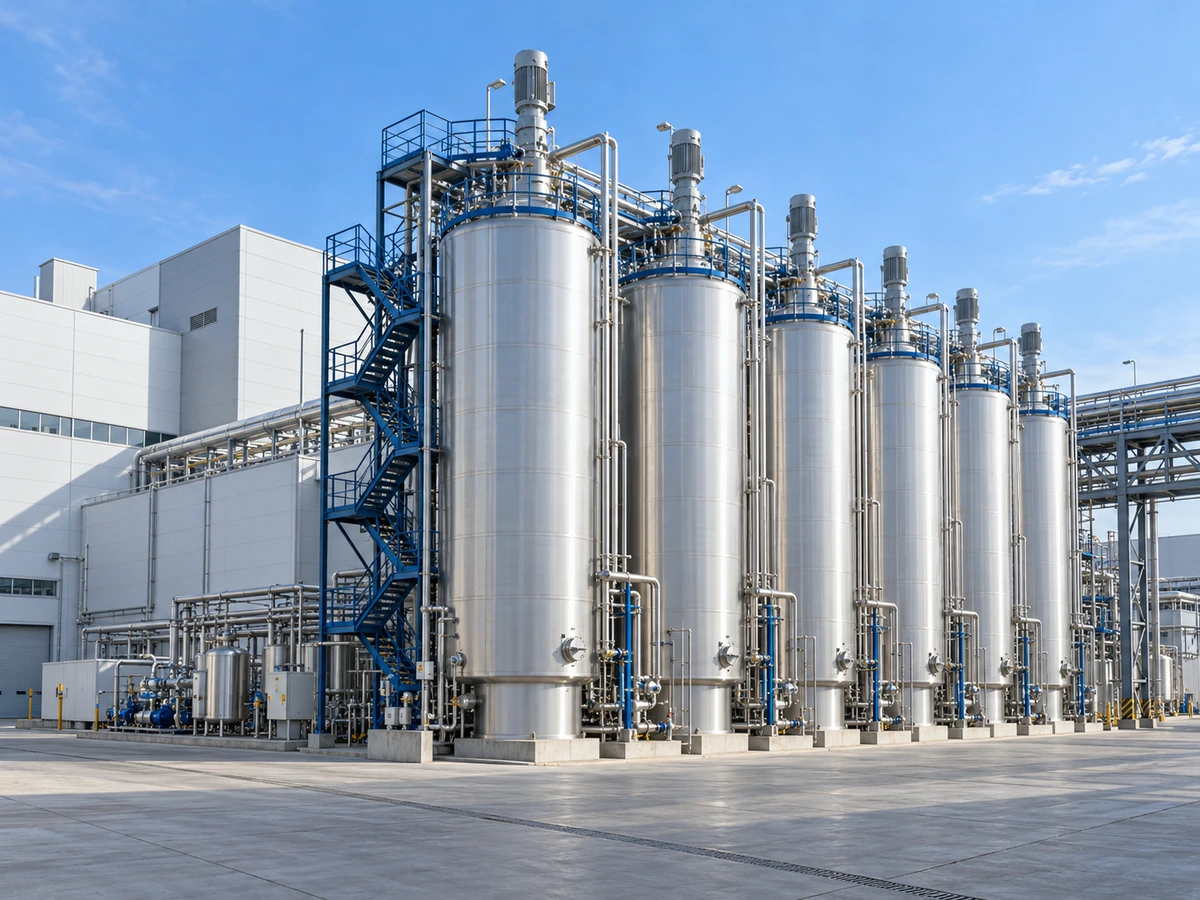
Design and construction of plants
for industrial citric acid production · Behineh Ab Engineering
Citric acid (C₆H₈O₇) is the world's most widely used organic acid made by microbial fermentation; more than 70% of production is used in the food and beverage industry as a pH regulator, preservative and flavouring, and it has an important share in pharmaceuticals, cosmetics and detergents (as a phosphate substitute).
Industrial production is a biotechnological-chemical combination: the sensitive fermentation section must be integrated with the stability of a classic chemical unit. This article covers the path from strain and substrate to the mass-energy balance, equipment, hygiene, automation, pre-commissioning and HSE.
2. The biotechnology process
The standard strain, with sugar conversion yields above 90% of theoretical, tolerance of low pH and GRAS status. With manganese deficiency, high sugar, acidic pH and sufficient DO, aconitase/isocitrate dehydrogenase are inhibited and citrate accumulates. Control of C/N, trace ions (Mn, Fe, Zn) and initial pH is vital to prevent oxalic/gluconic acid.
Surface: low capital, much space, poor control. Submerged (SmF): the modern standard, 100–500+ m³ fermenters, a 5–9 day cycle, continuous control. SSF on a moist solid bed for small scale with agricultural waste; bed temperature control is difficult. Large-scale design focuses on SmF.
Beet/cane molasses (pre-treated with hexacyanoferrate to precipitate metals). Glucose/starch syrup for pharmaceutical grade. Raw starch needs enzymatic hydrolysis (α-amylase + glucoamylase). Preparation: dilution, pH, mineral salts and filtration before sterilisation.
3. Mass and energy balance
Fermenter and crystalliser design begins with stoichiometry and heat duty:
The optimum fermentation temperature is usually 28–32 °C; the heat duty of a large fermenter can reach several hundred kW (surface-to-volume limit). Multi-effect vacuum evaporation to supersaturation; monohydrate crystals below ≈36.5 °C and anhydrous above. A wrong cooling profile → fine crystals or caking in storage.
4. Design of the main equipment
An aerated stirred tank with H/D≈2–3. A ring sparger for sufficient kLa; aeration usually 0.5–1.5 vvm. Rushton or elephant ear impellers for pseudoplastic mycelium without excessive shear; anti-vortex baffles. Jacket + internal coil for the high heat duty.
Continuous sterilisation is preferred over batch to reduce caramelisation of sugar: preheating to 130–140 °C, a holding tube and rapid cooling. Inlet air through a membrane filter <0.2 µm (industrial HEPA).
Biomass separation (RVF/filter press) → clarification/UF → cation/anion ion exchange → multi-effect vacuum evaporation → crystalliser → centrifuge → rotary dryer. The washed biomass is often used as fertiliser/animal feed.
5. Materials and hygienic design
A fermentation medium with a final pH often <2 and chlorides from molasses/water can cause pitting/SCC in 304. The standard for process contact is SS 316L; at hot/concentrated points sometimes 904L or Hastelloy C-276. Surface finish Ra usually <0.8 µm (sometimes 0.4 µm) by mechanical polishing and, in critical cases, electropolishing per 3-A/EHEDG.
Product piping is welded by automatic orbital GTAW; internal borescope inspection and a weld log (current, voltage, speed, argon) are mandatory for every joint.
6. Shop fabrication and automation
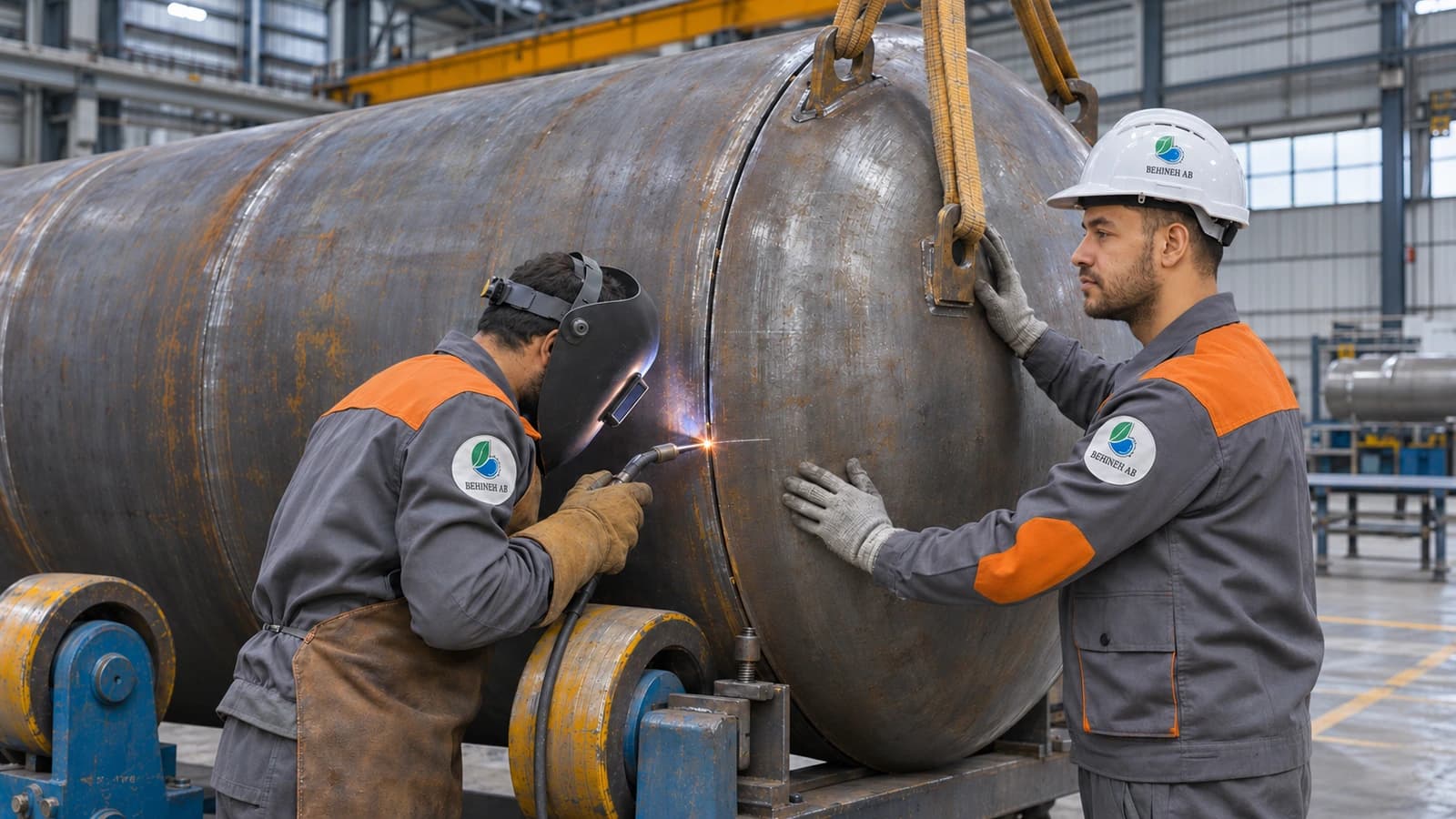
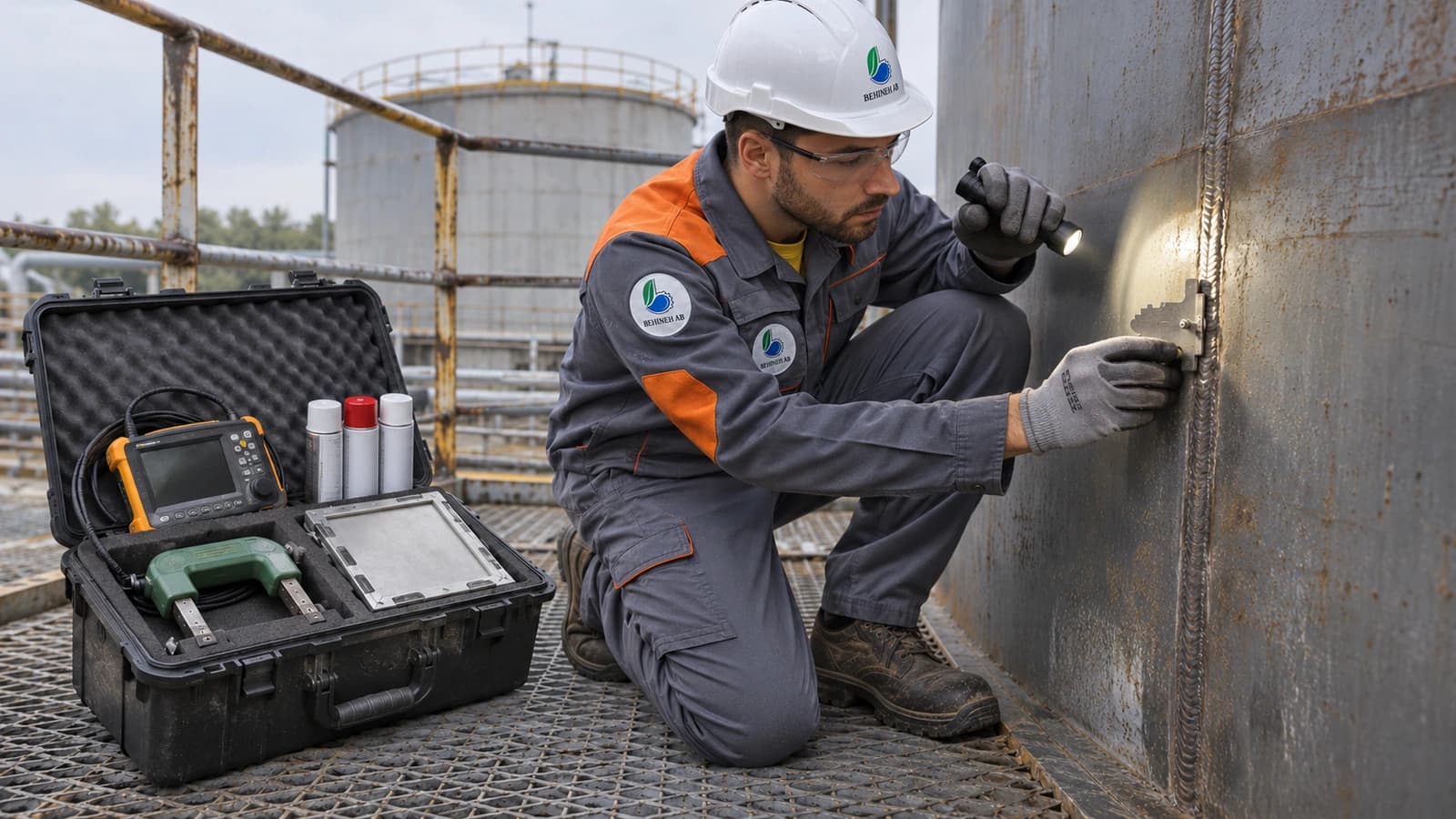
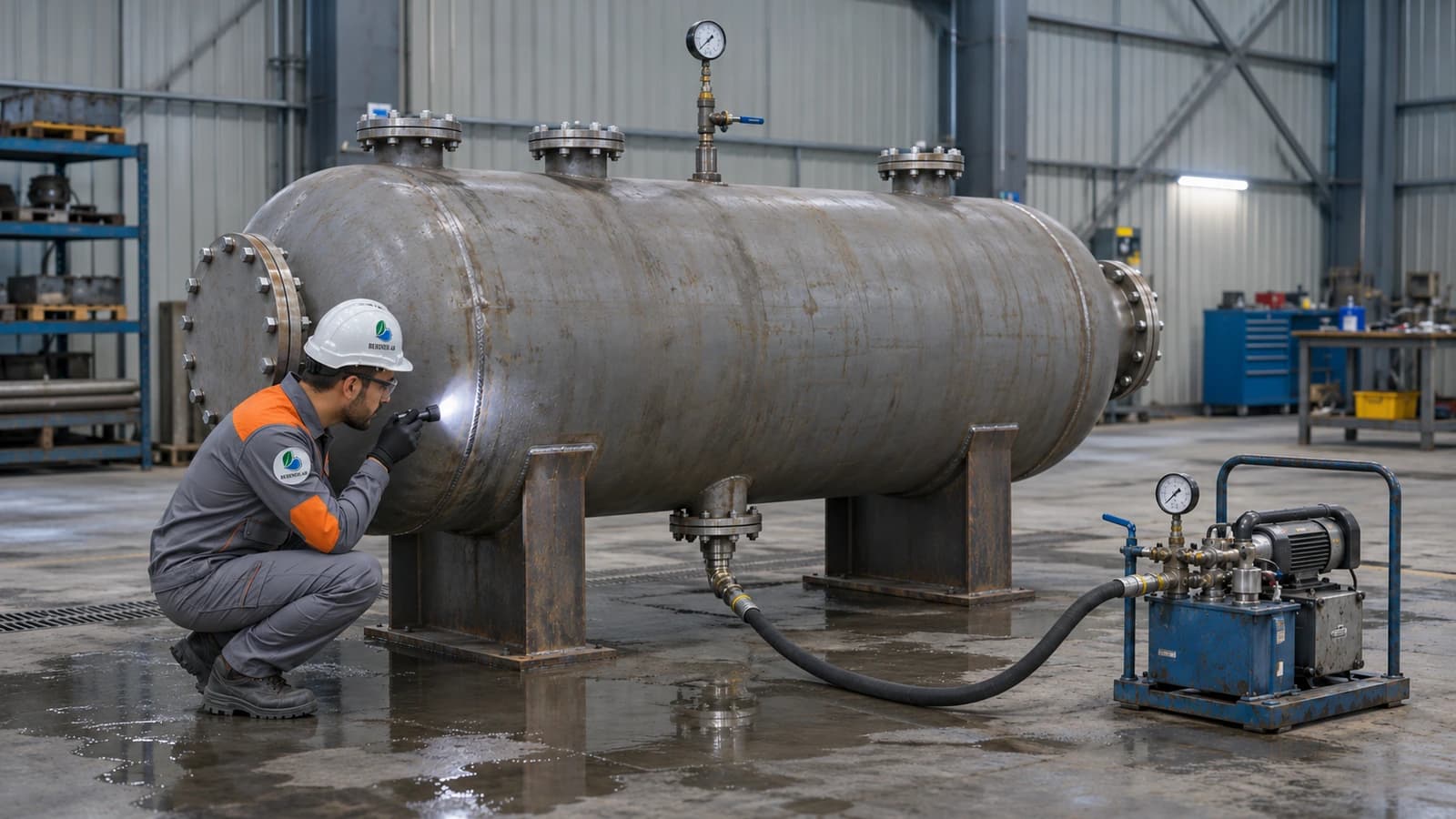
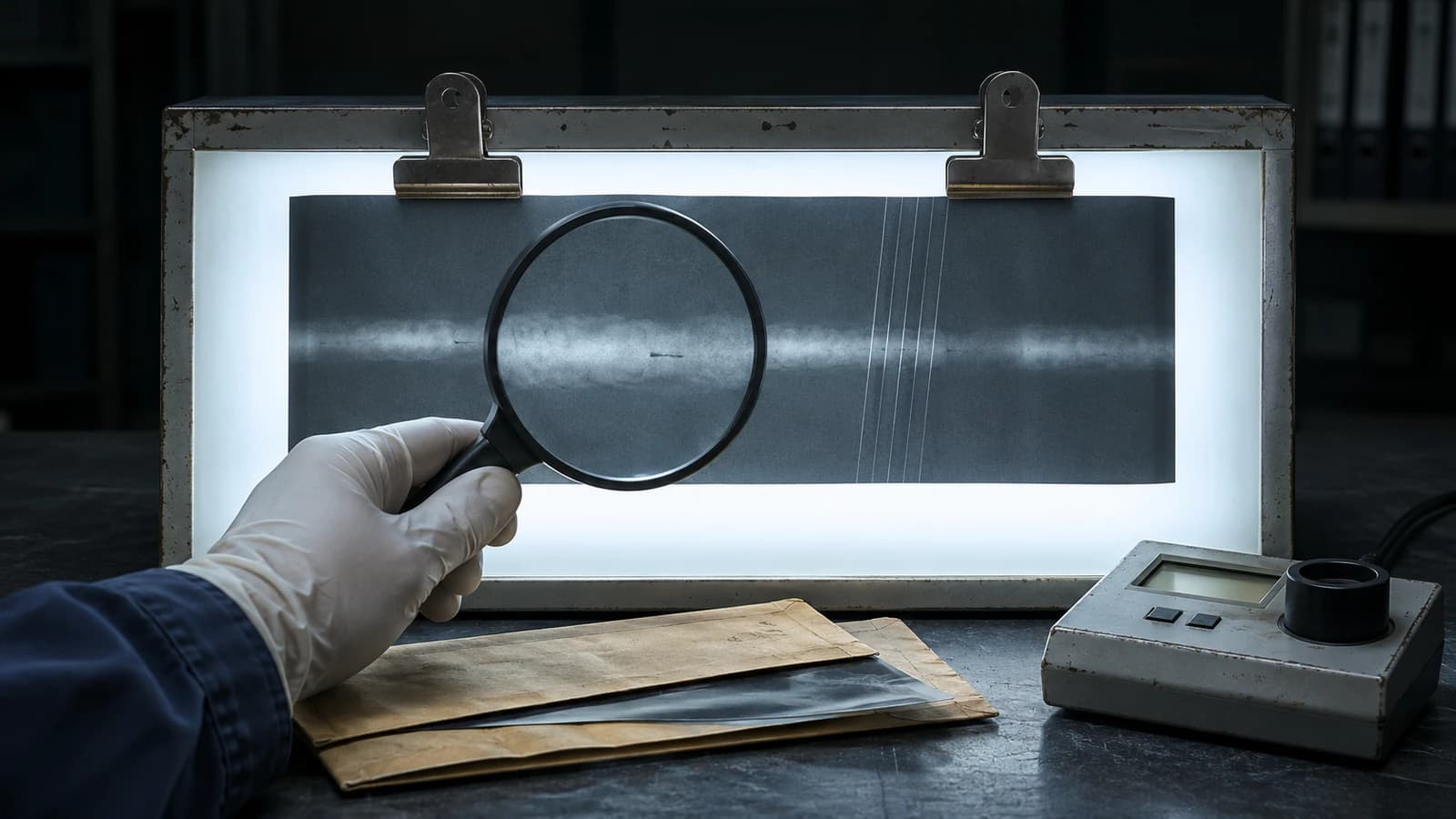
Modular shop fabrication + circumferential welding on site. Internal polishing checked with a portable profilometer. Design with no dead legs, self-draining, Tri-Clamp/hygienic welds; 360° spray balls and a coverage test (riboflavin). NDT per ASME VIII; helium leak test for shaft seals and sterility points.
| Equipment | Key selection criterion | Note |
|---|---|---|
| Basket/pusher centrifuge | Solids capacity · cake moisture · attrition | Acid compatibility of materials |
| Filter press | Slurry volume · cake washing · CIP | Automatic plate shifting |
| Rotary dryer | Temperature · residence time · dust collection | Dust explosion hazard · NFPA |
Temperature cascade ±0.5 °C; pH with SIP probes; optical/polarographic DO with control of aeration and agitator speed; fed-batch dosing based on a profile or OUR. Batch management per ISA-88 for traceability and pharmaceutical GMP.
7. Final testing and start-up
Alkaline wash → 10–20% nitric acid or citric acid → high-purity water → confirmation by ferroxyl test or surface potential. Lines are usually passivated by circulation.
A sterile hold of several days after sterilisation. Measurement of kLa with water and air. Calibration of T/P/pH/DO and load cells. CIP/SIP validation with wireless data loggers at remote points.
Seed fermenter chain → industrial inoculation → monitoring growth and sugar consumption → comparing yield/productivity with the design → tuning the set points. Several stable consecutive batches before commercial handover; an opportunity to fix dead zones and weak CIP.
8. Waste and HSE
Wastewater with high COD/BOD: anaerobic UASB (biogas for the boiler) + supplementary aerobic treatment. In the traditional lime route, gypsum (CaSO₄) is a bulky by-product — recycled for construction or landfilled under control; new designs tend towards IX/extraction to reduce gypsum.
Combustible dust in the dryer/packaging, fermentation and anaerobic odours, acid/alkali safety in CIP and passivation, and fire fighting suited to dust — included in the flowsheet from FEED.
9. Outcome and new trends
Variation in strain/molasses yield justifies strain improvement and soft sensors that predict the end of a batch. Heat recovery from sterilisation, integrated multi-effect evaporation, biogas from wastewater and predictive CIP automation are the path to lower-energy units.
Conclusion
The success of a citric acid plant lies in combining the strain and metabolic control, a scalable hygienic fermenter, downstream processing to food/pharmaceutical purity, and repeatable biological start-up.
Behineh Ab Engineering designs and builds the key equipment (fermenters, tanks, exchangers, hygienic lines) to suit the capacity and standards of the project.
Technical specifications
Why is SmF the industry standard?
Continuous control of temperature, pH, DO and agitation, higher biomass density and a shorter cycle (5–9 days) allow industrial scale-up; the surface method has remained mainly for small scale.
Why 316L and not 304?
A fermentation medium with pH below 2 and chlorides from molasses/water can cause pitting and SCC in 304; 316L, with molybdenum and low carbon, is the standard for process contact.
Dust hazard in the dryer
Citric acid dust at certain concentrations poses a dust explosion hazard; a cyclone/bag filter and explosion venting per NFPA must be included from the design stage.
Applications and industries
Photo gallery
Process stainless steel equipment gallery
Frequently asked questions
Request a quote
Citric acid plant design and construction
Enter the pressure, temperature and fluid; our engineers send a technical proposal and price within 24 working hours.
- Written technical reply with a proposed concept drawing
- Site visit in Tehran and surroundings
- 24-month warranty on fabrication and welding