Plastic elevated tank

Plastic elevated tanks for storing water at height

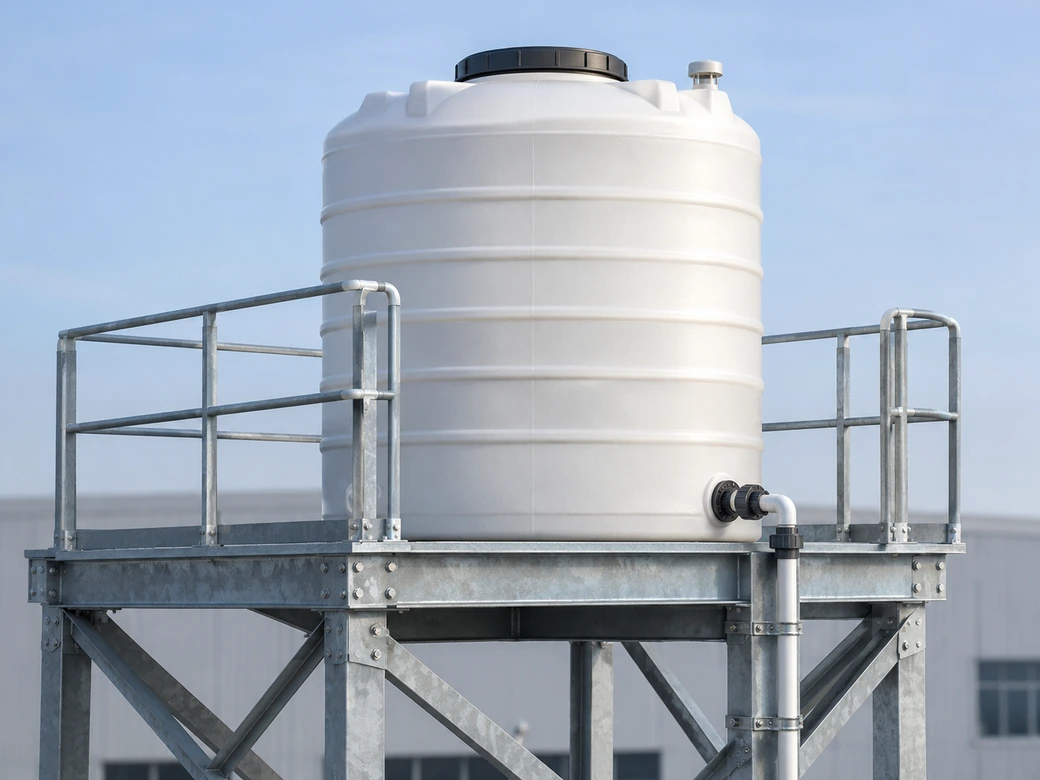
A plastic elevated tank is made of polyethylene or GRP, and its low weight makes it a good fit for steel or concrete structures with limited load capacity. These tanks are fully resistant to rust and corrosion and need no periodic painting.
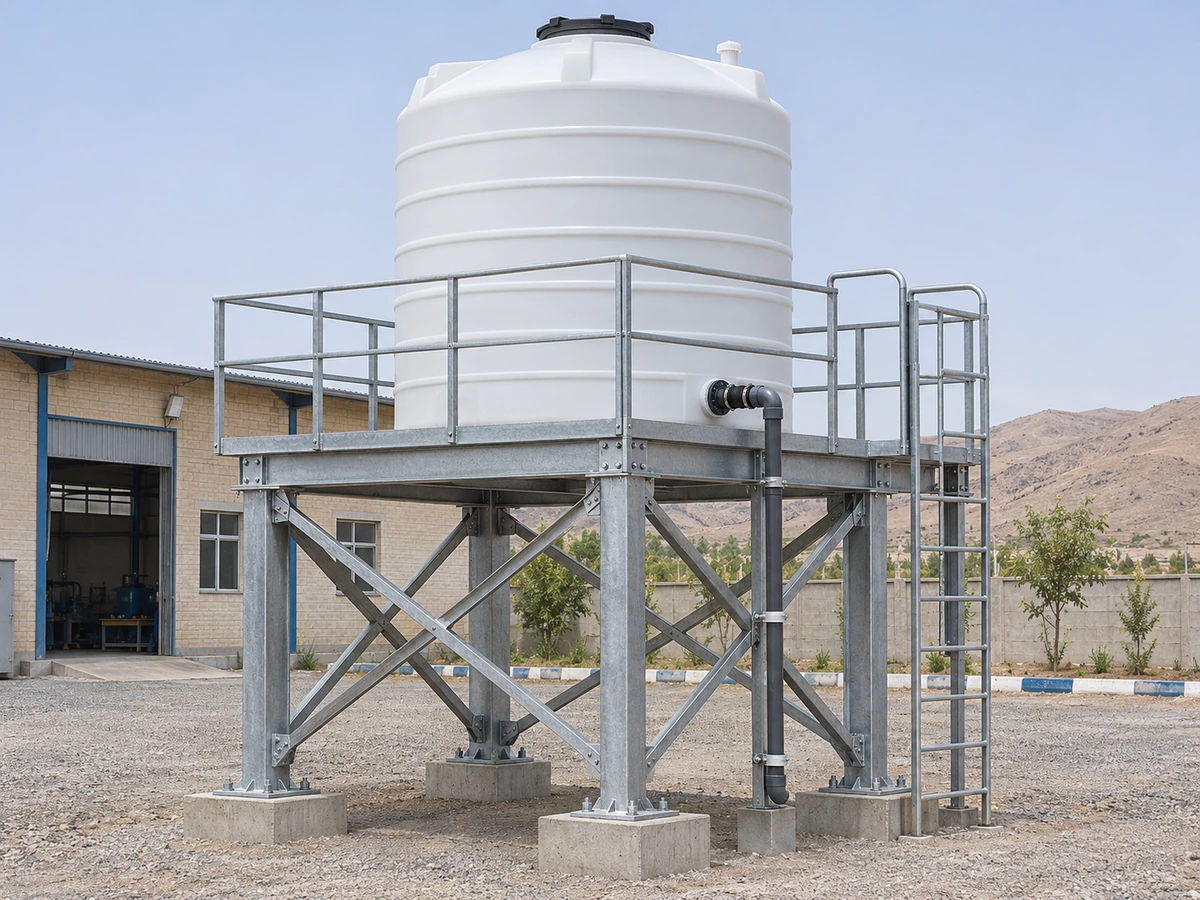
Plastic elevated tank
Material
Polyethylene (PE) or GRP
Capacity
Usually up to a few tens of m³
UV resistance
Grade stabilised against sunlight
Installation
On a light steel or concrete structure

Key features

Light weight reduces the load on the supporting structure
Resistant to corrosion and rust
UV-stabilised grade
Faster to move and install than steel tanks
No painting or periodic protection needed
Hygienic grade suitable for drinking water
Lightweight plastic elevated tank on a steel structure

Technical details

For drinking water, a hygienic, UV-resistant polyethylene grade is used to prevent algae growth and loss of water quality under direct sunlight. Their capacity is usually more limited than steel tanks of the same size.

Besides supplying and installing plastic elevated tanks, Behineh Ab designs the supporting structure for the weight of the full tank.

Technical specifications

Material
Polyethylene (PE) or GRP
Capacity
Usually up to a few tens of m³
UV resistance
Grade stabilised against sunlight
Installation
On a light steel or concrete structure
Shell colour
Black or dark to prevent algae

Polyethylene or GRP: which to choose?

Polyethylene is an economical, lightweight option for most drinking-water and agricultural uses, but larger volumes usually need more structural reinforcement. GRP (fibreglass) offers higher mechanical strength at similar volumes and suits larger tanks or harsher loading conditions.

Volume and temperature limits of plastic tanks

Plastic elevated tanks are usually most economical for medium volumes (up to a few tens of cubic metres); at very large volumes the weight of the reinforcing structure needed can cancel out the plastic's weight advantage. At very high or low temperatures, polyethylene also loses more of its mechanical properties than steel.

Installing and fixing to a steel support structure

Unlike steel tanks, which can be welded directly to the support structure, plastic tanks are usually seated on the structure with mechanical clamps and retaining straps so no local stress is put on the plastic shell. Designing these fixings correctly prevents the tank from deforming over time.

Applications and industries

Rural water networks
Farms and orchards
Farms and orchards
Small and medium workshops
Sites with limited access for heavy cranes
Temporary projects
Temporary projects
Villas and homes
Villas and homes

Frequently asked questions

Request a quote
Plastic elevated tank

Enter the pressure, temperature and fluid; our engineers send a technical proposal and price within 24 working hours.

  • Written technical reply with a proposed concept drawing
  • Site visit in Tehran and surroundings
  • 24-month warranty on fabrication and welding
Call our engineering office
+98 21 4686 6276

Your details are confidential and used only to prepare a technical proposal.

All articles
  • Assembling the shell and head of a steel tank in the Behineh Ab tank fabrication workshop

    Steel Tank Manufacturing Steps, from Order to Delivery

    The steps of building a steel tank, from the data sheet to testing and dispatch. A 20,000-litre tank takes about three weeks; here is what that time is spent on.

    Read more
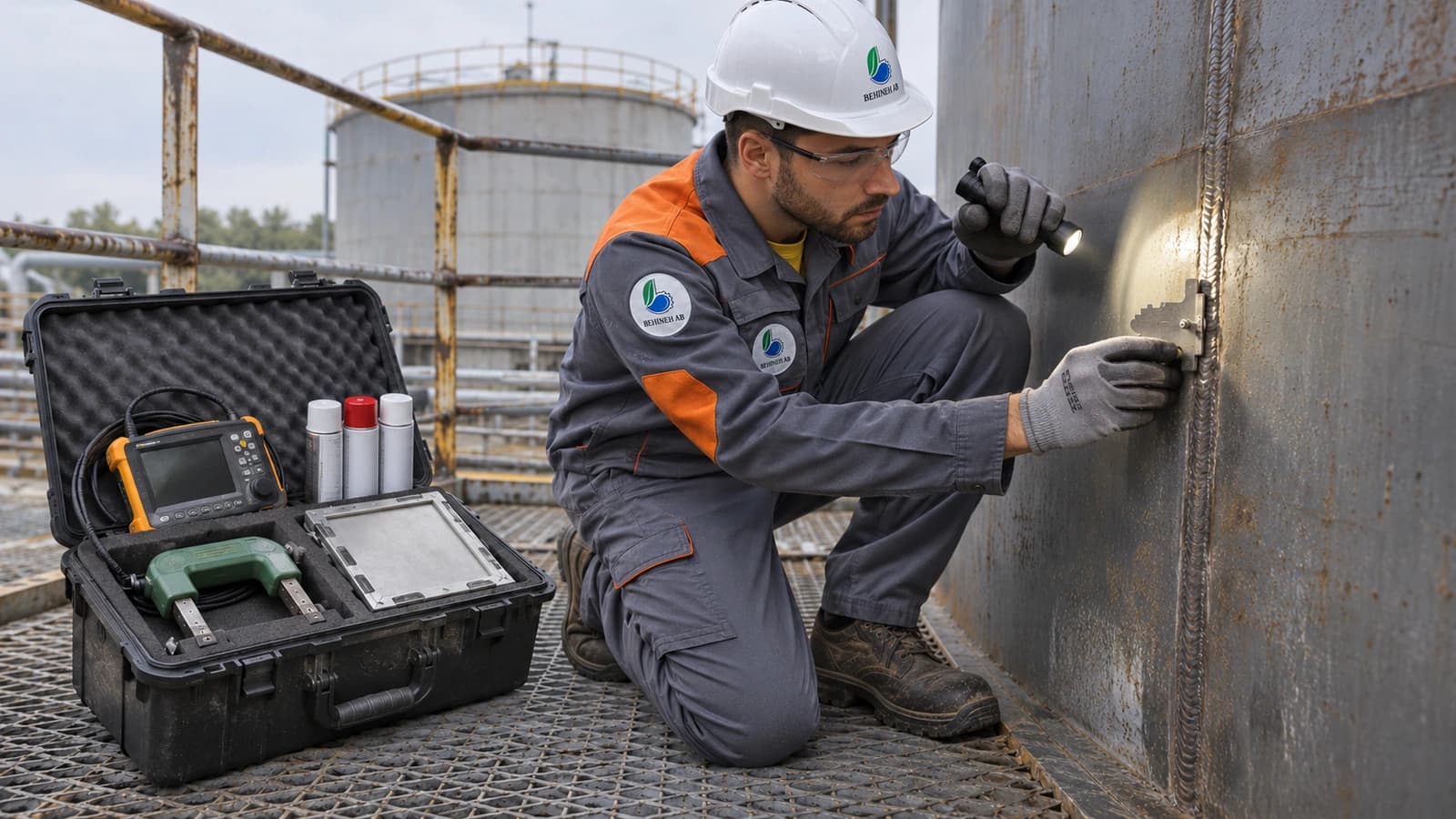
  • Inspector carrying out a non-destructive test on a steel tank shell weld

    Tank Tests: What Defect Does Each Test Find?

    Hydrotest, radiography, ultrasonic, liquid penetrant, magnetic particle and vacuum box. Each finds a particular defect and none can replace another. Here we compare them.

    Read more
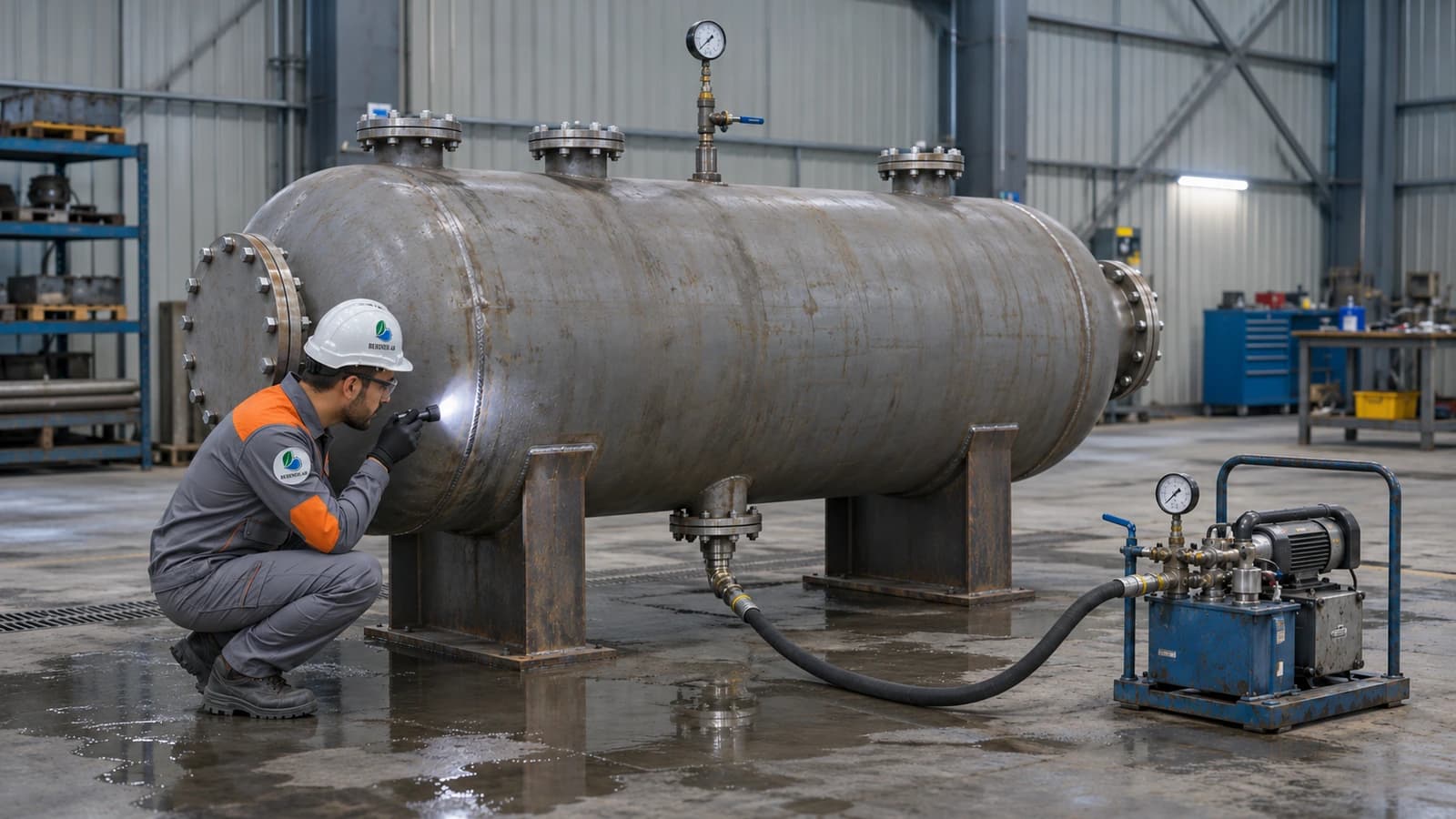
  • Pressure vessel under hydrostatic test with a pressure gauge in the Behineh Ab workshop

    Tank Hydrostatic Test, Step by Step

    The hydrotest is a tank's final exam before delivery, and we carry it out in our own factory. The test pressure, the work before filling, and the mistake that can ruin a tank while it is being drained.

    Read more
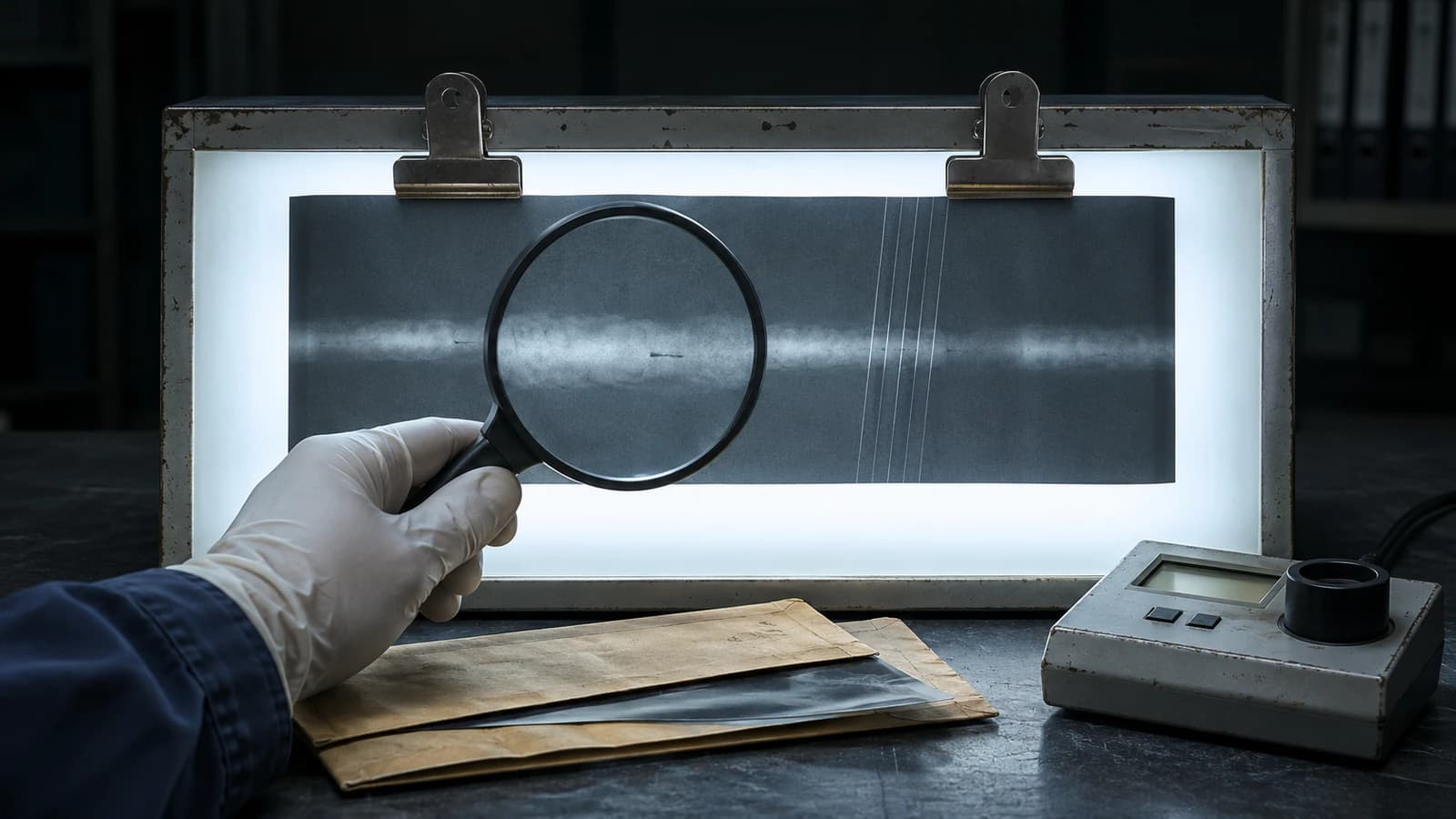
  • Radiography film of a tank shell weld on a film viewer

    Weld Radiography: What Percentage of Seams Must Be Tested?

    The radiography percentage sets the joint efficiency, and the joint efficiency sets the plate thickness. In other words, this decision directly affects the tank's weight and price.

    Read more