Design and fabrication of
acid storage tanks resistant to corrosion!
The shell material must match the exact acid, not be chosen in general
Different acids behave very differently towards metals. Concentrated sulphuric acid at ambient temperature is fairly compatible with carbon steel, but the same acid at a lower concentration or a higher temperature can quickly corrode that same metal. That is why an 'acid tank' is not a single product: each design depends on the acid, its concentration and its temperature.
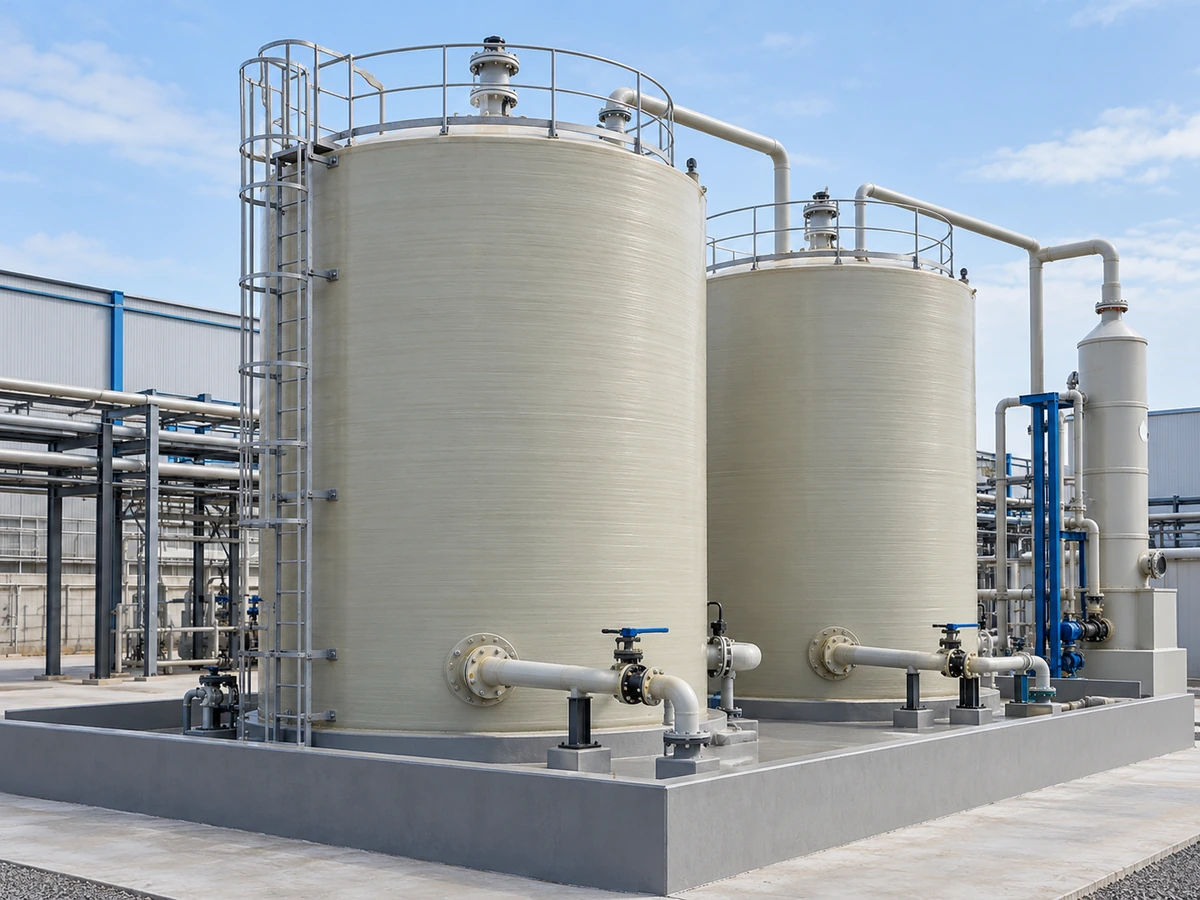
Key features
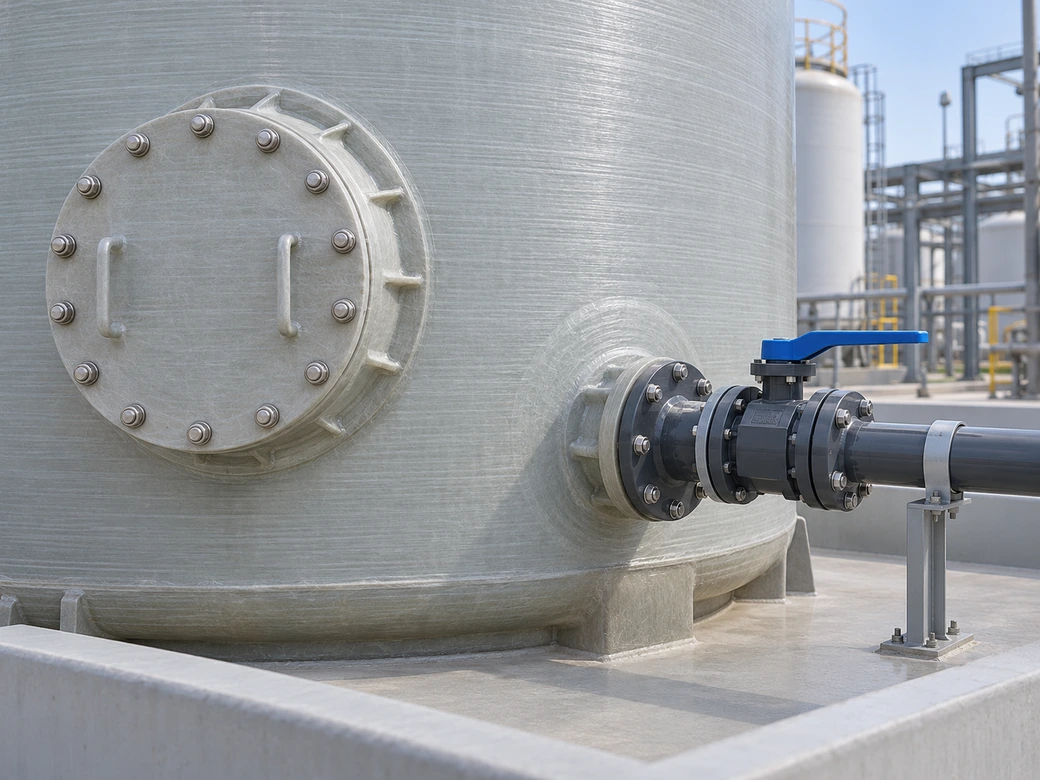
Technical details
Thanks to its molybdenum content, 316L stainless steel resists chloride and dilute acids better than 304; but for hot, concentrated acids such as hydrochloric acid, a rubber lining or FRP (fibreglass) is usually the safer choice.
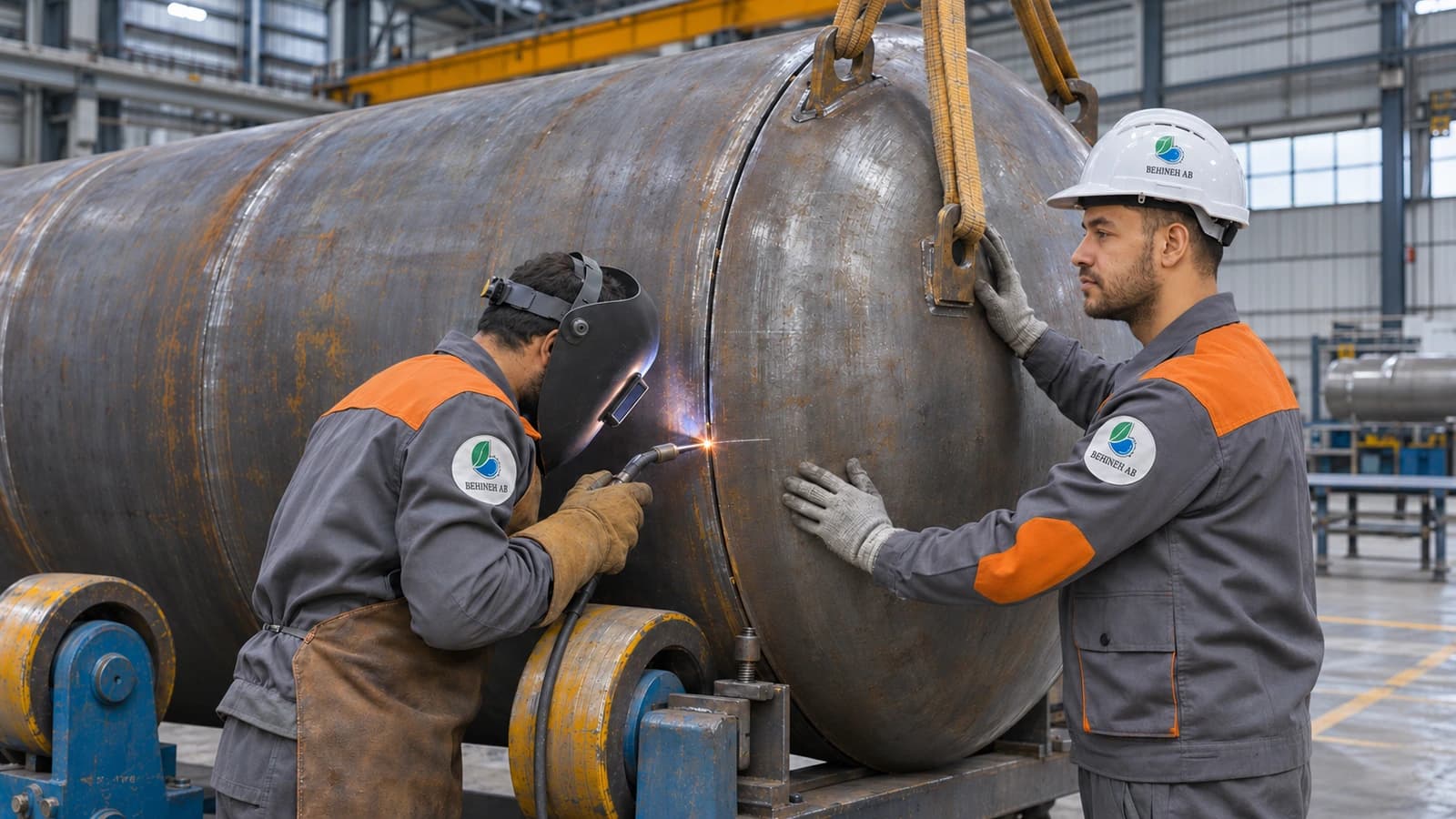
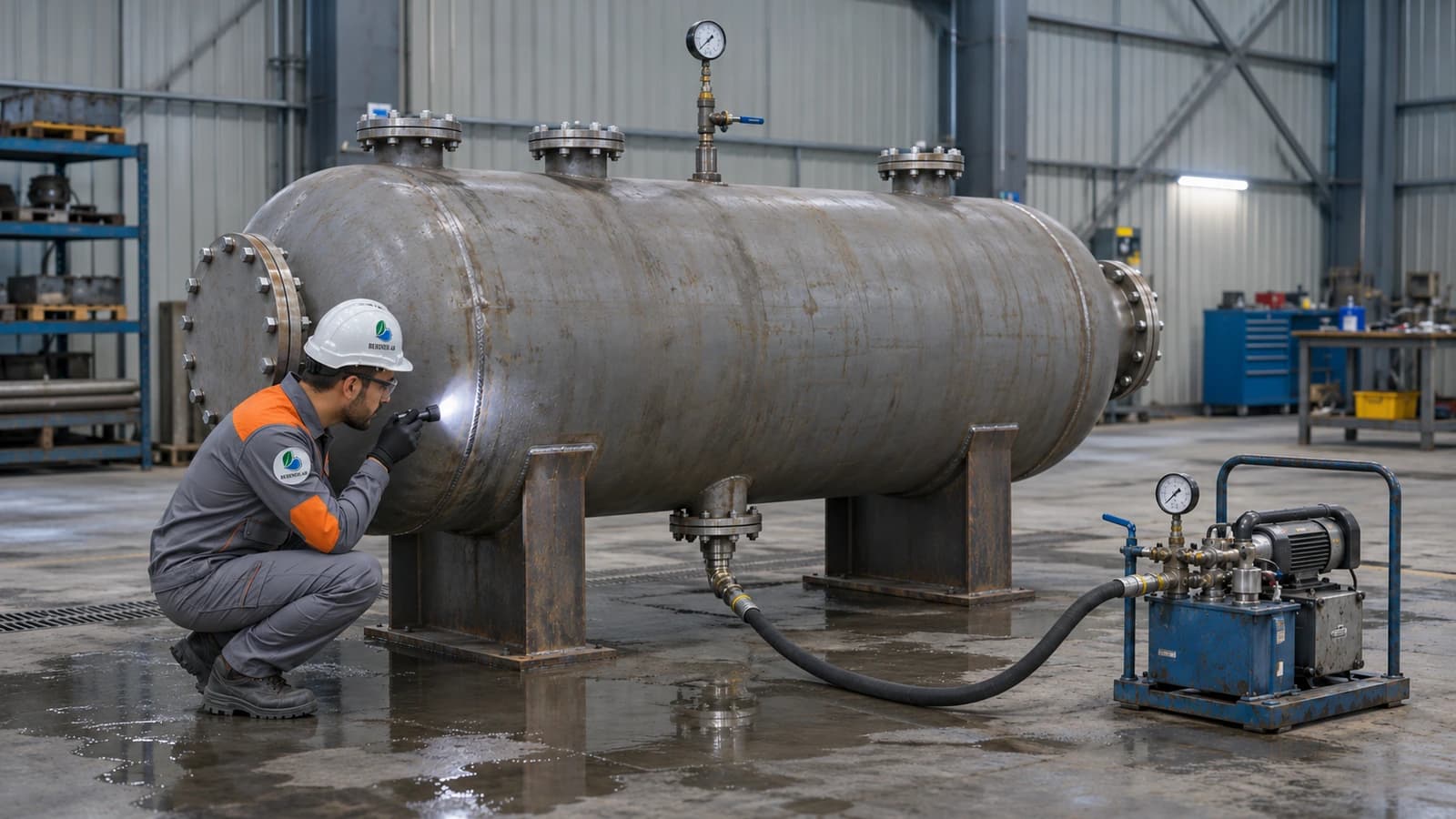
Before choosing the material, Behineh Ab checks the concentration, temperature and possible impurities of the project's acid, then designs and builds the tank together with a secondary wall and the necessary safety equipment.
Technical specifications
Which acid suits which shell material?
Before choosing the material, establish which family the acid belongs to: strong mineral acids (sulphuric, nitric, phosphoric) behave differently from halogen acids (hydrochloric, hydrofluoric). The table below is a first guide.
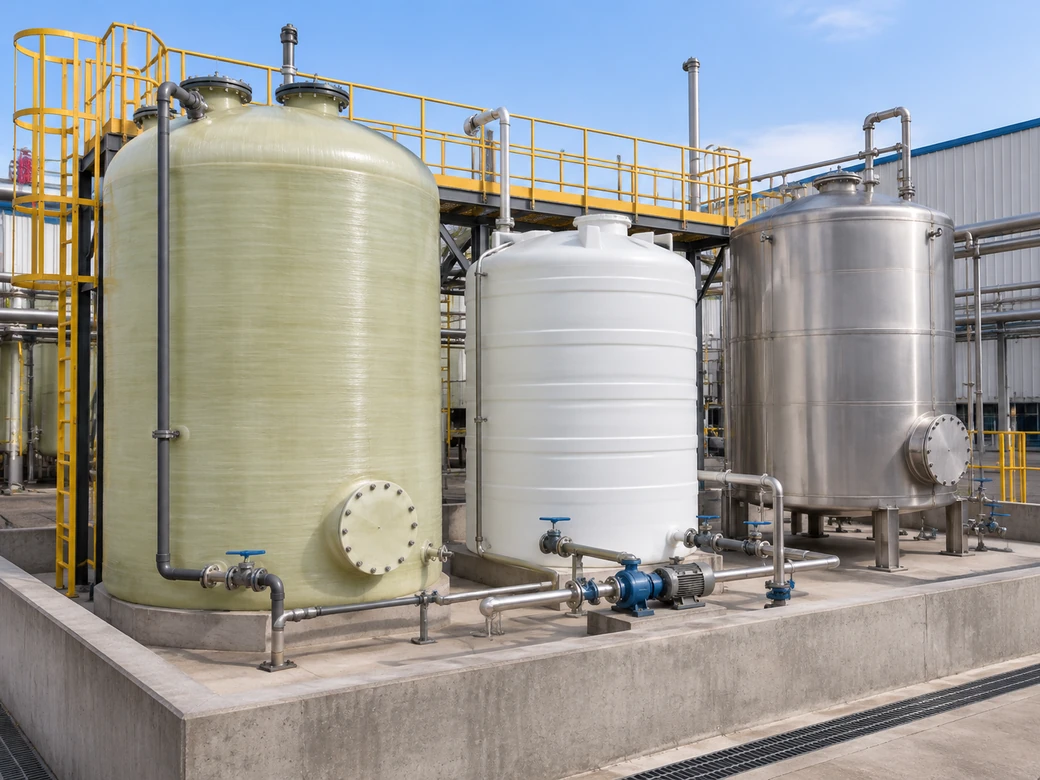
Polyethylene (HDPE): the most common practical choice
Alongside stainless steel and FRP, which are recommended for hot, concentrated acids, a large share of acid tanks are in practice made of high-density polyethylene or fibreglass-reinforced polyethylene — especially for phosphoric acid (odourless, widely used in fertiliser and beverage production) and peracetic acid (a sanitiser in the food and pharmaceutical industries), which are well compatible with HDPE at normal concentrations.
Before buying a polyethylene acid tank, check the exact name and concentration of the chemical; polyethylene's resistance changes sharply with concentration and temperature, and the compatibility of fittings, gaskets and valves with that chemical must be confirmed separately.
Required secondary wall and safety equipment
Unlike many other chemicals, an acid leak is a direct danger to people, so a secondary wall is not optional for acid tanks but a practical requirement. The containment basin must be able to hold the whole tank volume in a worst-case leak.
Alongside the secondary wall, an emergency shower and eyewash close to the tank, and auxiliary equipment (valves, fittings, pumps) made of materials compatible with the same acid, are an inseparable part of a safe design.
Periodic maintenance and inspection of acid tanks
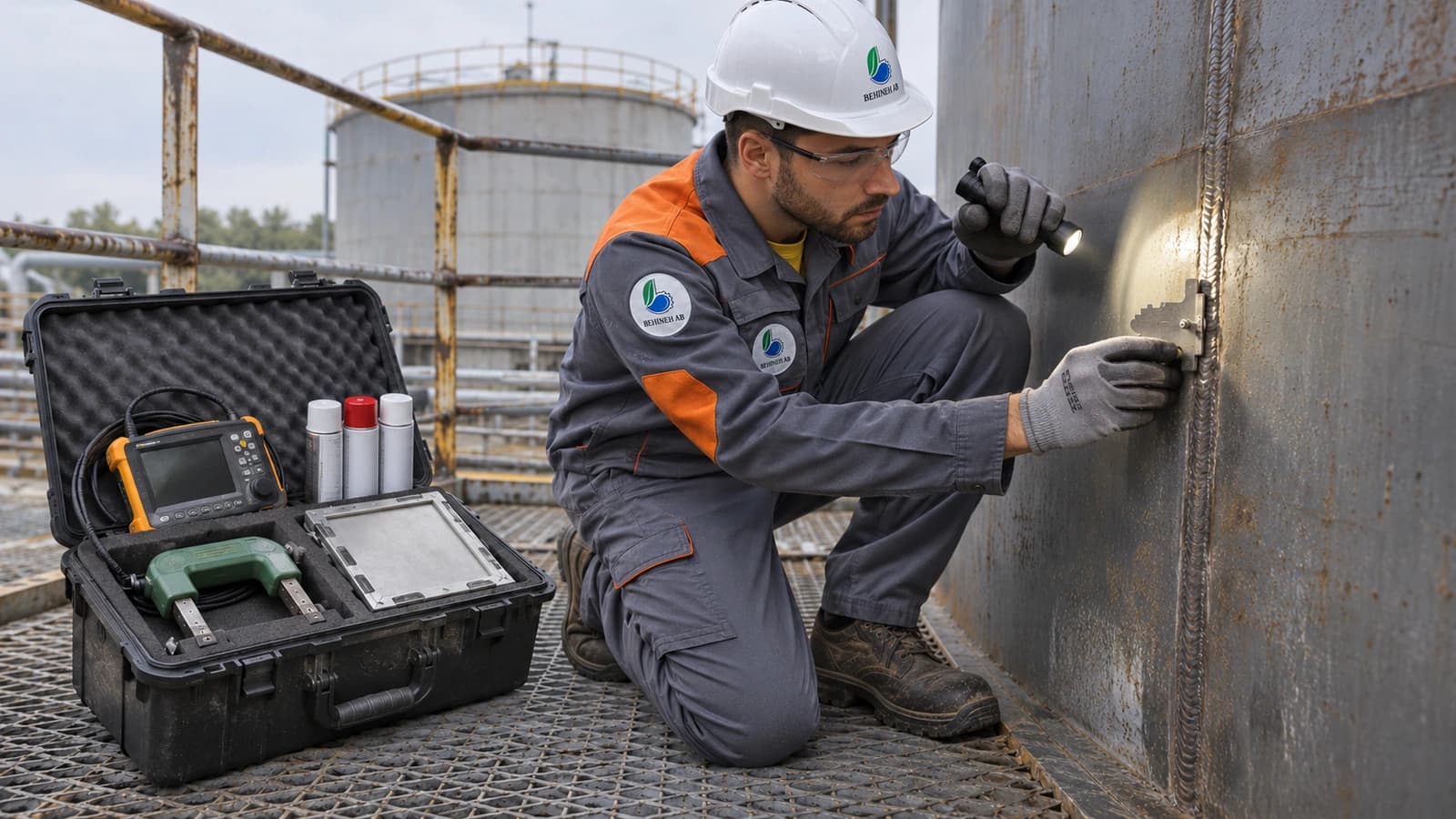
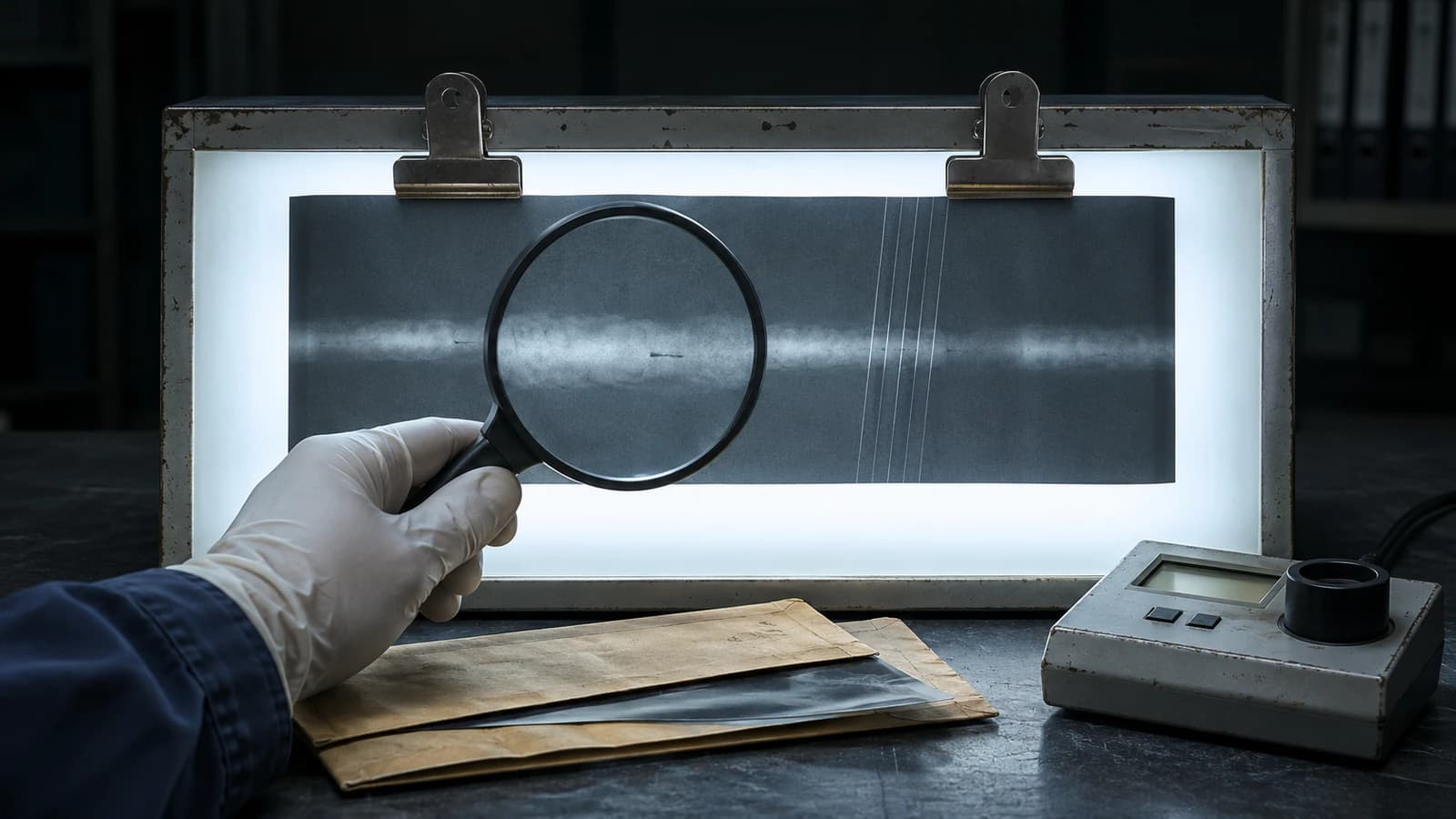
Even with the right material, periodic thickness inspection of the shell (especially at welds and the tank bottom) is essential to spot local corrosion early. Thinning in acid tanks is usually uneven and happens faster where there is turbulence or vapour condensation.
Rubber or FRP internal linings also have a limited life and must be inspected at intervals set by the manufacturer and replaced when needed, so the acid never reaches the base metal.
Applications and industries
Photo gallery
Acid storage tank gallery
Frequently asked questions
Request a quote
Acid storage tank fabrication
Enter the pressure, temperature and fluid; our engineers send a technical proposal and price within 24 working hours.
- Written technical reply with a proposed concept drawing
- Site visit in Tehran and surroundings
- 24-month warranty on fabrication and welding