Carbon filter

Activated carbon pressure filters for water quality improvement

A carbon filter uses granular activated carbon (GAC) to adsorb free chlorine, taste/odor compounds, and part of dissolved organics. It is typically a metal pressure vessel placed after a sand filter.

Behineh Ab builds carbon filters with carbon steel or stainless shells, GAC beds, distributors, and service/backwash connections matched to flow and inlet chemistry.

Typical applications include drinking water polishing, RO chlorine protection, food/pharma utilities, and process water treatment.

Does a carbon filter replace a sand filter?
No. Carbon is for adsorption; sand is for particulate removal. They are usually used in series.
How long does GAC last?
Service life depends on chlorine/organic load and flow. Change-out is based on outlet quality and performance monitoring.
All articles
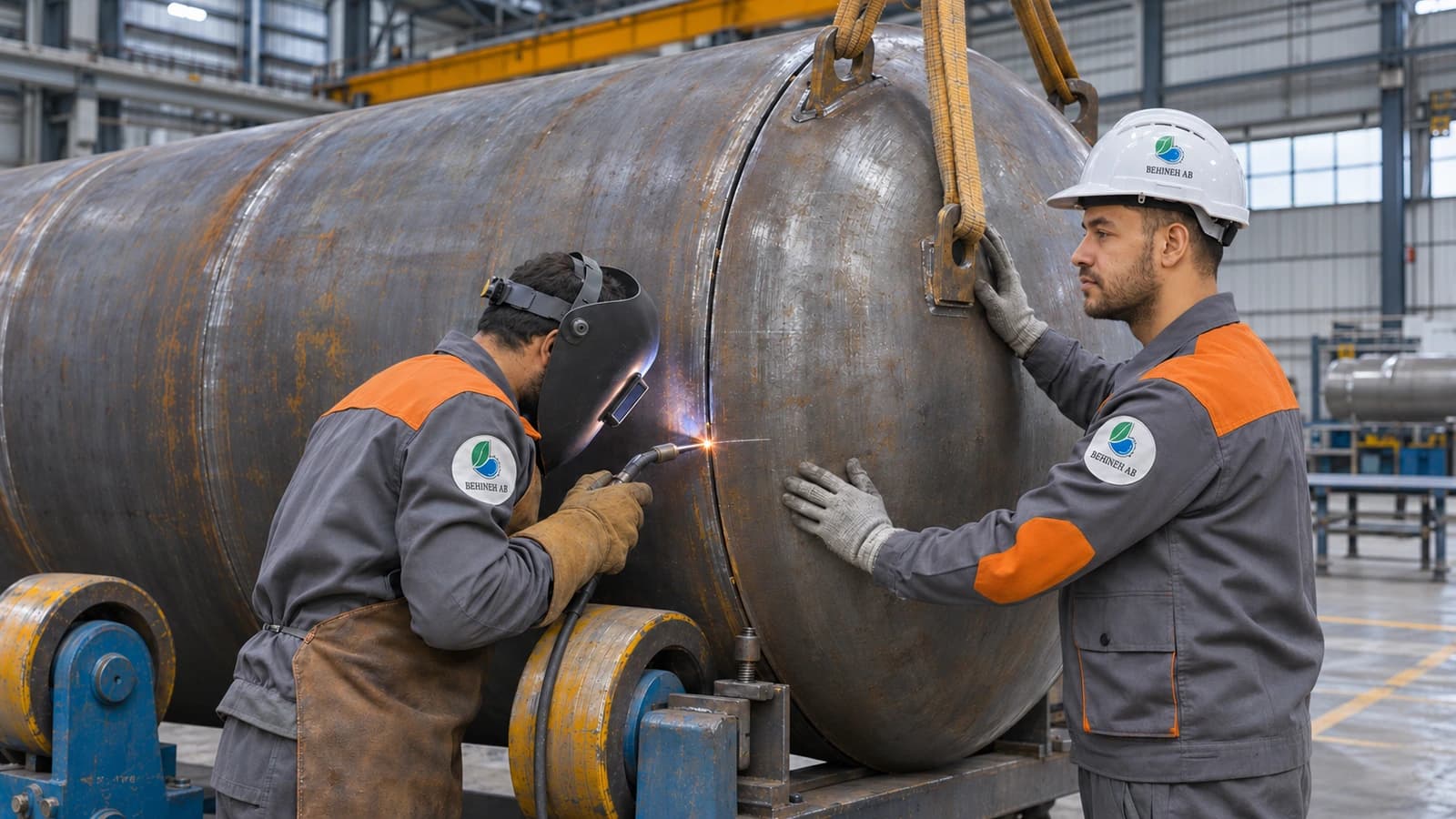
  • Assembling the shell and head of a steel tank in the Behineh Ab tank fabrication workshop

    Steel Tank Manufacturing Steps, from Order to Delivery

    The steps of building a steel tank, from the data sheet to testing and dispatch. A 20,000-litre tank takes about three weeks; here is what that time is spent on.

    Read more
  • Inspector carrying out a non-destructive test on a steel tank shell weld

    Tank Tests: What Defect Does Each Test Find?

    Hydrotest, radiography, ultrasonic, liquid penetrant, magnetic particle and vacuum box. Each finds a particular defect and none can replace another. Here we compare them.

    Read more
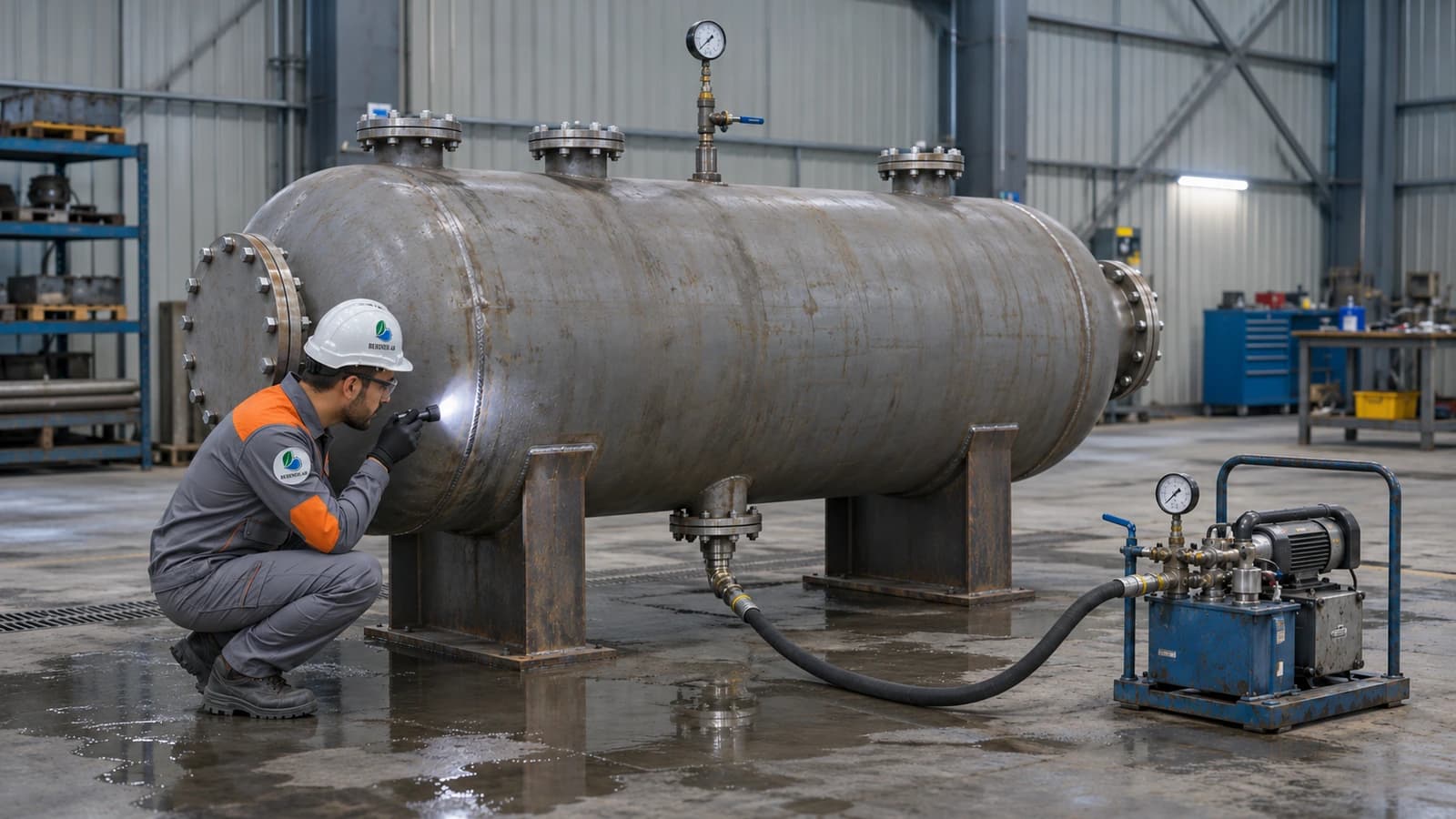
  • Pressure vessel under hydrostatic test with a pressure gauge in the Behineh Ab workshop

    Tank Hydrostatic Test, Step by Step

    The hydrotest is a tank's final exam before delivery, and we carry it out in our own factory. The test pressure, the work before filling, and the mistake that can ruin a tank while it is being drained.

    Read more
  • Radiography film of a tank shell weld on a film viewer

    Weld Radiography: What Percentage of Seams Must Be Tested?

    The radiography percentage sets the joint efficiency, and the joint efficiency sets the plate thickness. In other words, this decision directly affects the tank's weight and price.

    Read more