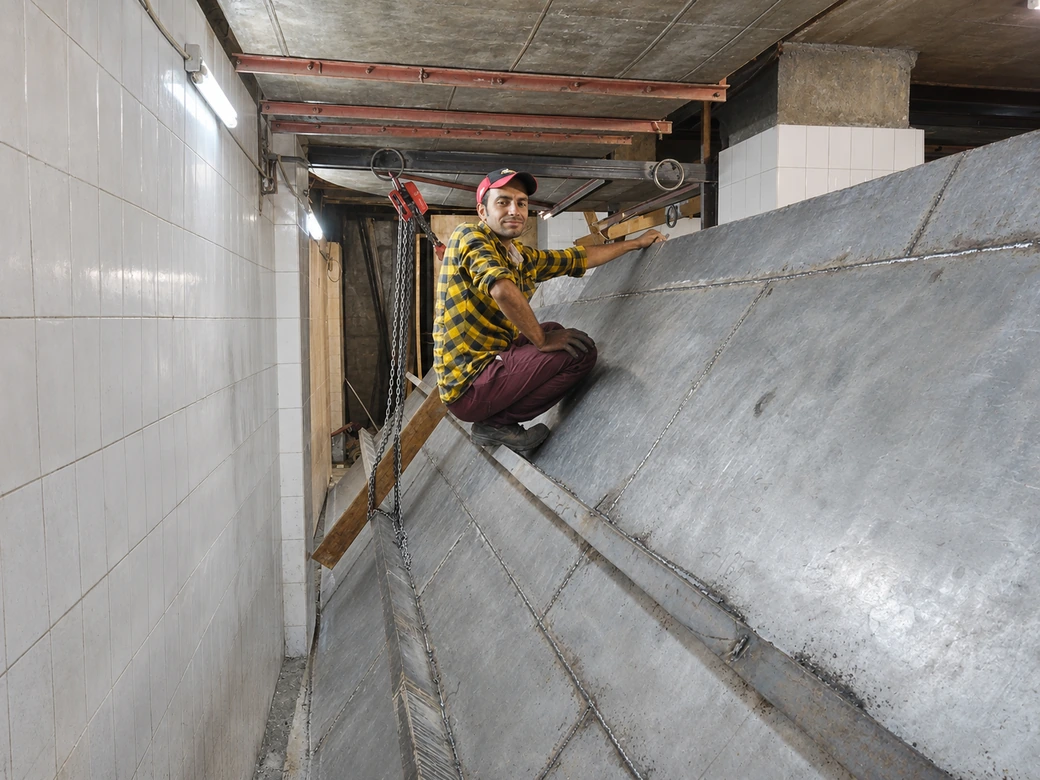
Designed and built to API 650

Delivering
on-site tank construction is our speciality!

We build large storage tanks for oil, fuel, water and fire water at the project site. When a tank's diameter exceeds the limit for road transport, the plates are usually prepared in the factory and then assembled, welded and tested on site.
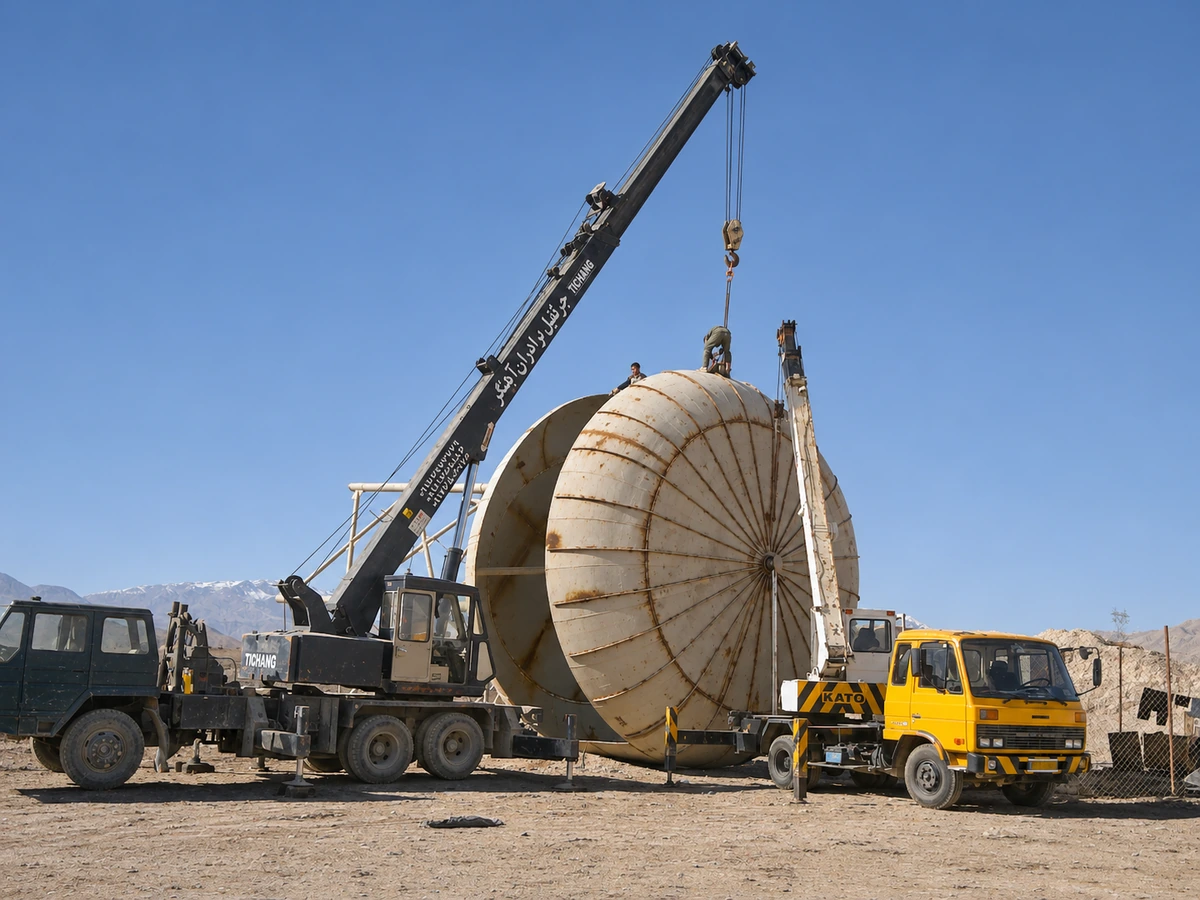
Project photo — installing shell courses on site
Design standard
API 650
Bottom test
Vacuum box
Hydrotest
With settlement monitoring
Fabrication warranty
24 months
API 650
Foundation checks
Vacuum box
Shell radiography
Hydrotest and settlement
Fixed or floating roof

1. Why build on site

The limits of road transport

Small and medium tanks are built in the factory and shipped in one piece; quality is easier to control in a covered workshop with fixed equipment. But when a tank's diameter exceeds the permitted transport dimensions, this option disappears.

Building on site means delivering factory quality in the open air, with changing weather and limited access. Careful planning, setting up the site workshop, controlling welding in wind and cold, and coordination with the client are the main parts of this work.

2. Key checks

The most important quality checks in on-site tank construction:

Foundation
Level check
Bottom welds
Vacuum box
Shell seams
Radiography
Whole tank
Hydrotest + settlement
Workshop note

Supplying hydrotest water for a tank of several thousand cubic metres is a project in itself. Plan the water source and where it will be discharged from the start.

3. Shell erection methods

MethodHow it worksAdvantage
Conventional (bottom up)The first course on the bottom, then the higher courses with scaffolding and a craneSimple, suits very large tanks
Jacking (top down)The top course and roof are built at ground level and jacks raise the tank course by courseMost welding near the ground; safer and faster

4. Client responsibilities

Foundation

A ready ringwall and pad with a controlled level, according to the foundation drawing.

Access and space

An access road for trucks and cranes and enough space to store the plates.

Power and water

Site power for the welding machines and enough water for the hydrotest.

Note

The division of work is set out in the contract; the sooner it is clear, the less the project is held up.

Features of our execution

Quality at the project site, just like quality in the factory
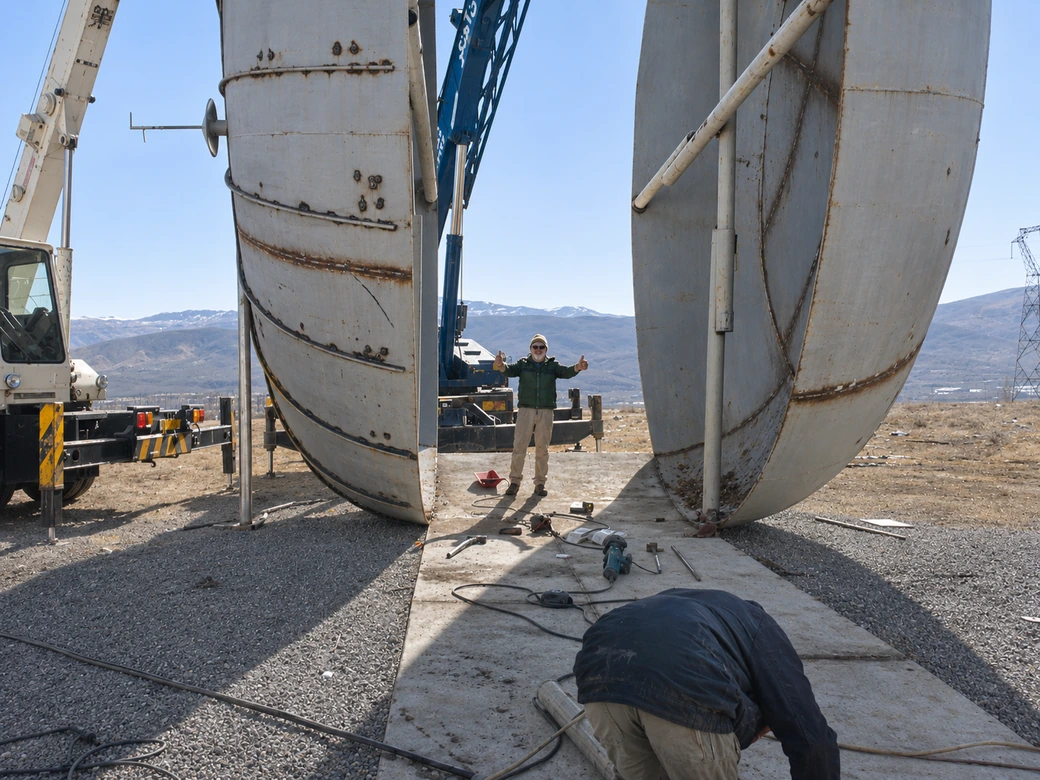
Checking foundation level and dimensions
Welding bottom plates and vacuum box testing
Conventional or jack-up shell erection
Radiography of shell seams
Fixed roof or floating roof
Hydrotest with settlement measurement
Painting and safety accessories
Planning coordinated with the client
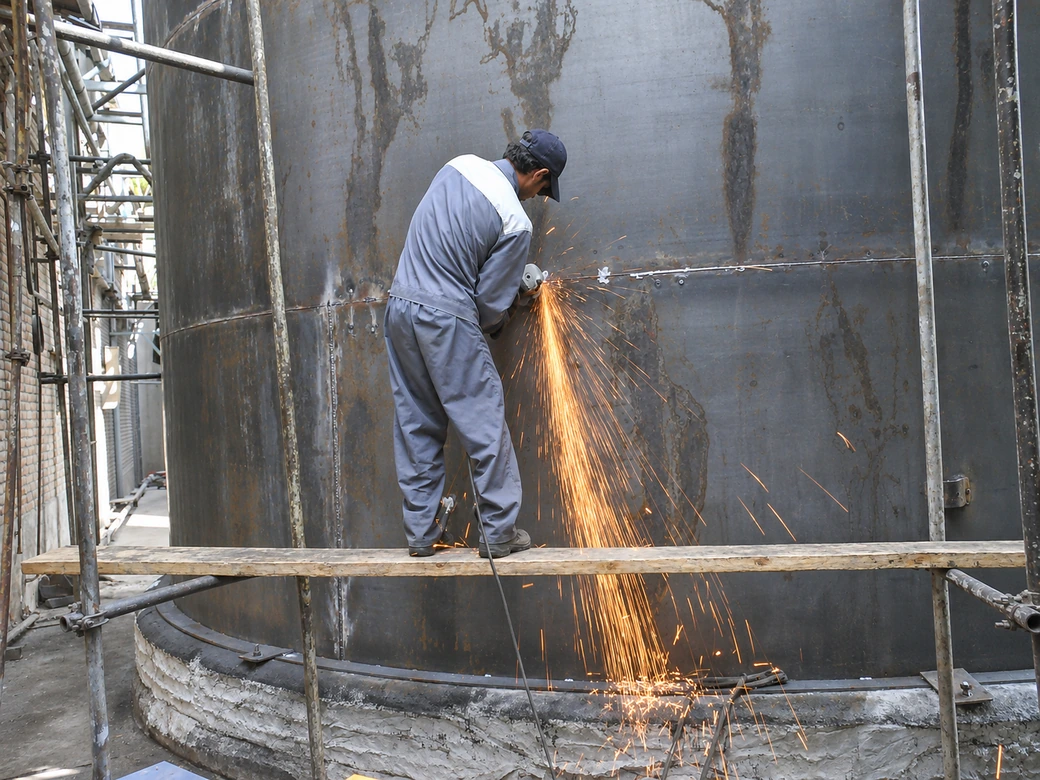
Project photo — welding the bottom plates

On-site tank construction: when?

Road transport has dimensional limits. Storage tanks of several thousand cubic metres for oil, fuel and water have diameters that no road can carry. For these tanks, building in the factory and shipping in one piece is impossible, so the tank is built at the project site on its own foundation.

The plates are usually cut, bevelled and rolled in the factory and transported to the site. Assembly of the bottom, raising the shell courses, welding, roof installation, testing and painting are done on site. Weld quality and dimensional control on site meet the same requirements as in the factory.

No size limit
Tanks that cannot be transported by road
To API 650
Standard design, fabrication and testing
Tested on site

Tanks we build on site

By fluid and roof type

Fixed roof tank

Fixed roof storage tank

A cone or dome roof on the shell. For gas oil, fuel oil, bitumen, water and fire water; fluids with low evaporation.
UseGas oil, fuel oil, water
RoofCone or dome
StandardAPI 650
Floating roof tank

Floating roof tank

The roof floats on the liquid surface and eliminates the vapour space. For crude oil and volatile products such as gasoline, reducing evaporation and fire risk.
UseCrude oil, gasoline
RoofExternal or internal floating
NoteRim seal
Large water tank

Large water storage tank

High-volume municipal, industrial and fire water storage tanks, with an internal coating suited to the water quality.

UsePotable, industrial, fire water
RoofFixed
CoatingFood-grade epoxy

Technical specifications and quality control

The checks at each stage of on-site work

Design standard
API 650
Atmospheric storage tanks
Foundation
Concrete ringwall with sand pad
Level checked before starting
Bottom
Lap-welded plates with annular plate
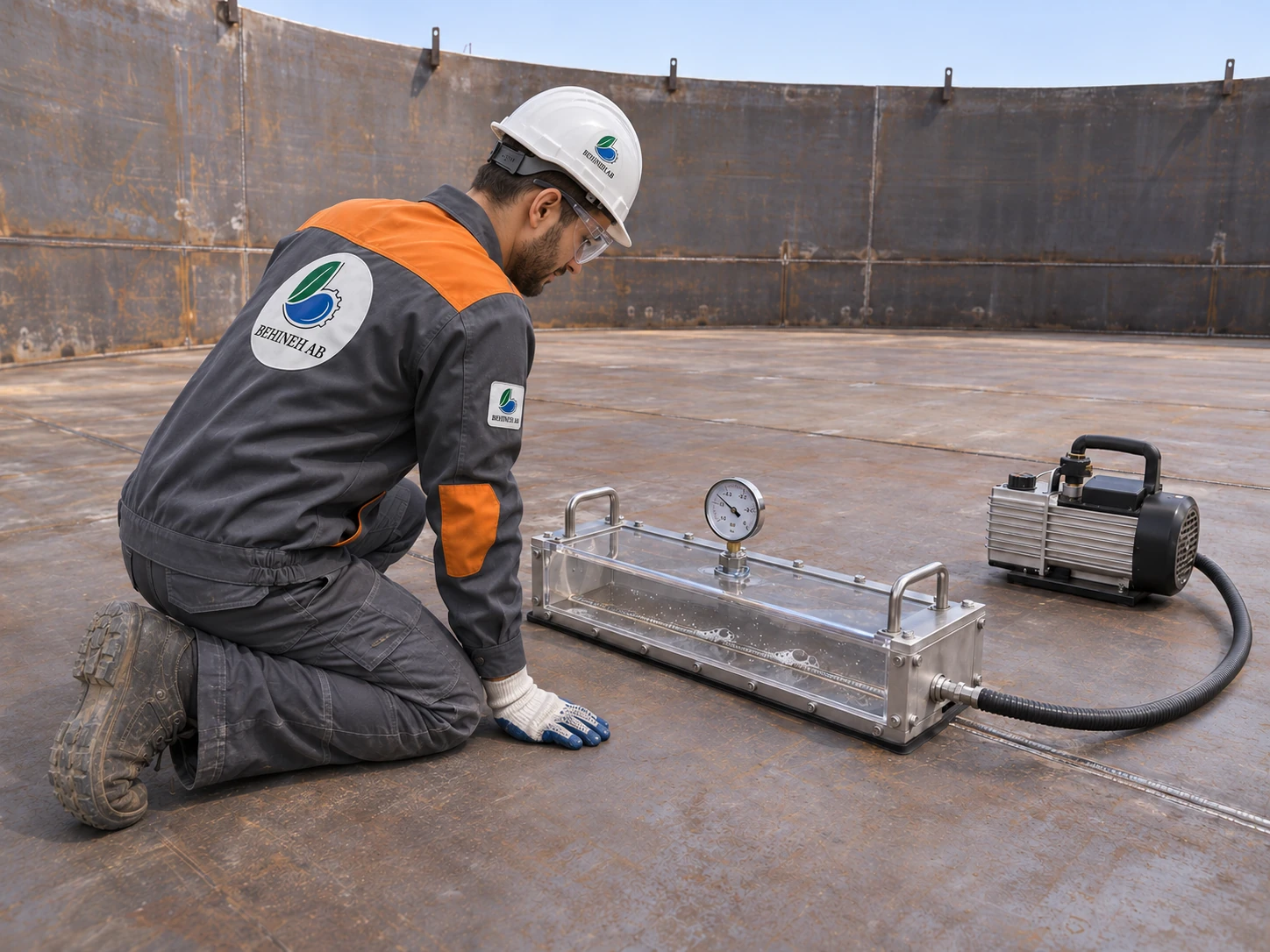
Vacuum box test of the welds
Shell
Spot radiography of seams
According to the number and length of seams
Hydrotest
Filled to design level
With foundation settlement measurement
Safety
Earthing · foam · bund wall
For fuel tanks

Steps of on-site construction

From foundation handover to filling

1
Foundation handover
Checking the level and dimensions of the ringwall and pad; any unevenness later shows up as shell distortion.
2
Bottom and vacuum test
Laying and welding the bottom and annular plates, and testing every weld with a vacuum box.
3
Shell and roof
Erecting the courses, welding the vertical and horizontal seams, radiography, and installing the roof and nozzles.
4
Hydrotest and handover
Step-by-step filling with settlement measurement, painting and installation of safety accessories.

Standards and quality control

Design, fabrication and testing are carried out to API 650. Non-destructive testing is done by a third-party inspection company, and the reports are delivered with the tank documents. The inspection plan is agreed with the client before work begins.
Design and fabrication to API 650
Vacuum box test of the bottom welds
Radiography of shell seams by a third party
Hydrotest with settlement measurement
Project photo — filling the tank for the hydrotest

Applications of on-site construction

Projects that need large tanks

Refineries and oil terminals
Crude oil and product tanks
Fuel depots
Gas oil and fuel oil
Municipal and industrial water
High-volume water storage tanks
Fire fighting
Fire water storage for industrial sites

Speak directly with technical specialists

Tell us the volume, fluid, project location and schedule to receive an execution plan and price.

Frequently asked questions

The most common questions about on-site tank construction

Price inquiry
on-site tank construction

Enter your project details; our specialists will send a technical proposal and price within 24 business hours.

  • Written technical response with a proposed concept drawing
  • Site visit in Tehran and suburbs
  • 24-month fabrication & weld warranty
Direct line to engineering office
+98 21 4686 6276

Your information is confidential and used only to prepare a technical proposal.

All articles
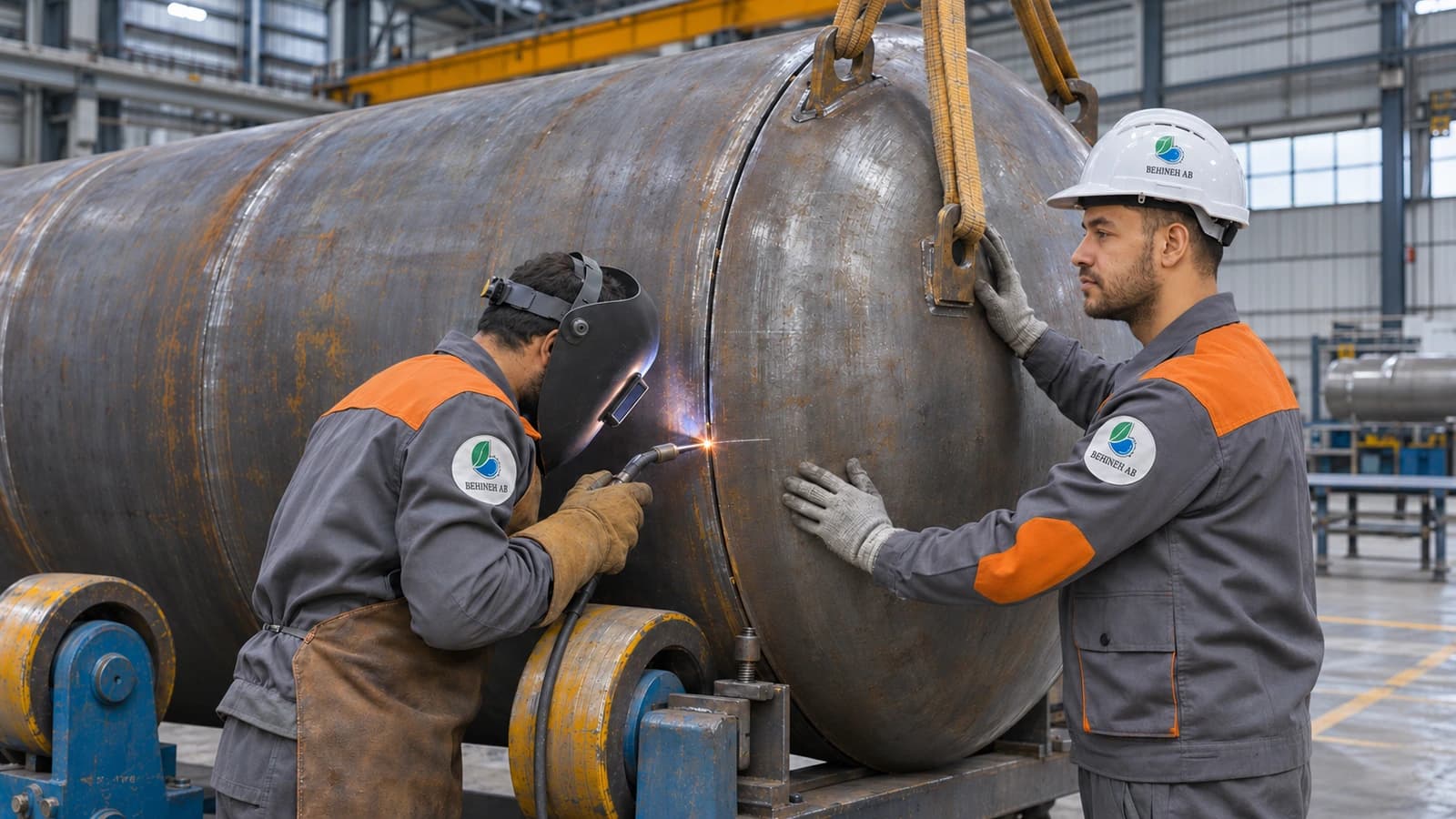
  • Assembling the shell and head of a steel tank in the Behineh Ab tank fabrication workshop

    Steel Tank Manufacturing Steps, from Order to Delivery

    The steps of building a steel tank, from the data sheet to testing and dispatch. A 20,000-litre tank takes about three weeks; here is what that time is spent on.

    Read more
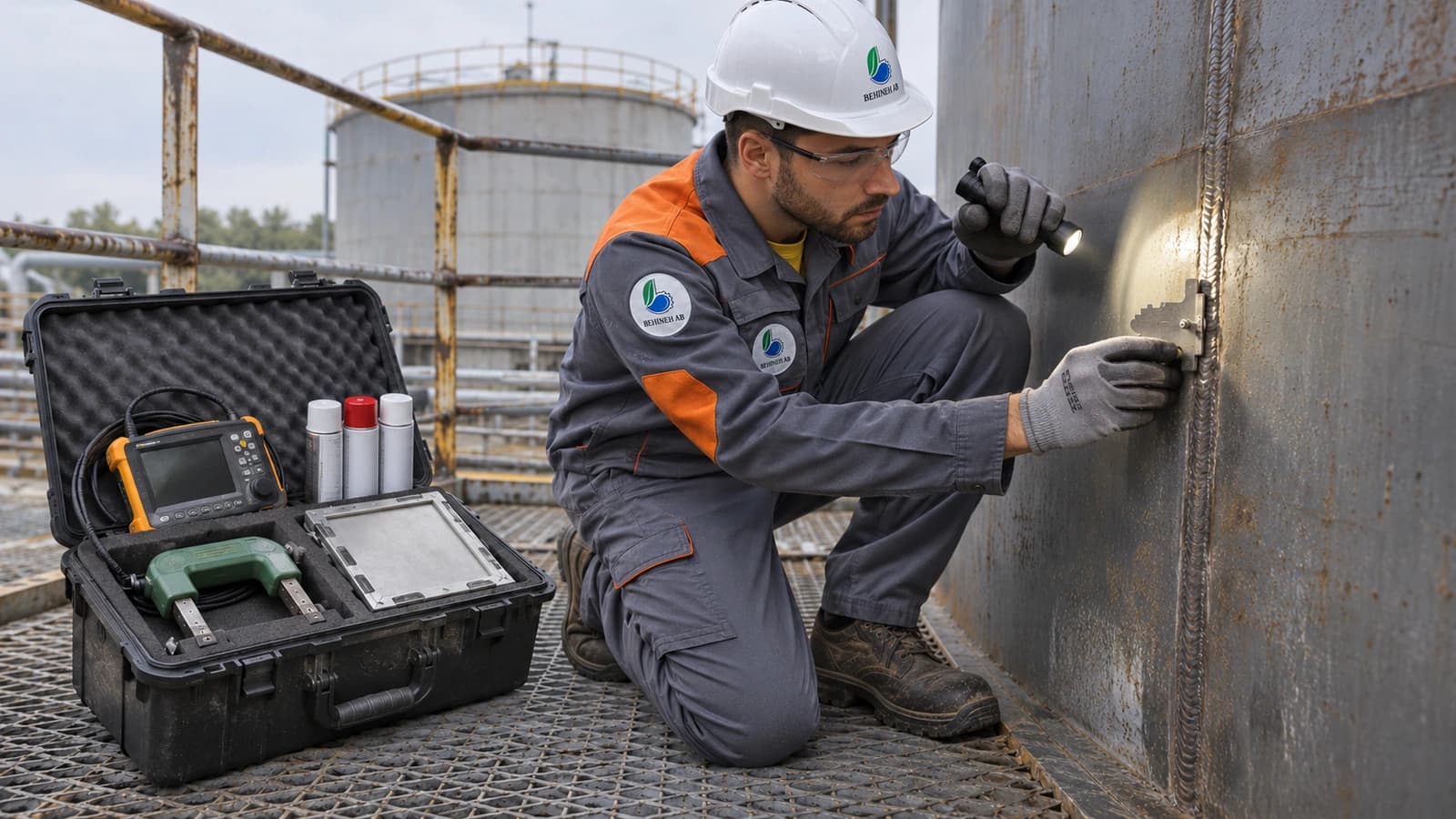
  • Inspector carrying out a non-destructive test on a steel tank shell weld

    Tank Tests: What Defect Does Each Test Find?

    Hydrotest, radiography, ultrasonic, liquid penetrant, magnetic particle and vacuum box. Each finds a particular defect and none can replace another. Here we compare them.

    Read more
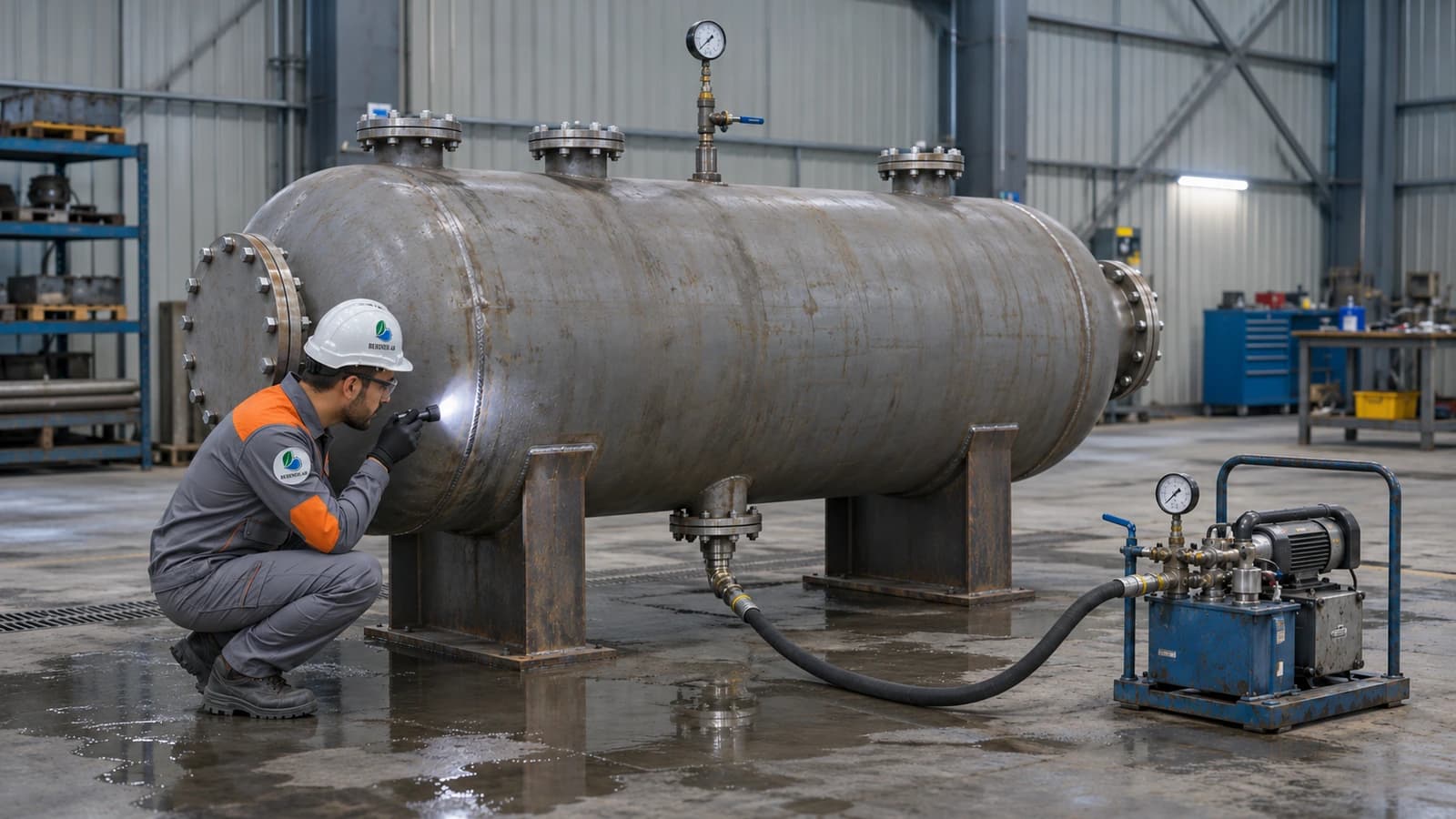
  • Pressure vessel under hydrostatic test with a pressure gauge in the Behineh Ab workshop

    Tank Hydrostatic Test, Step by Step

    The hydrotest is a tank's final exam before delivery, and we carry it out in our own factory. The test pressure, the work before filling, and the mistake that can ruin a tank while it is being drained.

    Read more
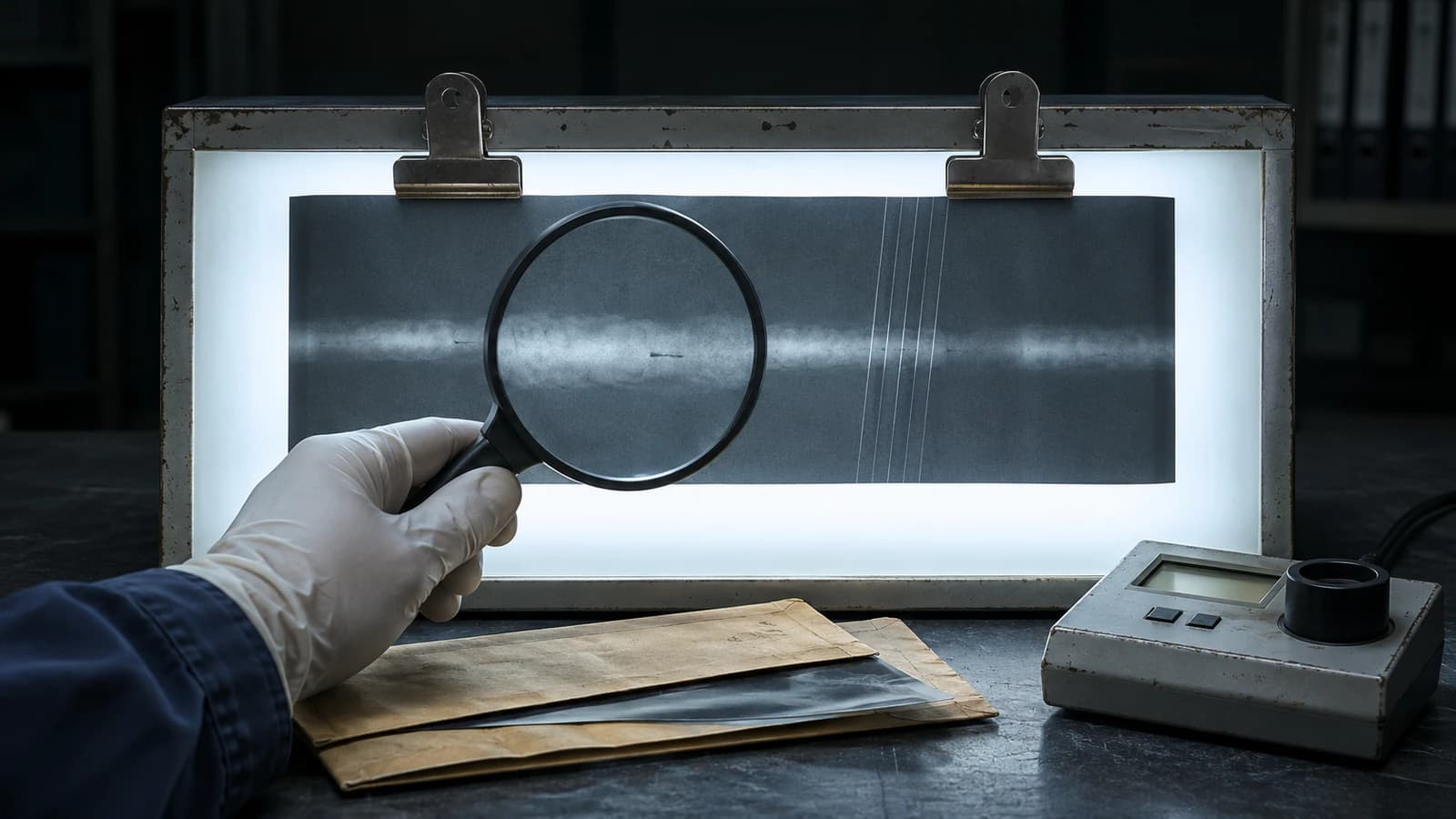
  • Radiography film of a tank shell weld on a film viewer

    Weld Radiography: What Percentage of Seams Must Be Tested?

    The radiography percentage sets the joint efficiency, and the joint efficiency sets the plate thickness. In other words, this decision directly affects the tank's weight and price.

    Read more