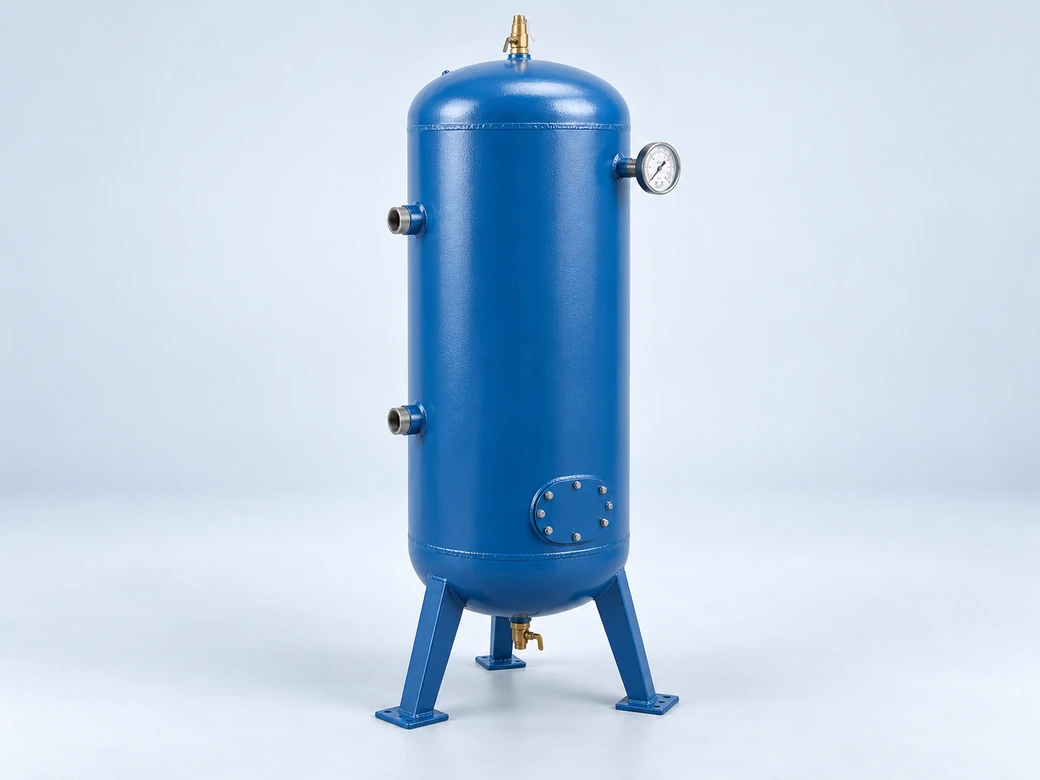
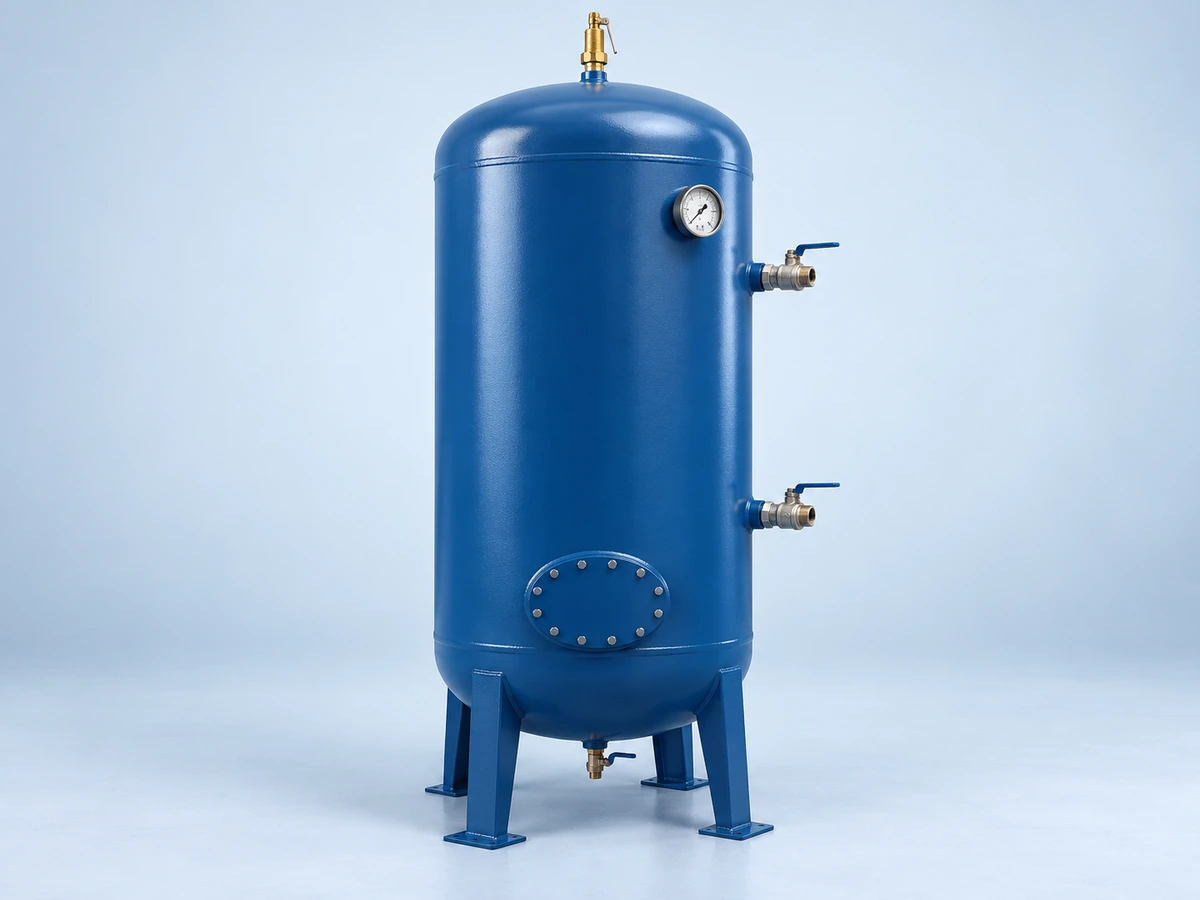
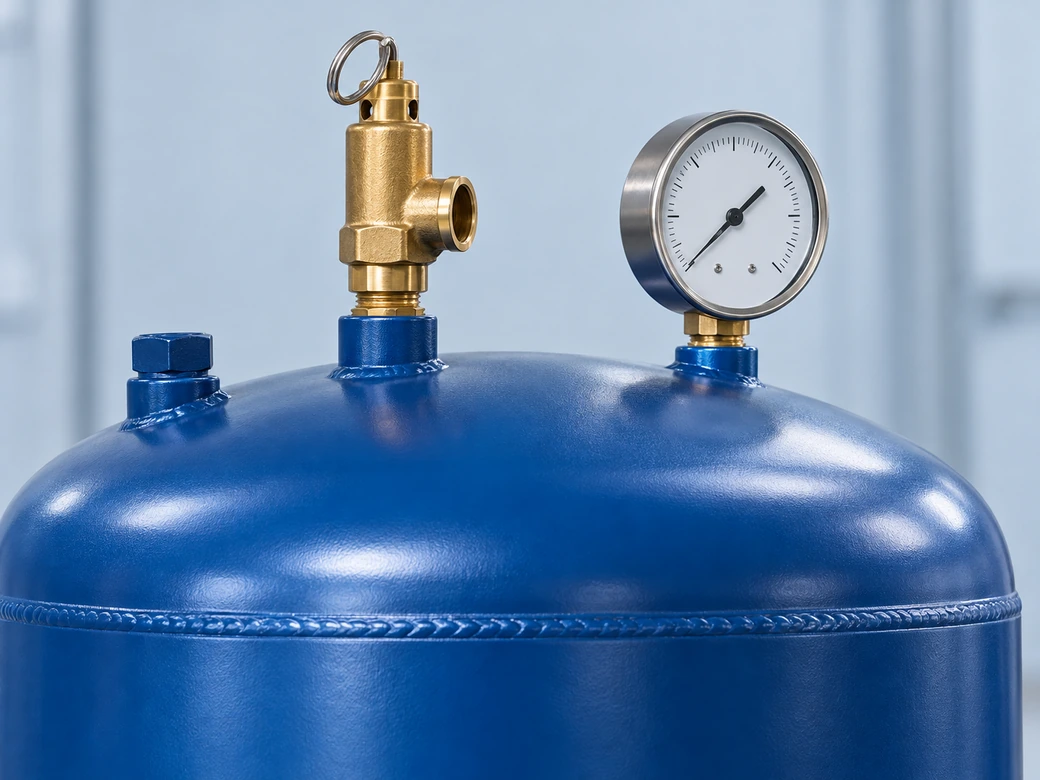
Vertical air receiver
The most common model in plant rooms and compressor halls; it takes little floor space and the condensate collects and drains easily at the bottom head.
VolumeTo order
Working pressure8 to 16 bar
SupportThree or four legs
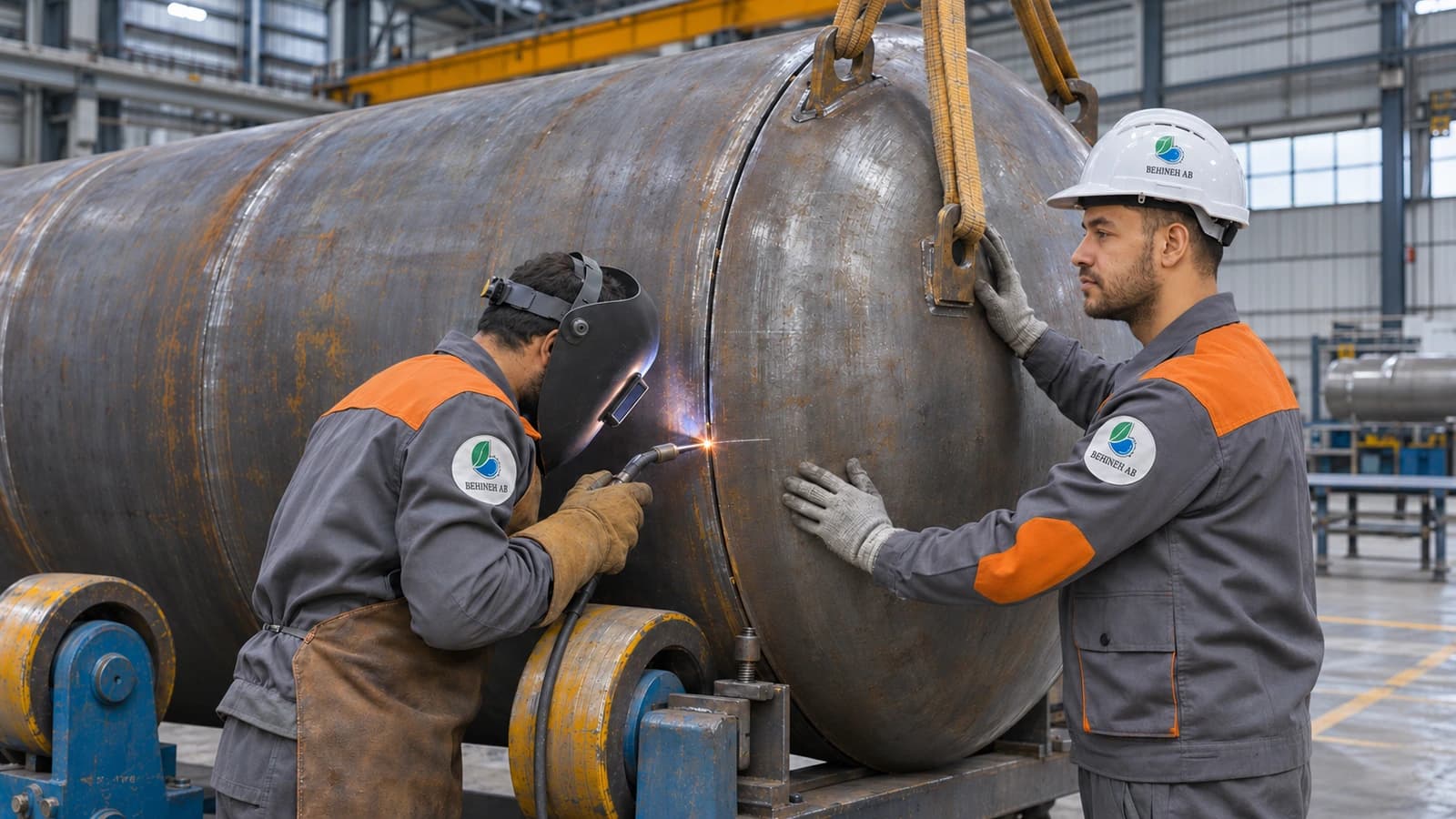
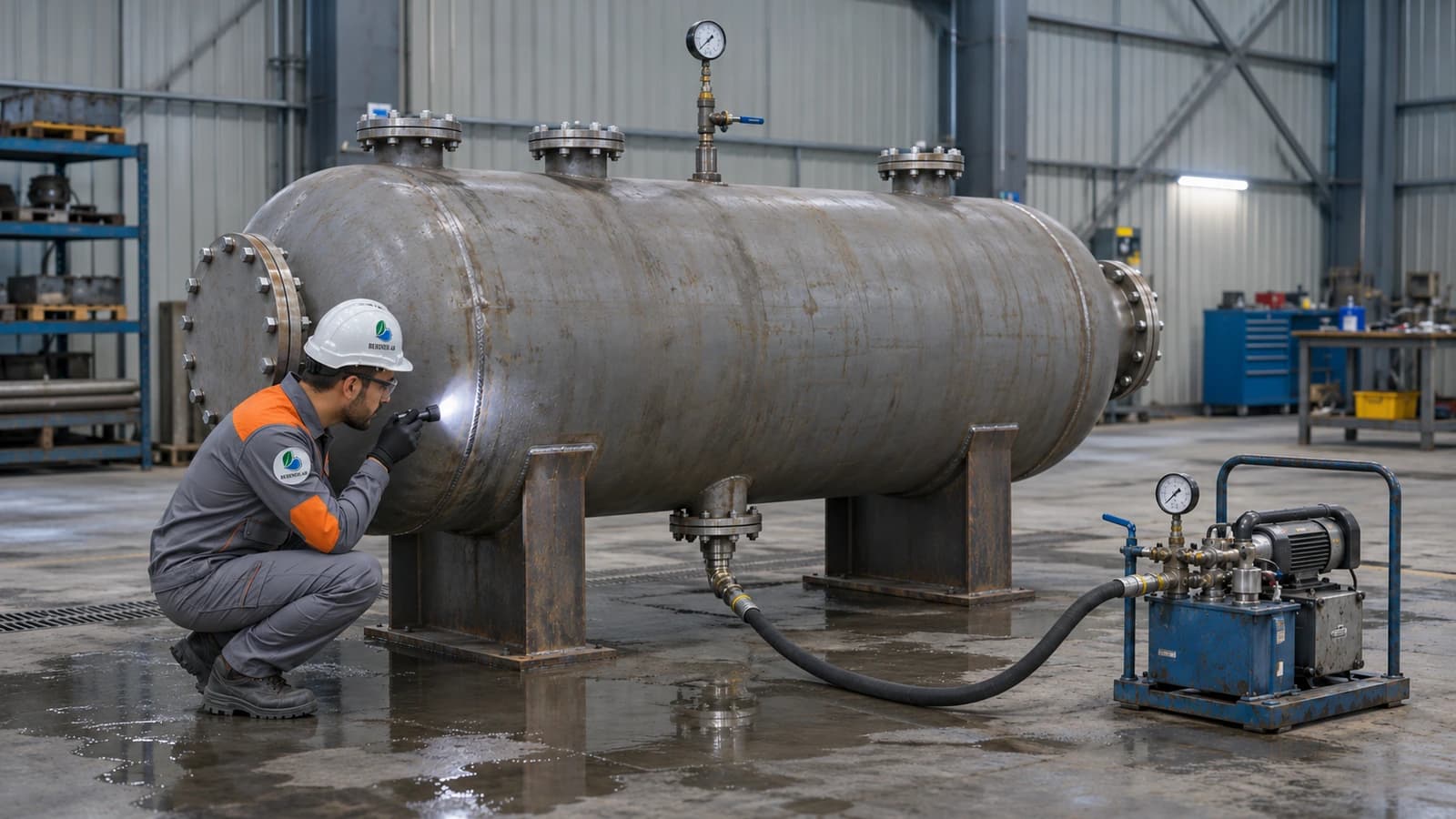
A compressed air receiver, or compressor tank, stabilises the air network pressure, covers heavy momentary demand and extends the compressor's life. It is a pressure vessel; its design, fabrication and testing are carried out to ASME, and every receiver is hydrotested in the Behineh Ab factory before delivery.
Unlike water, compressed air is compressed and stores energy. An air receiver of a few hundred litres at 10 bar holds considerable energy, and if it bursts this energy is released all at once. That is why an air receiver, however small, falls under the rules for pressure vessels.
The second danger comes from inside. Condensate collects at the bottom of the receiver and, if it is not drained, slowly corrodes the plate. Most air receivers that are damaged in service have thinned at the bottom because of corrosion, not because of the original design.
These figures are the starting point for designing a compressed air receiver:
Set the design pressure slightly above the compressor's maximum pressure so that the safety valve does not open in normal operation.
The volume of an air receiver depends on three factors:
A compressor with a higher flow rate needs a larger receiver so that its start/stop interval stays reasonable.
The gap between the compressor's start and stop pressures. The smaller this gap, the more volume is needed for the same demand.
Steady demand can be covered with a smaller receiver. Heavy momentary demand, such as sandblasting, needs a larger receiver or a second receiver near the user.
A receiver smaller than needed wears out the compressor, and a very large one takes extra cost and space. Choose the volume from real flow and demand figures.
Ambient air always contains moisture. When the compressor compresses the air and it then cools in the receiver, part of this moisture turns into liquid water. This water collects at the bottom of the receiver and, together with compressor oil particles, creates a corrosive environment.
That is why three things matter in the design: a drain valve exactly at the lowest point, enough corrosion allowance in the plate thickness, and, where possible, automatic draining. In humid air, or where regular draining is not done, galvanizing the receiver or using stainless steel multiplies its life.
Draining the water from the bottom of the receiver.
Testing the safety valve and calibrating the pressure gauge.
Measuring bottom and shell thickness ultrasonically to find corrosion before it becomes dangerous.
What keeps a compressor tank safe and durable
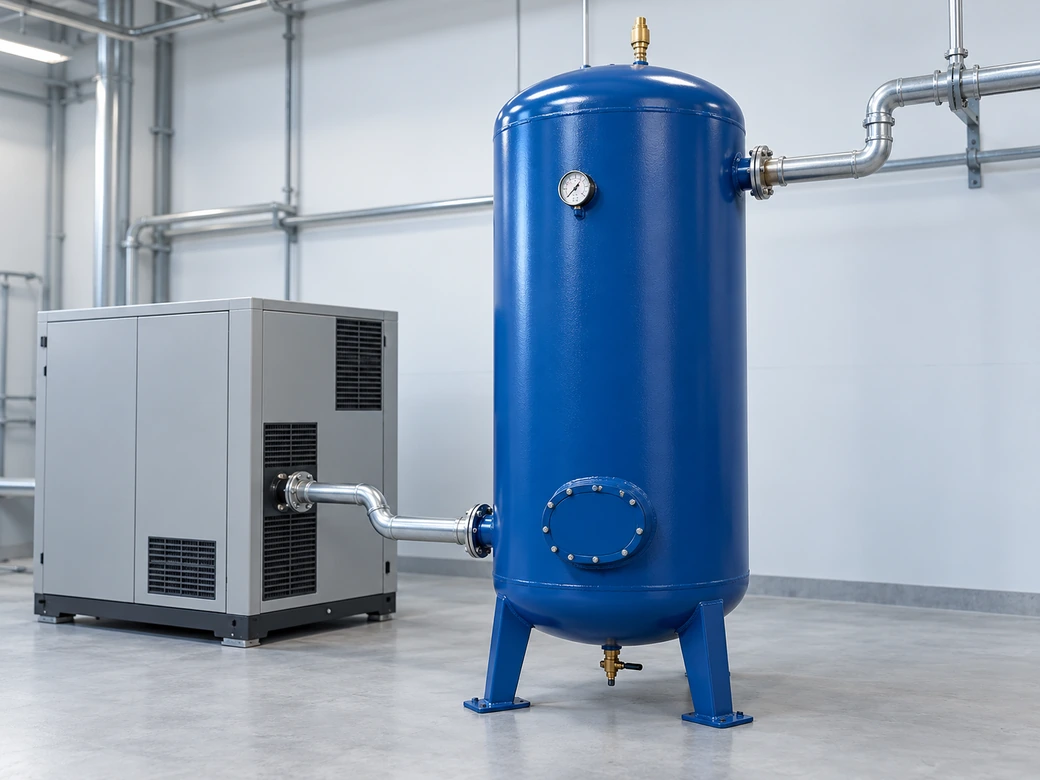
A compressor produces air at a constant flow rate, but a factory's demand is not constant. Air tools, sandblasting, pneumatic valves and packaging lines each draw a lot of air at moments. A compressed air receiver acts as a store: it fills during low demand and makes up the shortfall at peak demand so the network pressure does not drop.
The second advantage is that the compressor starts and stops less often. A compressor that is constantly starting wears out sooner and uses more electricity. A receiver of the right size lengthens the interval between starts. Part of the air's moisture also cools and condenses inside the receiver and leaves through the drain valve, which means less load reaches the dryer.
Chosen by installation space, volume and network pressure
The most common model in plant rooms and compressor halls; it takes little floor space and the condensate collects and drains easily at the bottom head.
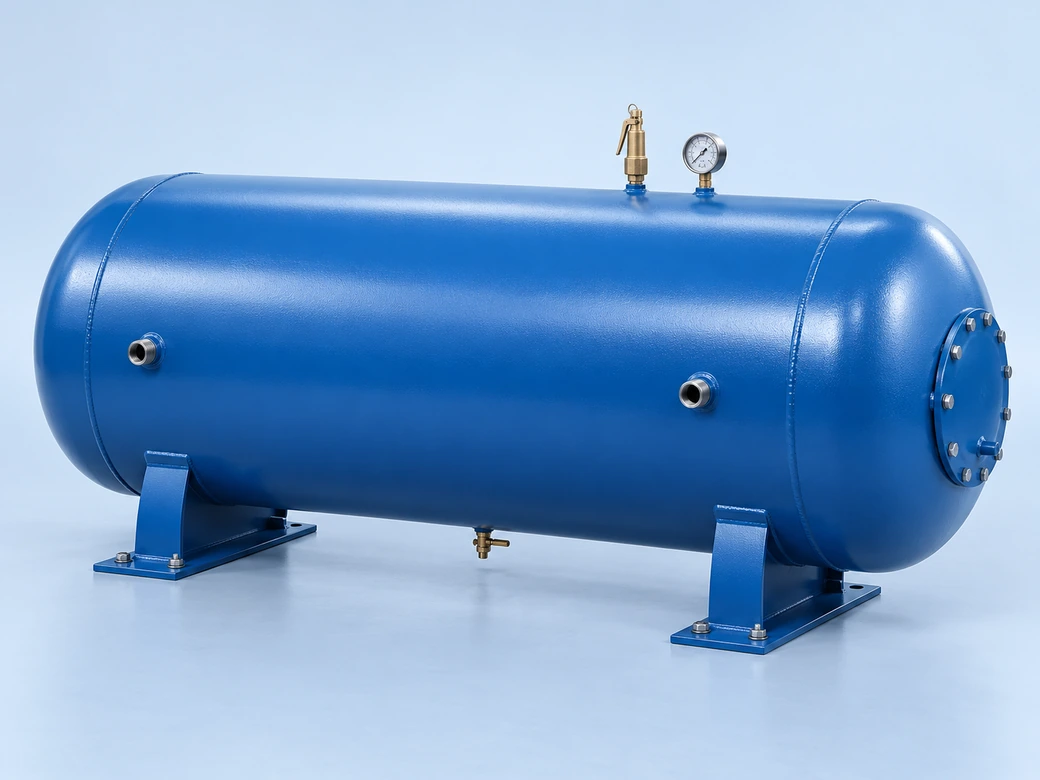
For halls with limited height, or where the compressor is mounted on the receiver. It sits on two saddles and the drain valve is at the lowest point of the shell.
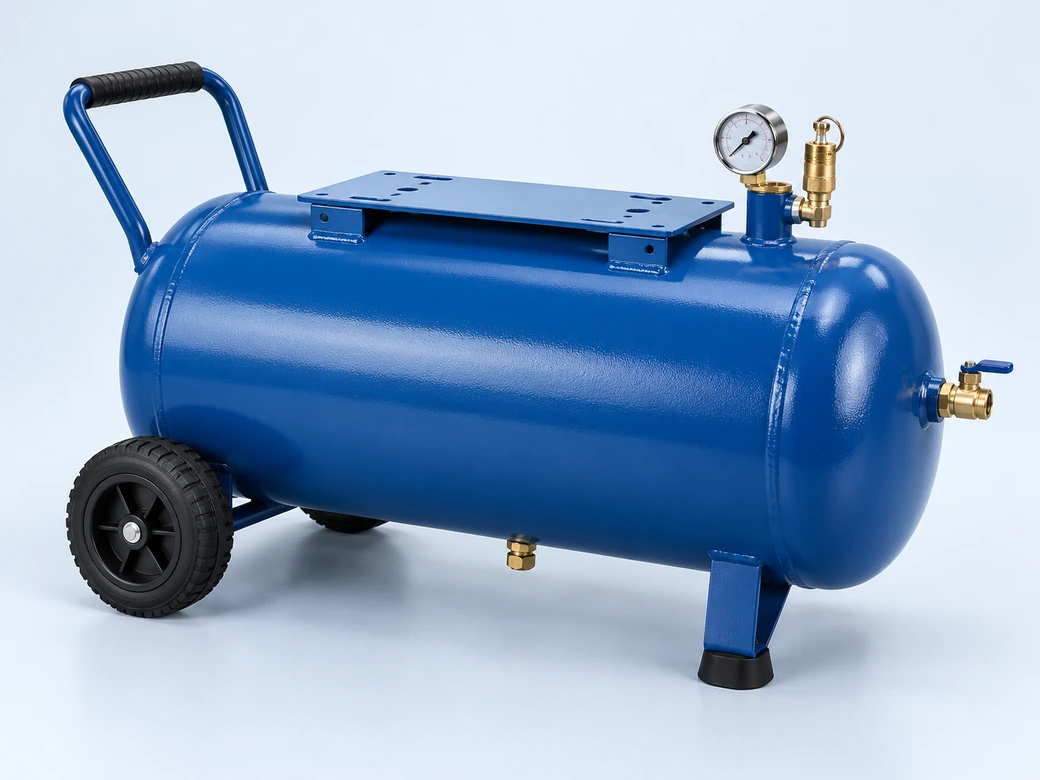
For small compressors in workshops, repair shops and small production lines. It follows the same design and testing rules as an industrial receiver, just at a smaller size.
The common range; higher pressures and volumes with a dedicated design
From compressor flow rate to hydrotest — with quality control at every stage
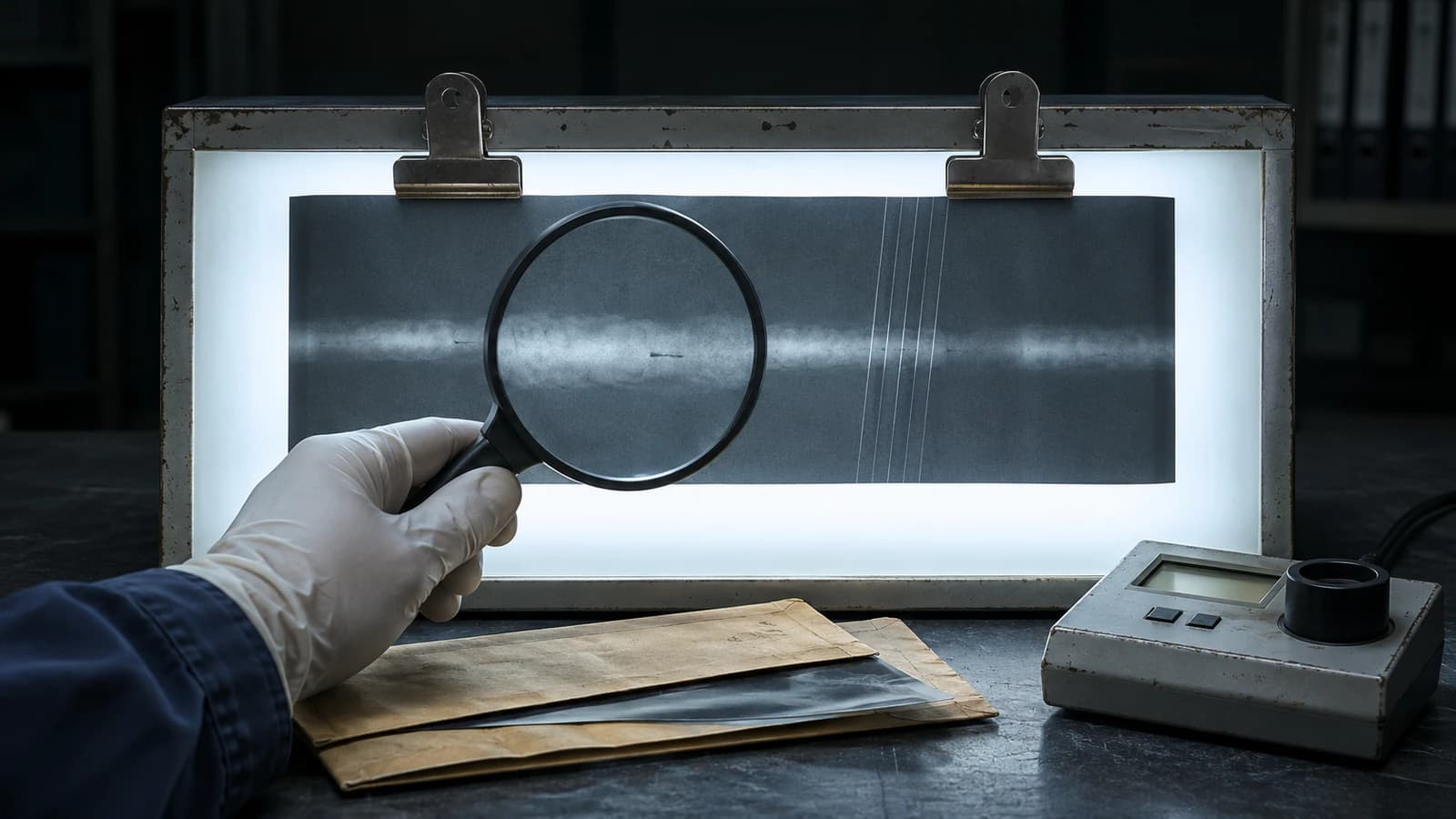
Simple as it looks, an air receiver stores a lot of energy. Design to ASME Section VIII, a correct safety valve and the hydrotest are its three layers of safety. No receiver leaves the factory without a test report.
Wherever there is compressed air, an air receiver is needed too
Tell us the compressor flow rate, working pressure and type of use to receive the right volume and a receiver price.
The most common questions about compressed air receivers and compressor tanks
Enter your project details; our specialists will send a technical proposal and price within 24 business hours.