Stainless steel tank fabrication
Stainless steel tanks for the water industry · grades, corrosion, surface finish and hygiene standards
A stainless steel tank is for fluids that must not react with the plate or be contaminated: drinking water, RO water, milk and food, pharmaceuticals and many chemicals. Stainless steel has a protective chromium-oxide layer that re-forms if it gets scratched, so a stainless tank needs no internal lining.
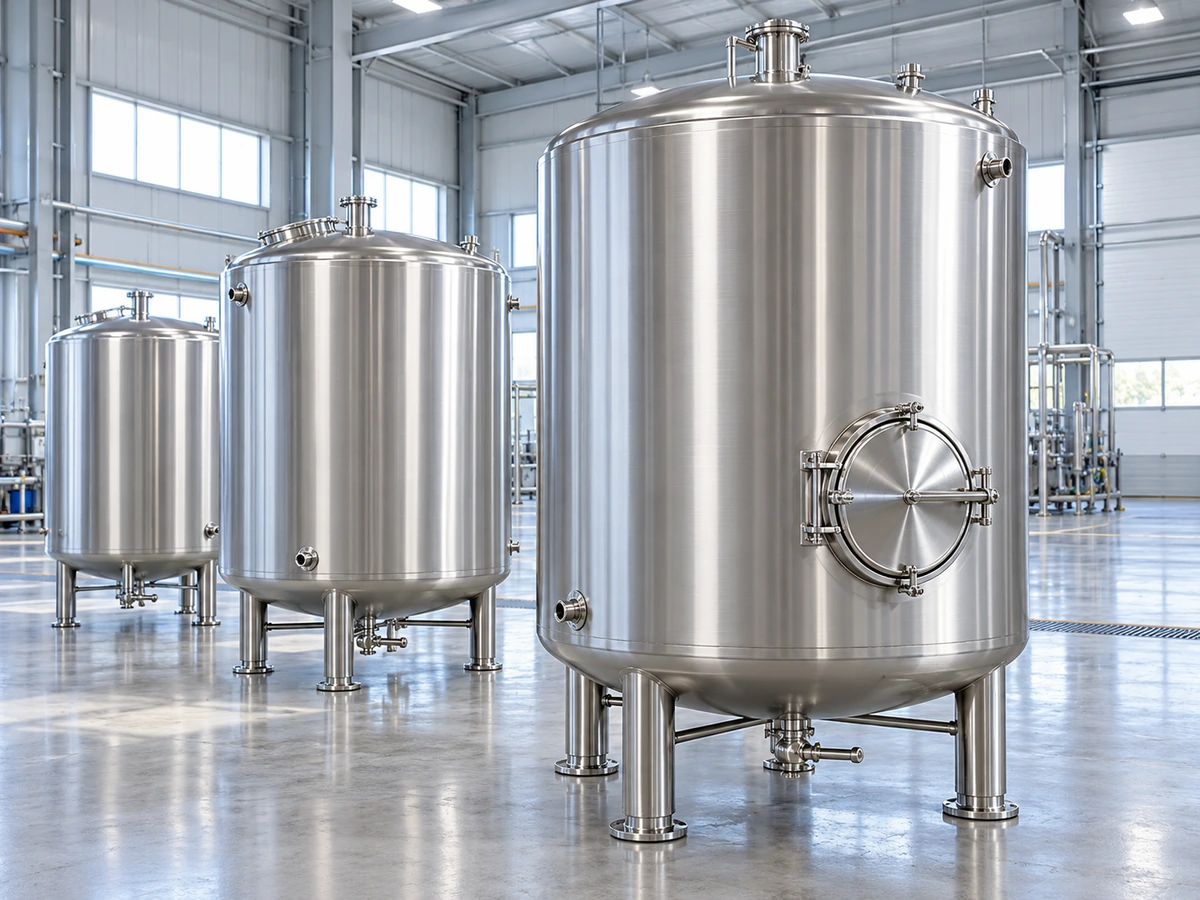
Stainless steel tank fabrication
Stainless steel tanks for water, food, pharmaceuticals and chemicals
The fluid decides the grade. 304 is enough for water and most foods. Where there are chlorides or acids, 316 or 316L is needed. In food and pharmaceutical tanks, the quality of the welds and the internal surface finish matter as much as the grade itself, because bacteria settle in rough surfaces and uneven welds.
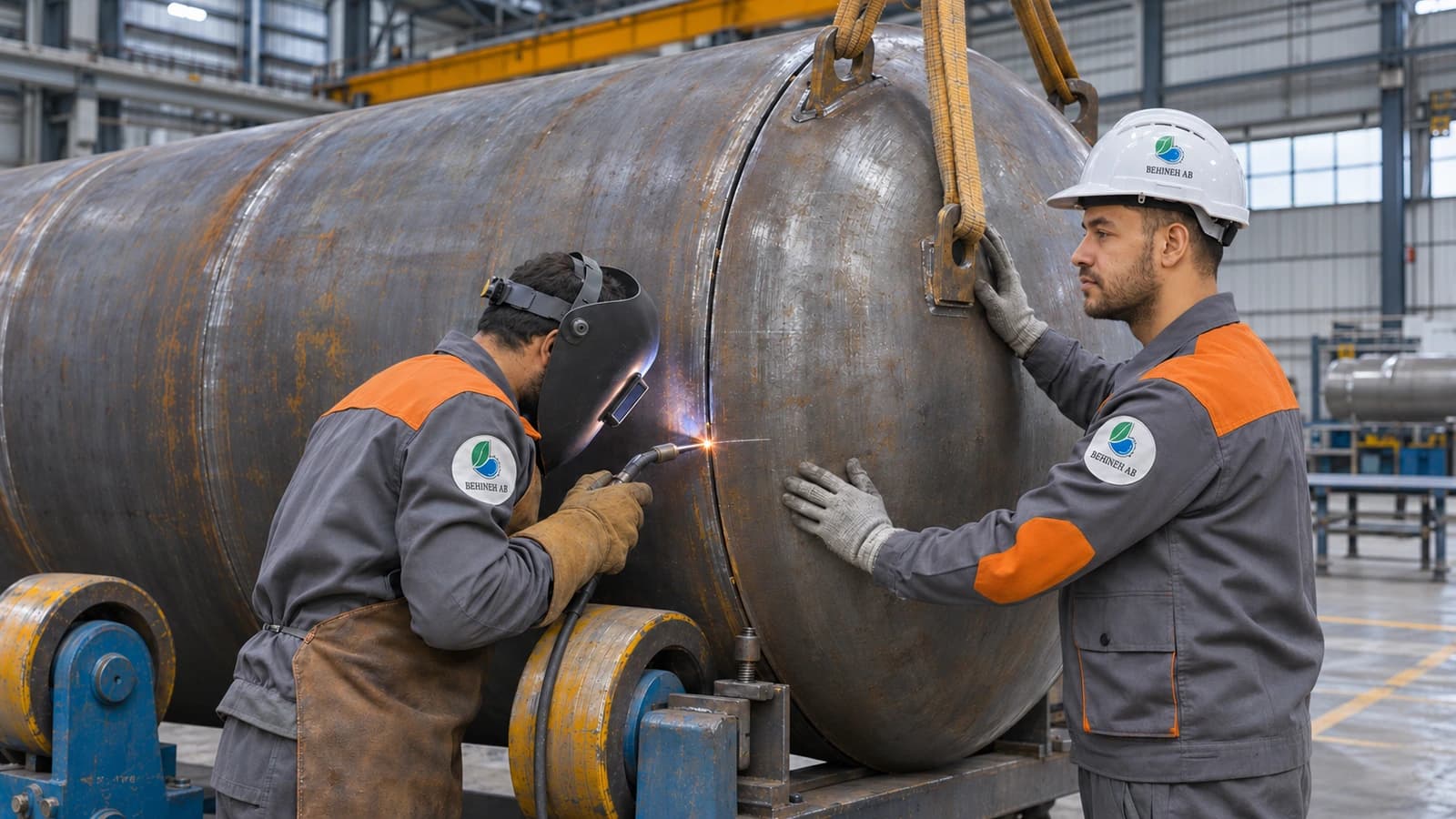
Behineh Ab builds stainless steel tanks from 500 to 100,000 litres, single-wall, double-wall and with agitators. A stainless tank weighs about the same as a carbon steel one, but stainless plate costs several times more per kilo. We price tank fabrication on that weight. Below we explain grades, corrosion, surface finish, welding and passivation.
Why stainless steel?
Stainless steel contains at least 10.5% chromium. Chromium reacts with oxygen to form a very thin, dense, self-healing chromium-oxide layer that protects the base metal from corrosion — the secret of being 'stainless'.
2. Common stainless steel grades
The most common grade in the world ('18-8': about 18% Cr and 8% Ni). Suited to drinking water, hot and cold water and general food use. Low-carbon 304L is for heavy welding and reduces sensitization and intergranular corrosion.
316, with 2–3% molybdenum, has higher resistance to pitting and crevice corrosion in chlorides (sea water, brackish water, salt) — the standard for pharmaceuticals and corrosive environments. 316L, with C < 0.03%, keeps its resistance in the heat-affected zone and is the gold standard for WFI, biotech and sanitary service.
| Grade | Key composition | Corrosion resistance | Typical use |
|---|---|---|---|
| 304 | 18% Cr · 8% Ni | Good | Drinking water, general tanks, food |
| 304L | Low-carbon 304 | Good (better welds) | Heavily welded structures |
| 316 | + 2–3% Mo | Excellent | Chlorides, sea water, pharmaceuticals |
| 316L | Low-carbon 316 | Excellent (best welds) | WFI, biotech, sanitary |
Chlorides, sea water or strict pharmaceutical requirements → 316/316L. Ordinary drinking water → 304 is more economical. Extensive welding → the L version.
3. Reasons to choose stainless steel
The passive layer rebuilds itself in the presence of oxygen even after a scratch. Decades of life without an internal lining. Uniform corrosion is rare; pitting and crevice corrosion are handled with 316 and a proper finish; intergranular corrosion with L grades and passivation.
The non-porous surface limits bacterial attachment and biofilm and gives no taste or odour to the water. In food and pharmaceutical plants it is cleaned and sterilised by CIP/SIP and withstands steam temperatures.
High durability, a wide temperature range, mechanical strength, 100% recyclability and a bright finish suited to industrial and display settings.
4. Surface finish and the Ra parameter
The lower the Ra, the smoother the surface, the easier the cleaning and the fewer places for bacteria to collect:
A rough surface is a landscape of microscopic peaks and valleys that traps dirt and bacteria. Pharmaceutical work usually requires Ra < 0.8 µm (32 µin), and critical uses Ra < 0.4 µm. Electropolishing leaves a chromium-rich surface and is the usual standard for WFI and biotech.
4-2. Electropolishing
An electrochemical process selectively removes a thin surface layer; microscopic peaks are levelled and the result is a bright, chromium-rich surface with better corrosion resistance and hygiene — the usual standard for WFI and pharmaceuticals.
5. Orbital welding and passivation
Mechanised GTAW/TIG in which the weld head rotates around the joint under control. Consistent quality, full penetration, minimal heat tint, and digital recording of parameters for validation. In pharmaceutical and ultrapure water service it is effectively required. Argon back purging prevents oxidation of the root.
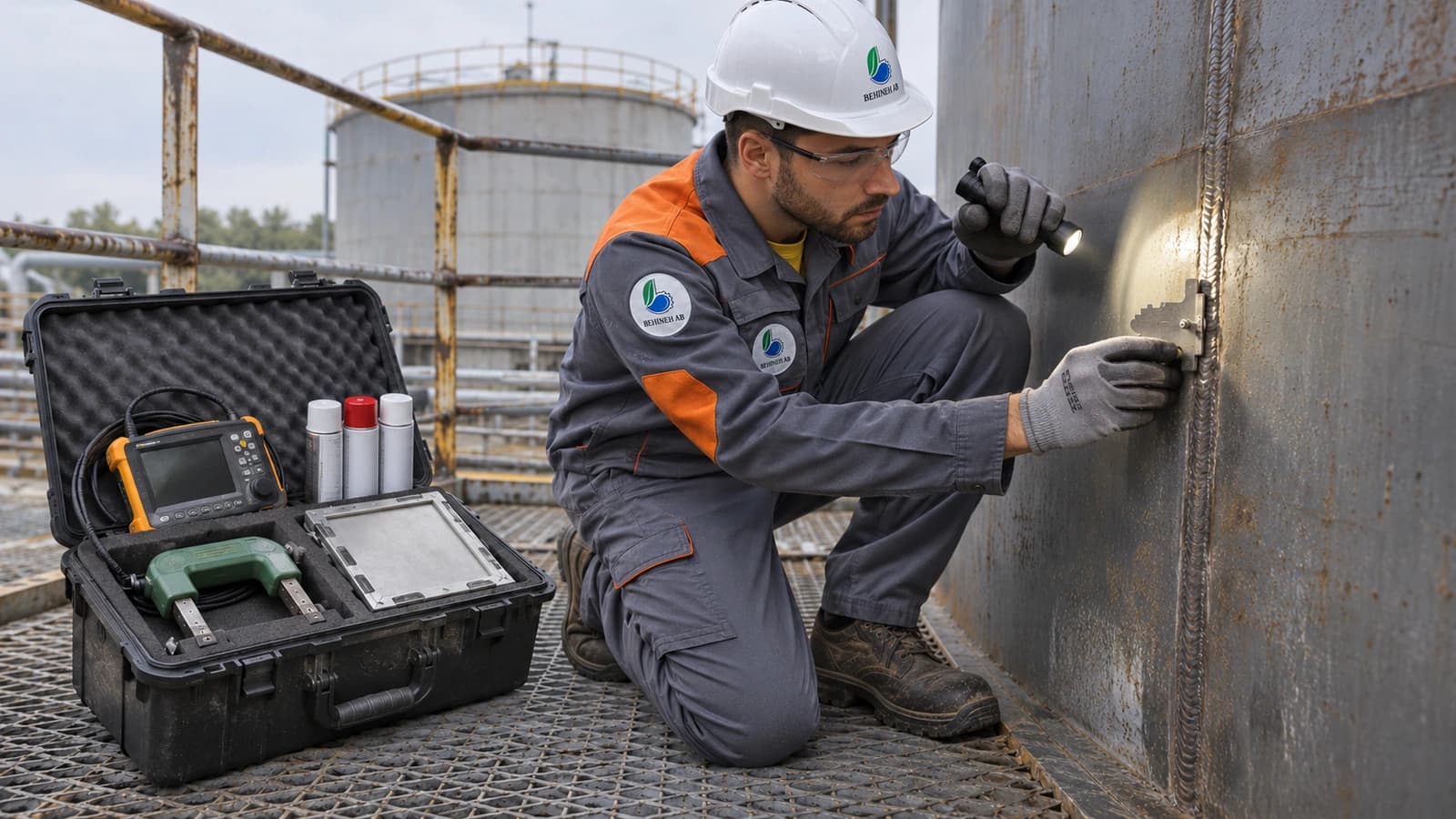
After welding and machining, free iron particles and heat tint reduce corrosion resistance. Passivation with nitric or citric acid removes free iron and rebuilds the passive chromium layer. It usually follows pickling, which removes heavy heat tint.
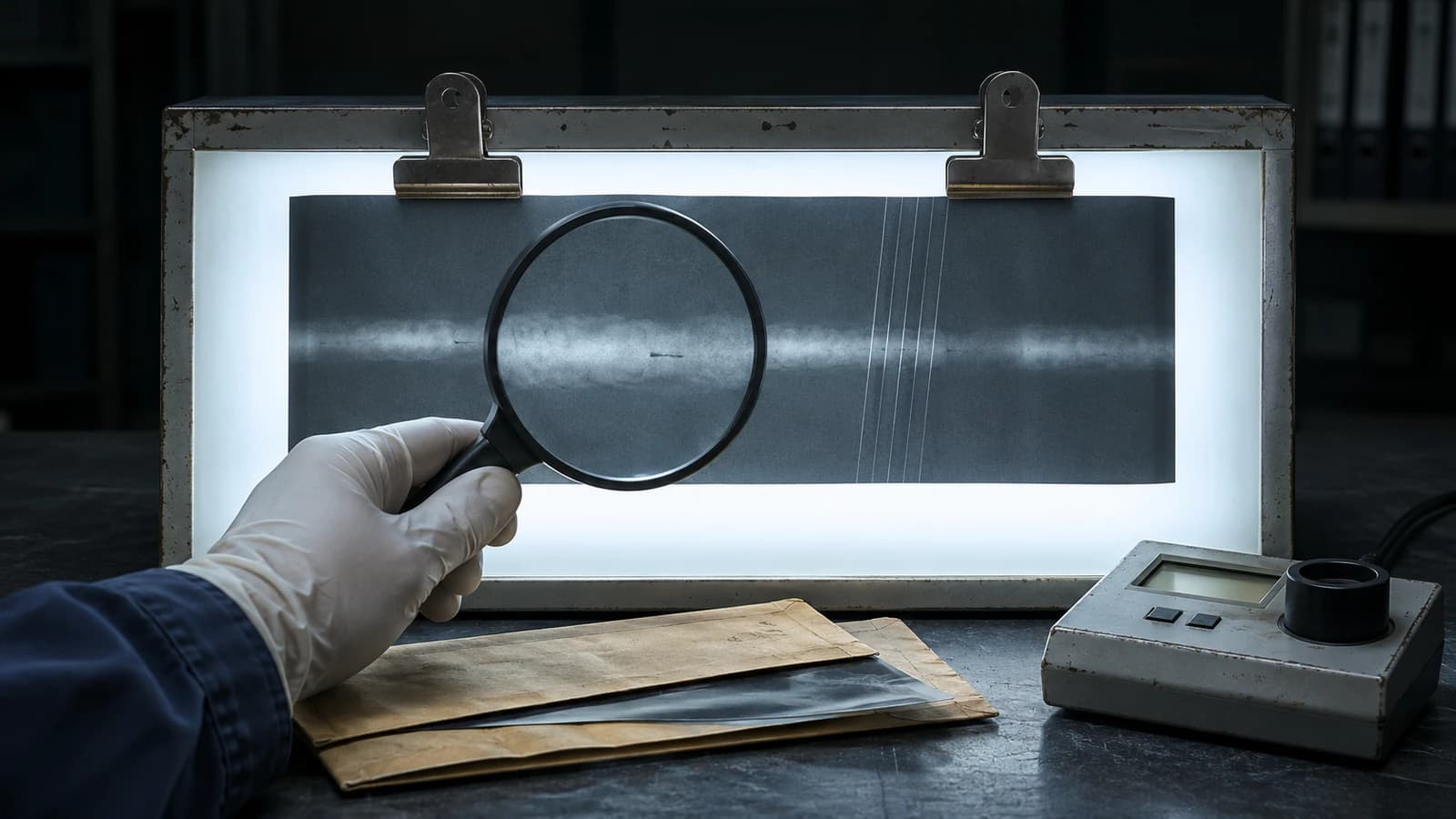
1) Degreasing 2) Pickling 3) Rinsing and neutralising 4) Passivation 5) Final rinse, drying and inspection. Heat tint after welding is a sign of chromium depletion at the surface and must be removed completely.
6. Hygiene and quality standards
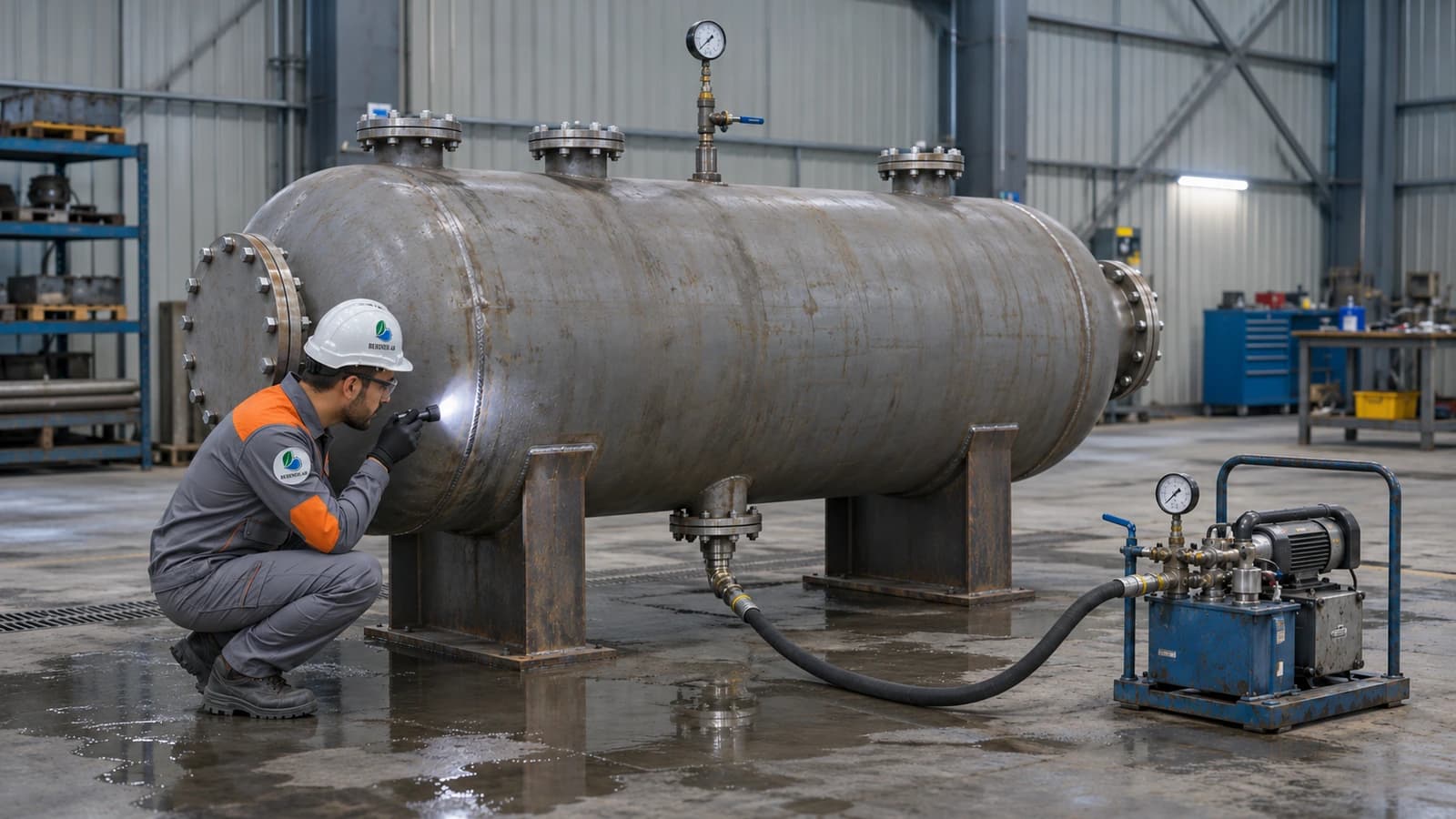
3-A: sanitary design for food, dairy and beverage. FDA: materials in contact with food and drugs (304/316 approved; gaskets and seals must comply too). ASME BPE: biopharmaceutical equipment. EHEDG: European hygienic design. ASME VIII: pressure vessels. NSF/ANSI 61: drinking-water system components. EN 10088: material specifications.
| Standard | Scope |
|---|---|
| 3-A | Food, dairy and beverage equipment |
| FDA | Materials in contact with food and drugs |
| ASME BPE | Biopharmaceutical equipment |
| NSF/ANSI 61 | Drinking-water system components |
| ASME Sec VIII | Pressure vessels |
7. Uses in the water industry
Drinking-water storage in buildings and networks. RO and ultrapure/distilled water systems in 316L with electropolish. Pressurised booster and expansion tanks. Food, pharmaceuticals and biotech with CIP/SIP. Storage and dosing of water-treatment chemicals in a suitable grade.
| Use | Recommended grade | Key point |
|---|---|---|
| Drinking water | 304 / 316 | Hygienic surface, no taste transfer |
| Ultrapure water and RO | 316L | Electropolish, low Ra |
| Booster and expansion | 304 / 316 | Pressure rating, ASME VIII |
| Pharma and biotech | 316L | CIP/SIP, BPE, orbital welding |
| Chemicals | 316 and above | Chosen by the chemical |
8. Summary
By combining corrosion resistance, hygiene, durability and strength, stainless steel tanks are a reliable choice for the water and hygienic industries. Grade selection, Ra quality, orbital welding and passivation decide their service life; following 3-A, FDA and ASME BPE keeps the product safe.
Behineh Ab Engineering offers specialist advice on grade selection and designs and builds stainless steel tanks for drinking water, industry, food and pharmaceuticals.
Technical specifications
Applications and industries
Photo gallery
Stainless steel tank fabrication
Frequently asked questions
Request a quote
Stainless steel tank fabrication
Enter the pressure, temperature and fluid; our engineers send a technical proposal and price within 24 working hours.
- Written technical reply with a proposed concept drawing
- Site visit in Tehran and surroundings
- 24-month warranty on fabrication and welding