Testing with air is not a substitute for the hydrotest, unless water is genuinely not possible. The difference between a pneumatic test and a leak test, and why both are done with great care.
Two different tests with one gas
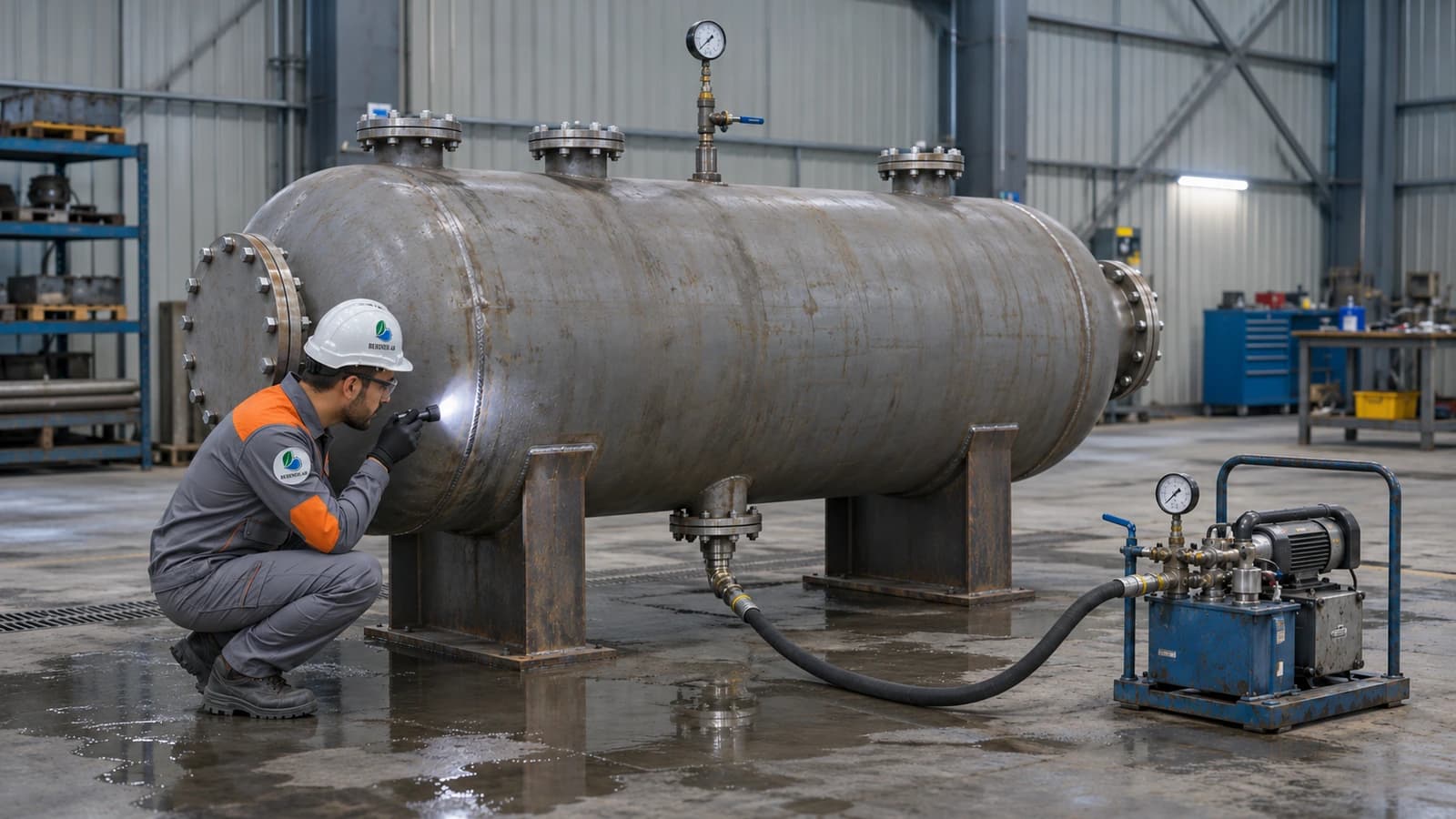
A pneumatic test is a strength test. The whole tank is brought up with air or nitrogen to a pressure above the design pressure, as in a hydrotest. A leak test, however, is done at low pressure and only aims to find leaks with a foaming solution. The purpose and level of risk of the two are very different.
Why is air more dangerous than water?
Water is almost incompressible. Gas, however, compresses and stores energy. If a tank bursts during a pneumatic test, this energy is released all at once and throws pieces of plate. That is why the codes only allow a pneumatic test when a hydrotest is not practical.
- The structure or supports cannot carry the weight of the tank full of water
- Even a small amount of residual water is not acceptable for the process
- The tank has an internal coating or lining that would be damaged by water
Pneumatic test procedure under ASME
In ASME Section VIII Div.1 the pneumatic test pressure is 1.1 times the maximum allowable working pressure, multiplied by the allowable stress ratio. The pressure is not raised all at once: first to half the test pressure, then in steps of about one tenth until the test pressure is reached. The welds are inspected after the pressure has been lowered to the test pressure divided by 1.1.
Before a pneumatic test, more non-destructive examination is usually done on the welds, and the area around the tank is cleared of people.
Leak test of reinforcing pads
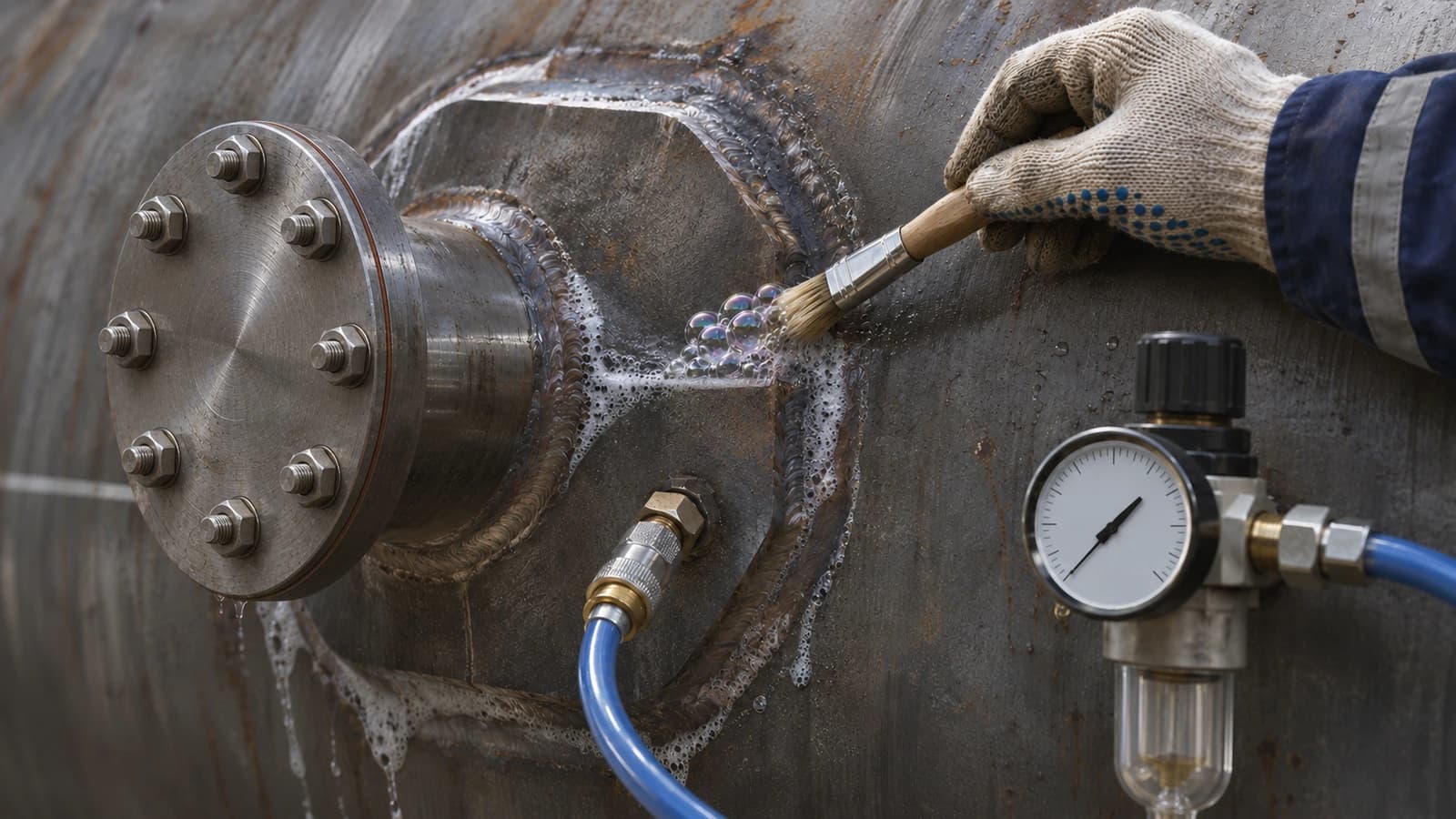
The most common leak test in tank fabrication is the test of the reinforcing pads around nozzles. Each reinforcing pad has a small tell-tale hole. Air at low pressure, about 100 kPa (15 psi) in API 650, enters the space between the pad and the shell through this hole. The welds around the pad are checked with a foaming solution, and every bubble means a leak.
Testing with air does not replace the hydrotest. We carry out tank strength tests with water. Air is for leak testing reinforcing pads, or for cases where water is genuinely not possible.