Why the shell's longitudinal and circumferential seams are welded with SAW, and where the method falls short.
Why SAW suits the shell
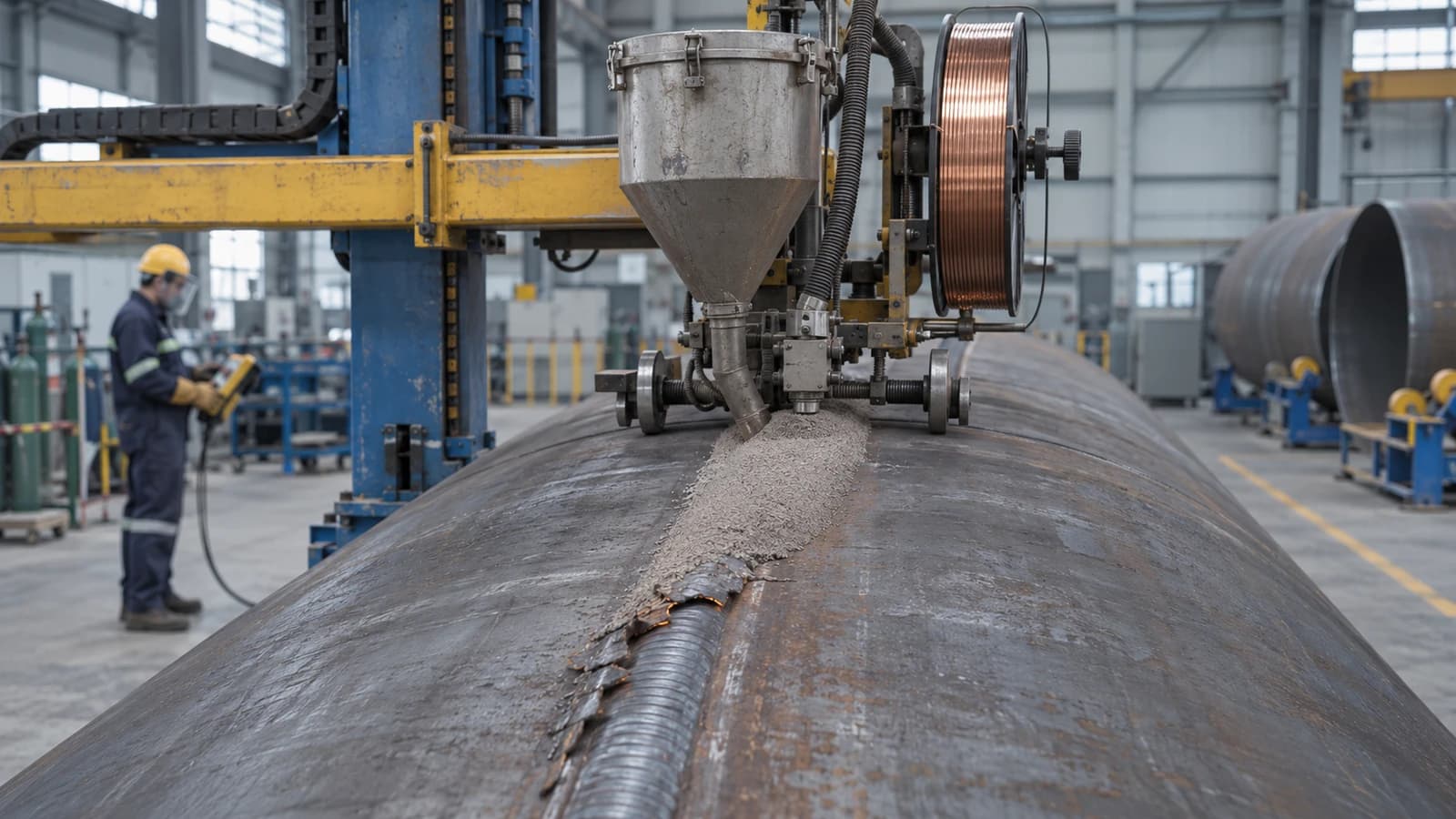
Submerged arc welding (SAW) has a high deposition rate and even penetration, which suits the shell's long, straight longitudinal and circumferential seams — and that same consistency means a higher acceptance rate under radiography.
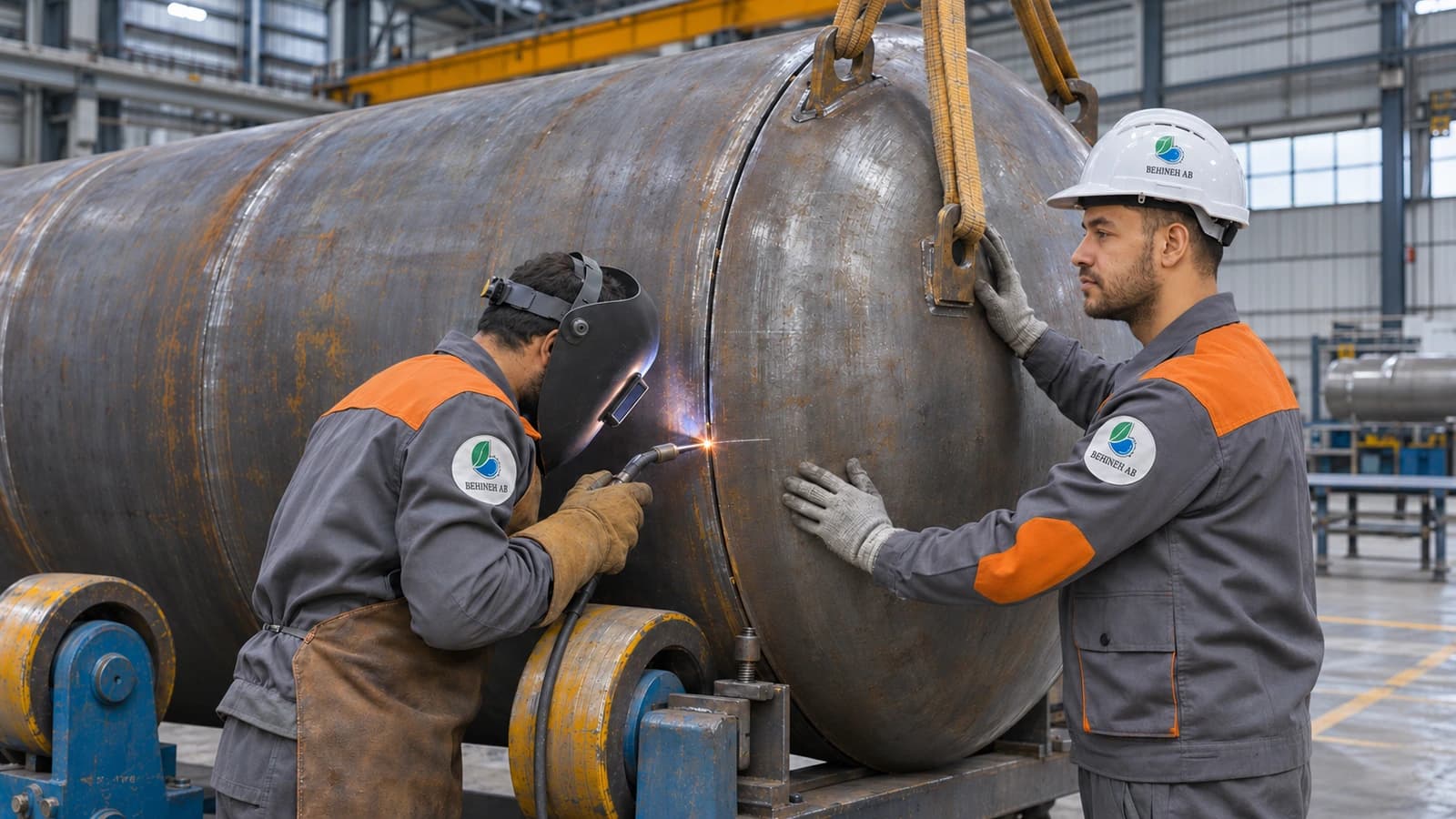
Its main limit is the need for direct access and a fairly straight weld path; small curved seams like the head-to-shell joint and nozzles are usually done with manual or semi-automatic arc welding instead.
The parameters that make or break the weld
Key SAW variables
- Amperage and voltage matched to plate thickness and flux type
- Travel speed, to control penetration depth and bead width
- Electrode nozzle angle and stick-out relative to the joint
- Keeping flux dry and recycled properly to avoid porosity
Field note
Damp flux is the single most common cause of porosity in submerged arc welds. Storing it in a heated, thermostatically controlled oven before use all but eliminates the risk.
SAW next to the other welding methods
| Method | Typical use on a tank | Welding position |
|---|---|---|
| SAW | Long shell longitudinal and circumferential seams | Flat or horizontal |
| SMAW | Short seams, repairs, restricted access | All positions |
| GTAW | High-quality root pass, thin plate | All positions |
| GMAW/FCAW | Fast assembly of supports and internals | Most positions |