Galvanising a tank is not just dipping it in molten zinc. The tank must be designed for galvanising from the start. The steps, coating thickness and common mistakes.
The tank must be designed for galvanising
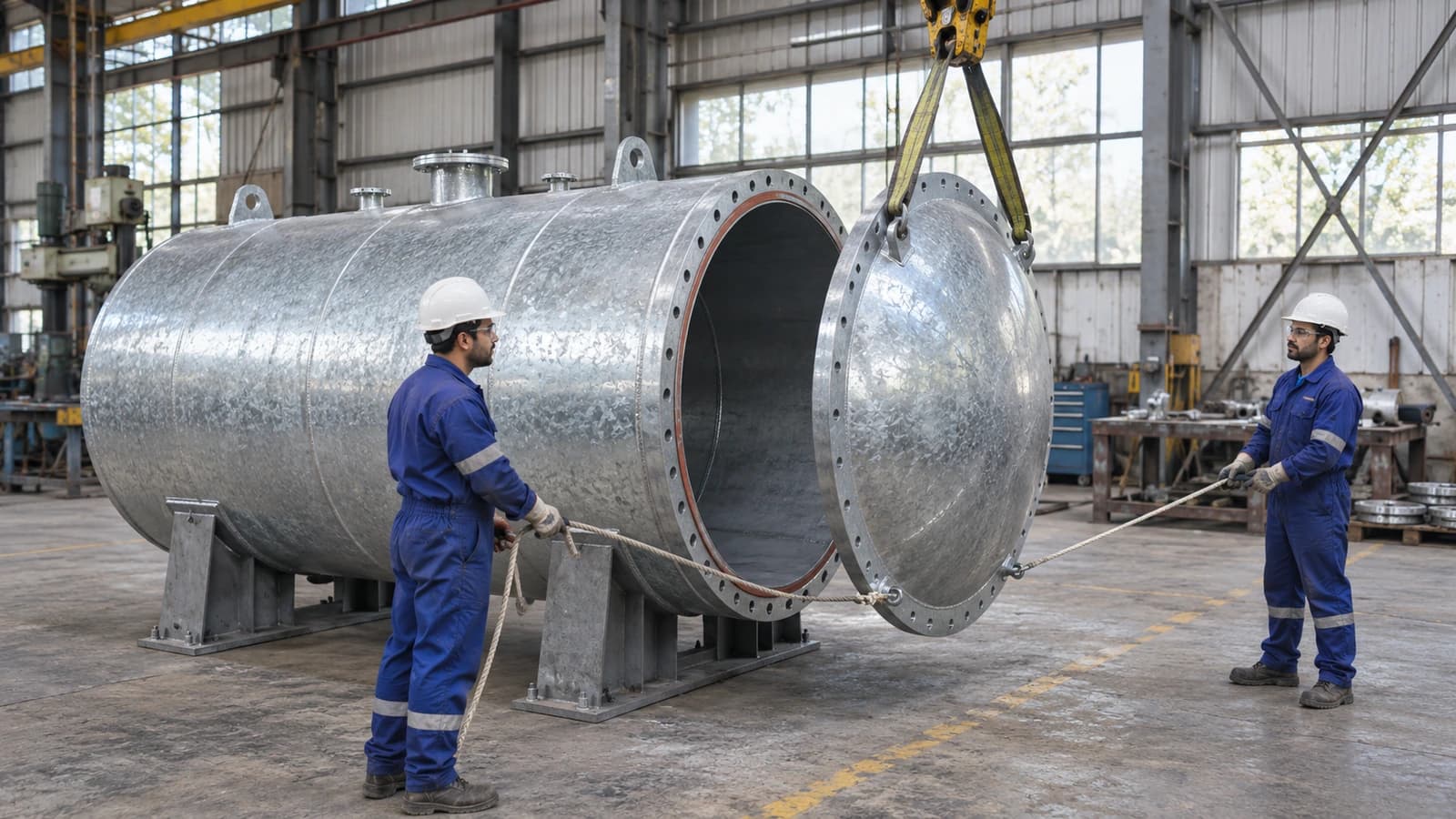
The most important point in building a galvanised tank comes before fabrication. A tank that is going into the zinc bath whole must have vent and drain holes in the right places. The molten zinc must be able to reach every space, and air and steam must have a way out.
If a part has a completely closed space, such as a pipe welded shut at both ends, the air and moisture inside expand at around 450 degrees. The result can be the part bursting in the bath. Every closed space must have a vent hole.
The size of a welded tank is also limited by the length, width and depth of the galvanising bath. A larger tank must either be built from separate panels or galvanised by double dipping, which has harder quality control.
Steel suitable for galvanising
The chemical composition of the steel, especially its silicon and phosphorus content, affects the thickness and appearance of the coating. Some steels take on a very thick, dark and brittle coating. If a uniform appearance matters, agree the plate grade with the galvaniser.
Fabrication and galvanising steps
- Design with vent and drain holes, taking the bath dimensions into account
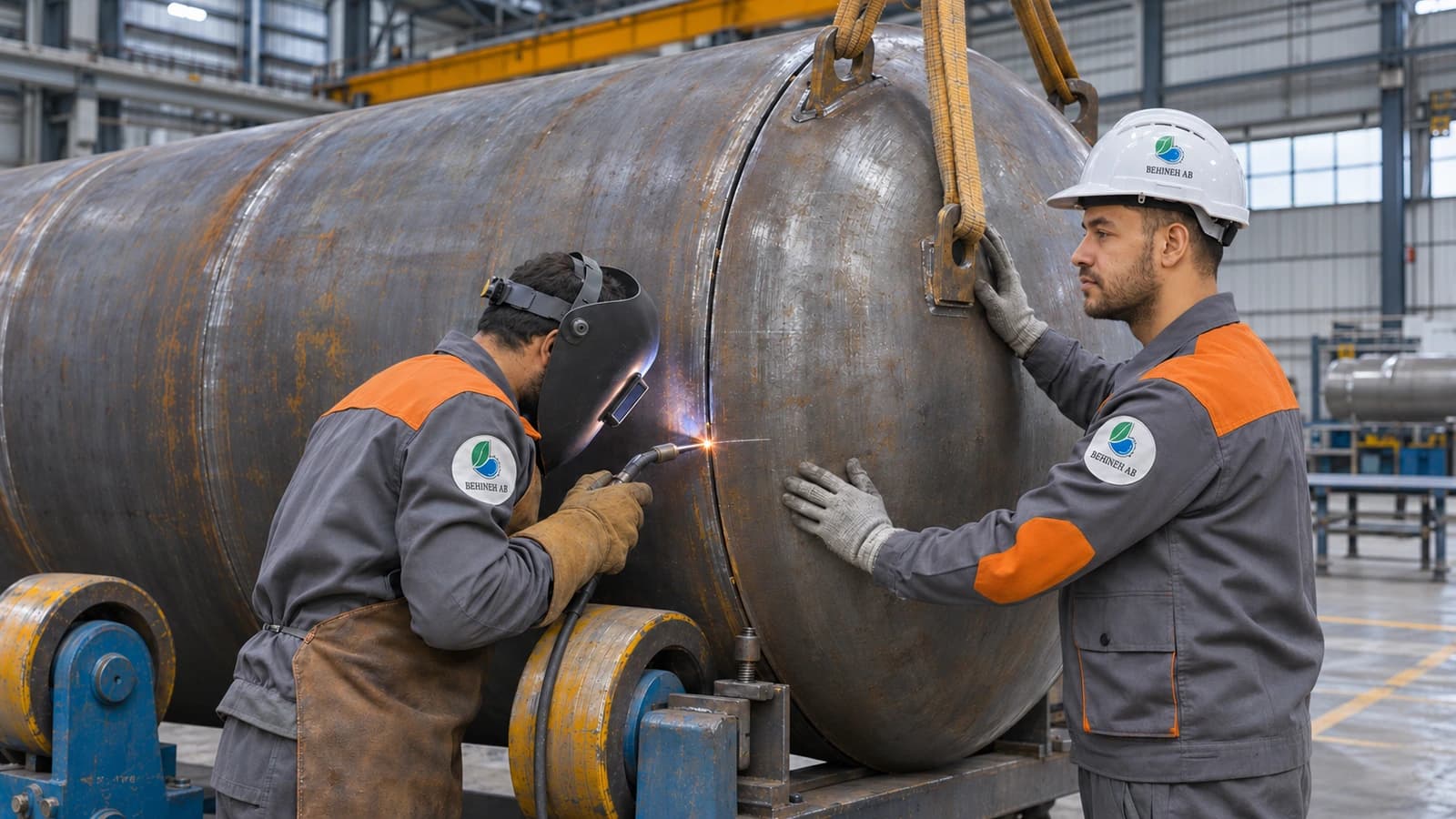
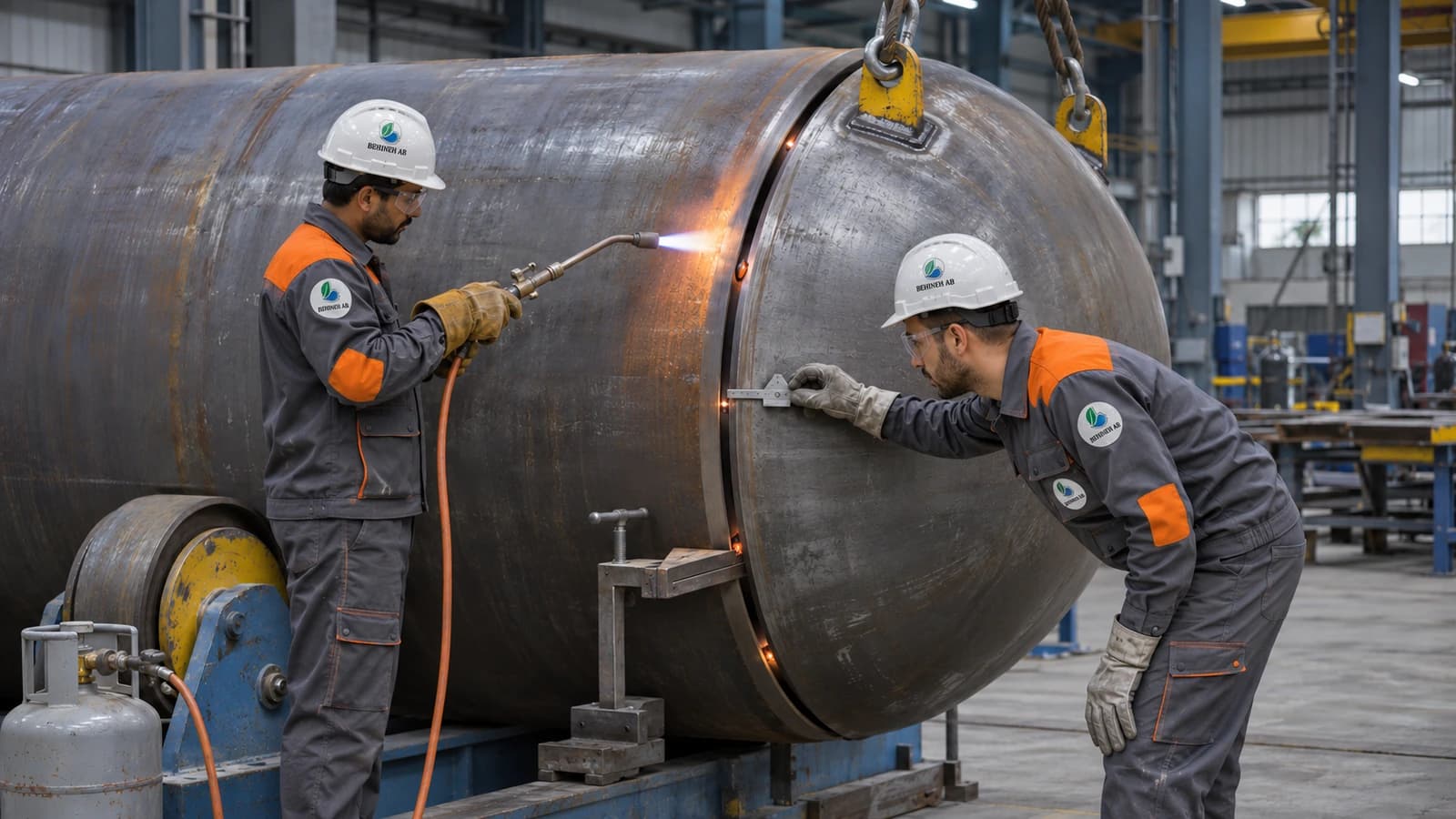
- Cutting, rolling and complete welding of the tank, including all nozzles and supports
- Removing slag and weld spatter; zinc does not adhere to slag
- Degreasing, pickling and fluxing at the galvanising plant
- Dipping in molten zinc at about 445 to 460 degrees
- Cooling and visual inspection
- Measuring the coating thickness with a magnetic thickness gauge
- Fill test
Coating thickness to ISO 1461
| Steel plate thickness | Minimum mean coating thickness | Local minimum |
|---|---|---|
| Over 6 mm | 85 microns | 70 microns |
| 3 to 6 mm | 70 microns | 55 microns |
The coating thickness is measured at several points on each part. The life of the coating is roughly proportional to its thickness, so a tank installed in a more corrosive environment benefits more from a thicker coating.
Welding after galvanising: avoid it if at all possible
Welding on a galvanised part burns off the coating at the weld, and zinc fumes are harmful to the welder. If something has to be added after galvanising, it is better bolted. If welding is unavoidable, the weld area must be repaired with zinc-rich paint. This repair never matches the durability of hot-dip galvanising.
In a panel tank, the panels are galvanised separately and assembled on site with bolts and sealing tape. This method has no size limit and is easier to transport, but sealing the joints is its sensitive point.
Half of a galvanised tank's quality is decided on the drawing: vent holes, dimensions that suit the bath, and complete welding before galvanising. The price of a galvanised tank comes from the steel weight plus the cost of galvanising.