A tank's weight comes from plate area, thickness and density. The formula for shell and head weight, the density of carbon steel and stainless, and two worked examples.
Why does weight matter?
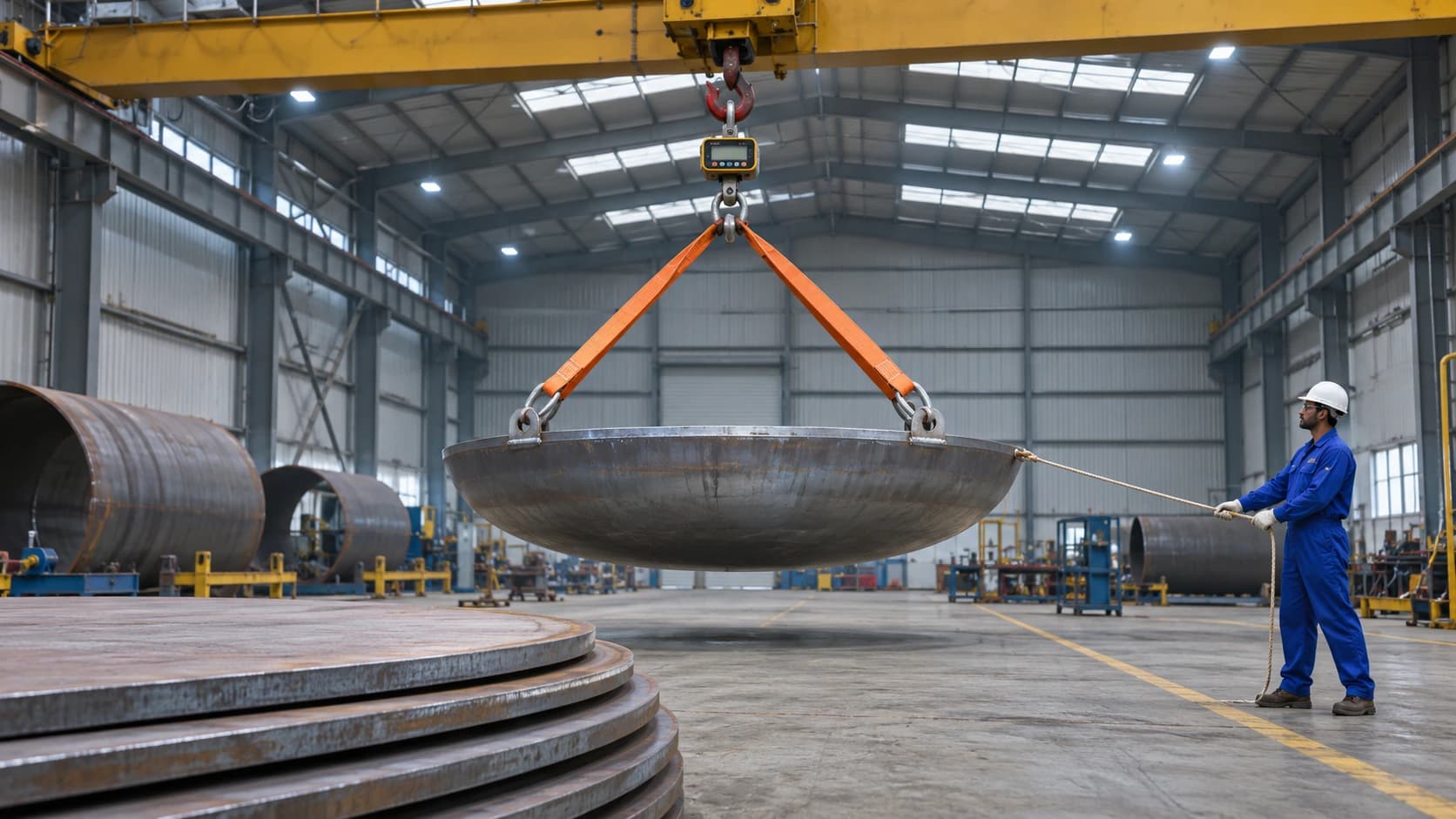
We buy plate by the kilo, and we calculate a tank's fabrication price above all from its weight. Weight also sets the cost of transport, the crane and the load on the foundation. If you know a tank's weight, you roughly know what price you are facing.
The formula
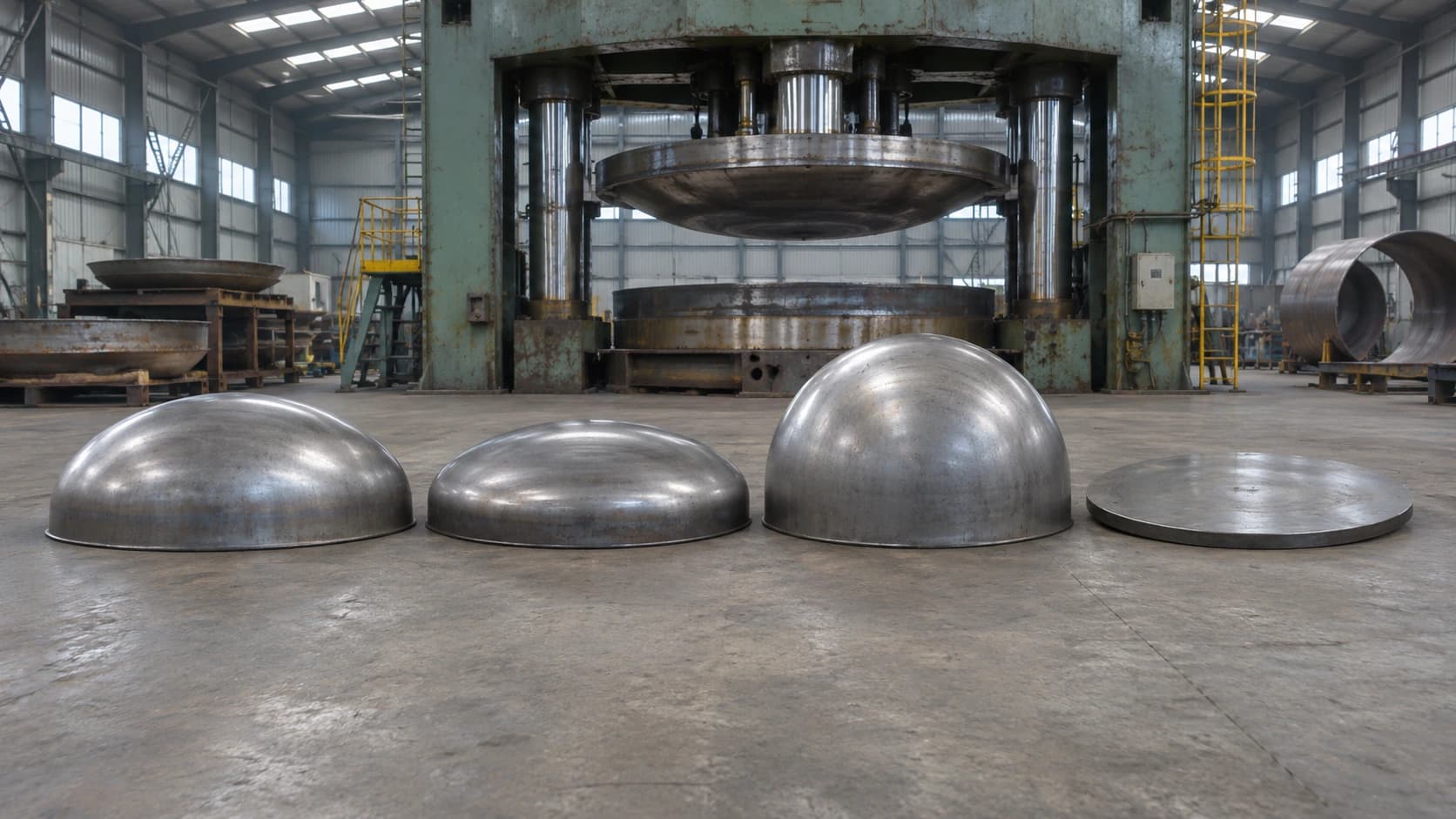
The weight of each part equals the plate area times the thickness times the density. For a cylindrical shell the area is π × D × L. For a 2:1 elliptical head the surface area is about 1.084 × D². Give the thickness in metres and the density in kilograms per cubic metre, and the weight comes out in kilograms.
| Material | Approximate density (kg/m³) |
|---|---|
| Carbon steel | 7,850 |
| Stainless 304 | 7,900 to 7,930 |
| Stainless 316 | 8,000 |
| Titanium | 4,510 |
| Aluminium | 2,700 |
Each square metre of steel plate one millimetre thick weighs about 7.85 kg. So one square metre of 8 mm plate is about 63 kg.
Example 1: a 20,000-litre vertical water tank
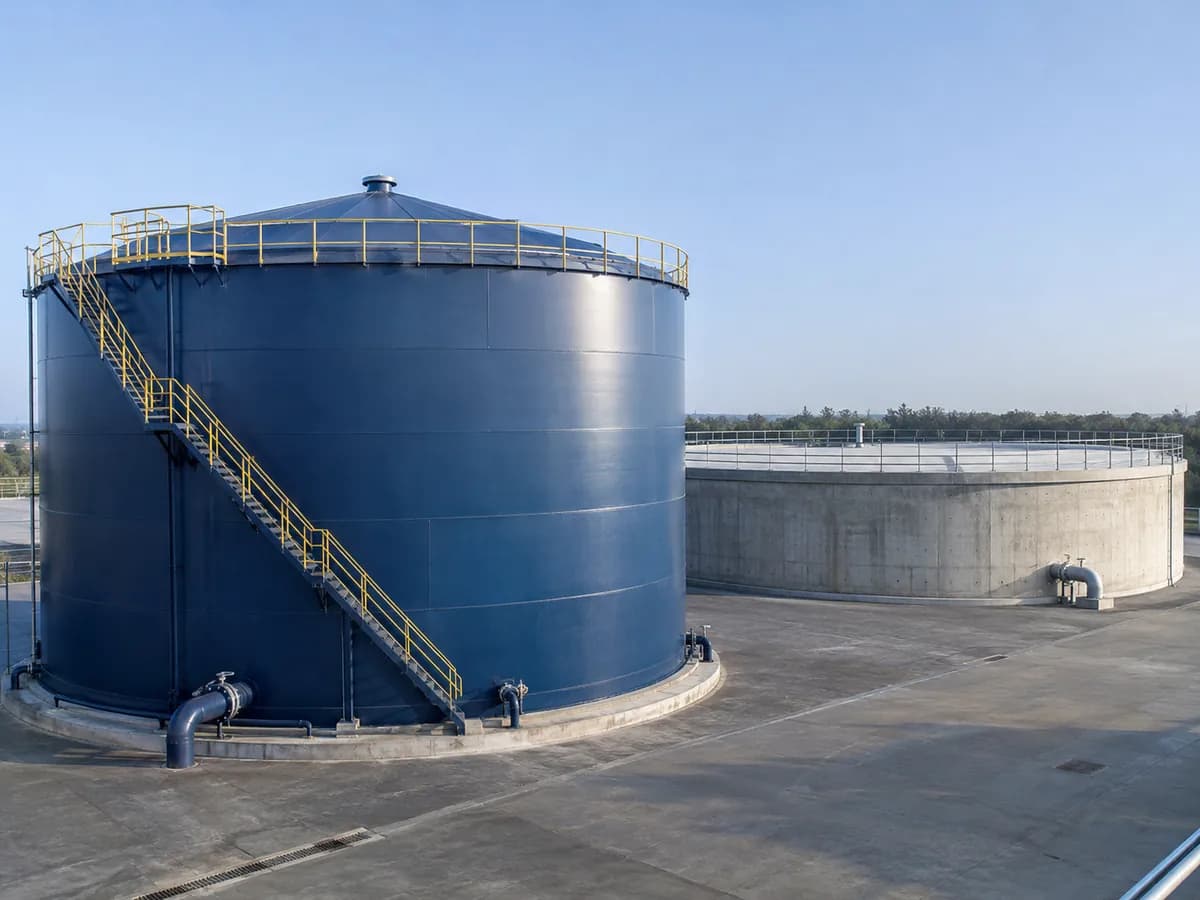
Diameter 2.5 m and height 4.1 m, with a 5 mm shell, a 6 mm bottom and a 5 mm roof. The shell is about 32.2 m² and weighs 1,260 kg. The bottom is 4.9 m² and about 230 kg. The roof is about 200 kg. The plates total about 1.7 tonnes. With the nozzles, manhole and ladder, which usually add 10 to 15 percent, we reach about 1.9 tonnes.
Example 2: a horizontal pressure vessel
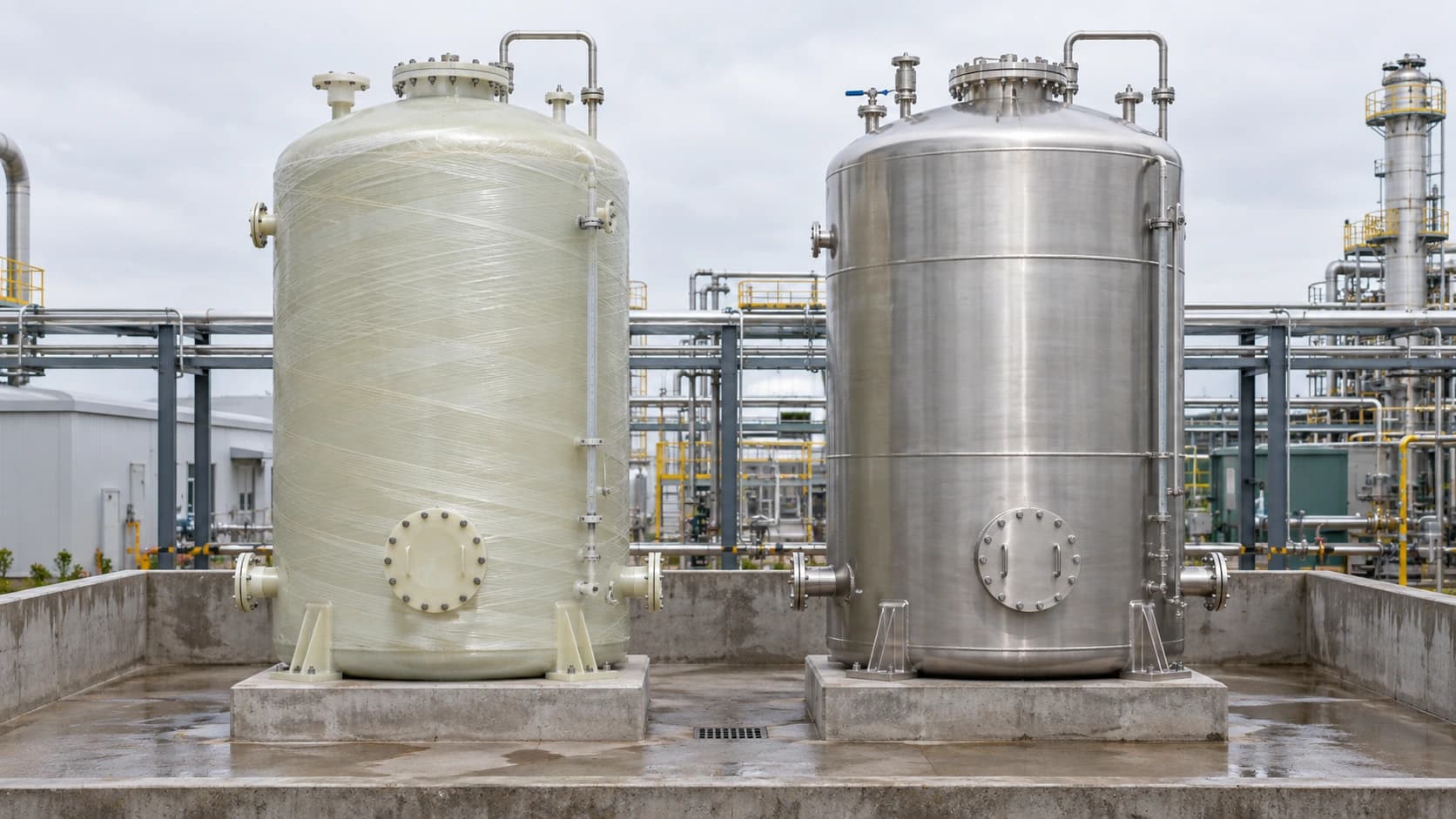
Diameter 1.2 m, shell length 3 m, shell and head thickness 10 mm, two 2:1 elliptical heads. The shell is about 11.3 m² and weighs 890 kg. Each head is about 1.56 m² and 122 kg. With the nozzles and saddles, the total weight is about 1.3 tonnes. The volume of this vessel is only about 4 m³: per litre, a pressure vessel is much heavier than a water tank.
The thicknesses in these examples are assumed; the real thickness is set by the calculation. The online tank calculator works out thickness and weight together. To see how weight turns into price, see the tank fabrication price page.
Weight = area × thickness × density. Every extra millimetre of thickness counts over the whole plate area, which is why an accurate thickness calculation directly affects the price.