Comparing concrete and steel water tanks: construction cost, build time, leaks, maintenance and whether the tank can be moved. With the steps for building a concrete water tank.
The short answer
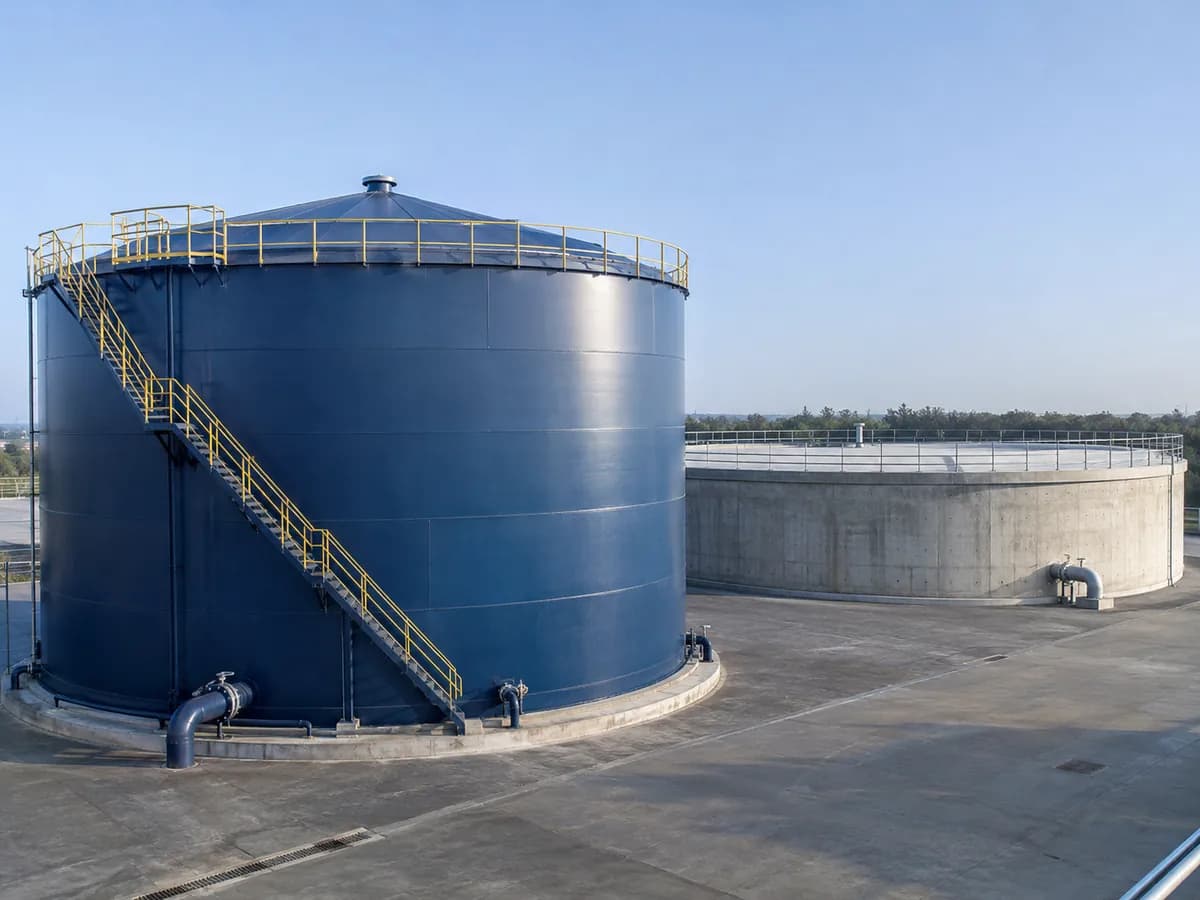
For very large municipal reservoirs built underground or semi-buried, concrete tanks are common. For most industrial, agricultural and fire-water projects, and anywhere build time, relocation or an elevated tank is a factor, a steel water tank is usually the better choice.
Comparison
| Criterion | Concrete tank | Steel tank |
|---|---|---|
| Build time | Long; formwork, pouring and curing | Short; built in the factory, quick installation |
| Leaks | Cracks and construction joints; needs waterproofing | Welds are tested before delivery |
| Weight | Very heavy; not suitable for an elevated tank | Lighter; installed on a steel tower |
| Relocation and expansion | Practically impossible | Can be moved and resold |
| Maintenance | Crack repair and waterproof coating | Anti-corrosion coating; less for galvanised and stainless |
| Very large buried volumes | Suitable | Usually more expensive |
Cost of a concrete water tank versus a steel one
The cost of building a concrete water tank comes from the volume of concrete, the weight of rebar, formwork, excavation and waterproofing. The price of a steel tank depends above all on the weight of plate. At small and medium volumes, the cost of formwork and the construction time make a concrete tank more expensive. At very large buried volumes, concrete is usually more economical.
Count the cost of time too. A tank that is ready a few months earlier gets the project running a few months earlier.
Steps for building a concrete water tank
- Excavation and blinding concrete
- Reinforcing the floor and walls
- Installing waterstops in the construction joints
- Formwork and pouring the floor, then the walls
- Curing the concrete, usually for at least several weeks
- Waterproofing and an internal coating suitable for drinking water
- Fill test and repair of leaking spots
We describe how a steel water tank is built in a separate article. Behineh Ab builds steel tanks and carries out a technical and economic comparison for projects that are undecided between the two.
If the tank is buried and very large, take concrete seriously. Otherwise, the build speed, testability and portability of a steel tank usually win.